
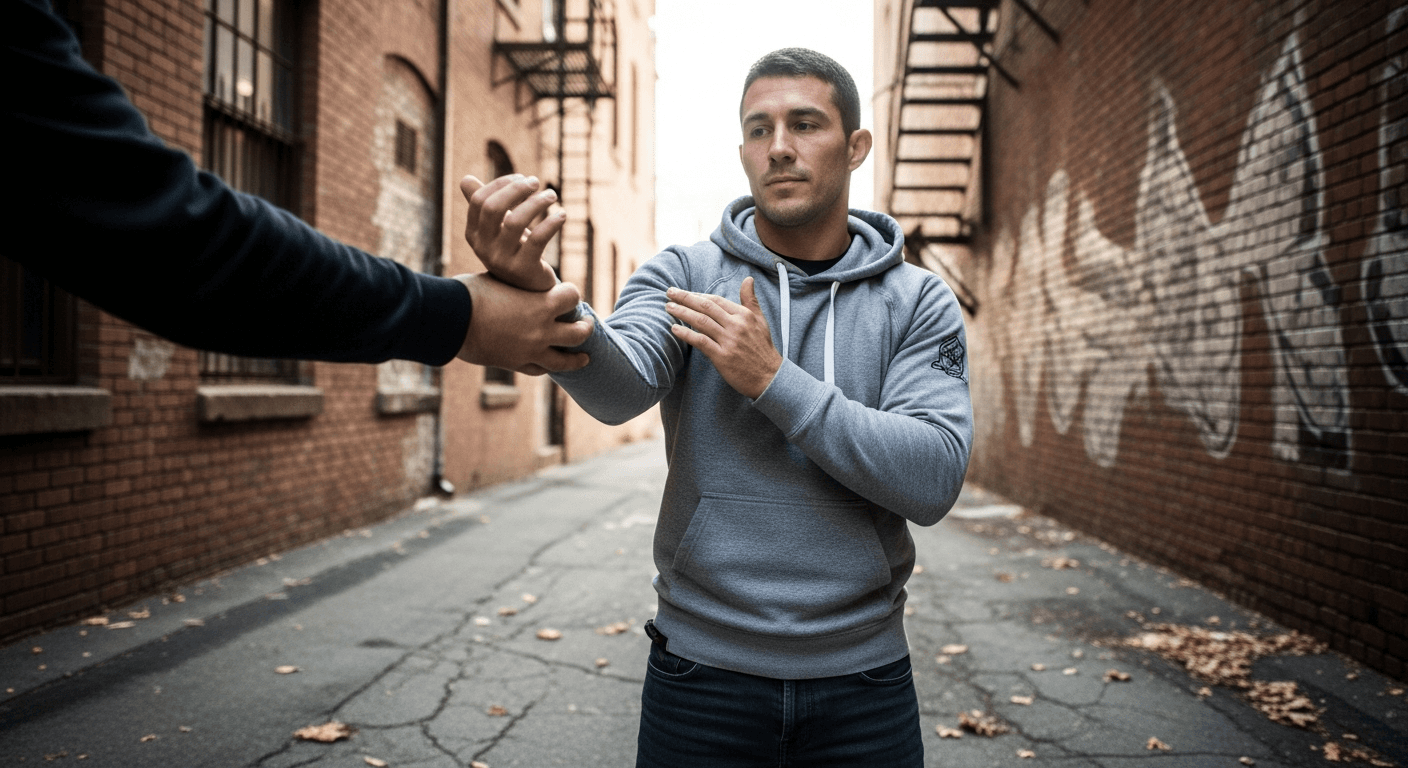
BJJ for Self-Defense: What Works and What Doesn't
The Gracie family didn't create BJJ to win tournaments. They created it to survive fights against bigger, stronger opponents. Hélio Gracie's famous challenge matches weren't sporting events — they were demonstrations that technique could overcome raw physical advantage in a real confrontation.
But modern BJJ has evolved. The sport has branched away from its self-defense roots in many gyms, prioritizing competitive positions and techniques that assume a controlled environment with rules, referees, and single opponents. This evolution raises an important question: how much of what you learn in a typical BJJ class actually applies to a real-world self-defense situation?
The answer is nuanced. BJJ provides some of the most practically applicable self-defense skills available in any martial art — but not all of it, and not without important caveats.
What BJJ Gets Right for Self-Defense
Distance Management and Clinch Work
Most real-world confrontations happen at close range. BJJ teaches you how to close distance safely, establish a clinch, and control an aggressor from a range where punches and kicks are less effective. This skill alone — getting inside the danger zone and establishing control — is more valuable than any single technique.
Controlling a Larger, Stronger Opponent
This is BJJ's core promise, and it delivers. A trained BJJ practitioner can control someone significantly larger and stronger through positional dominance, weight distribution, and leverage. In a self-defense context, this means you can pin someone to the ground without striking — useful for scenarios where de-escalation is preferable to inflicting damage.
Submissions That End Confrontations
Chokes and joint locks provide finishing options that don't require significant physical strength. A rear naked choke applied correctly renders an attacker unconscious in seconds. An armbar or kimura creates compliance through joint manipulation. These tools give even smaller defenders the ability to decisively end a physical confrontation.
Dealing With Ground Situations
Statistics from law enforcement and self-defense research consistently show that a significant percentage of real-world fights end up on the ground. If you're taken down or knocked down, BJJ gives you a functional framework for surviving, escaping, and reversing — skills that practitioners of striking-only arts lack entirely.
Pressure Testing Through Live Sparring
Unlike many self-defense systems that rely on choreographed scenarios, BJJ is tested daily through live sparring against resisting opponents. You know your techniques work because you've applied them against someone actively trying to counter them. This creates confidence that's grounded in reality, not theory.
Where Sport BJJ Falls Short
Multiple Attackers
BJJ is designed for one-on-one encounters. On the ground with one attacker, you have tools. Against multiple attackers, going to the ground is the worst possible strategy. If a self-defense situation involves more than one aggressor, your priority should be staying on your feet and creating distance to escape.
Weapons
No martial art reliably prepares you for an armed attacker. BJJ provides no specific weapon defense training in most schools. If a weapon is involved, the best self-defense strategy is compliance or escape — not engagement.
Striking in Combination With Grappling
Sport BJJ doesn't include strikes. In a real confrontation, the person you're controlling can still punch, elbow, headbutt, and bite. Some BJJ positions that work perfectly in sport — like certain open guards — become dangerous when the opponent can strike.
Gyms that teach self-defense-specific BJJ (such as Gracie Combatives programs) address this by incorporating striking awareness into grappling scenarios. If self-defense is your primary goal, seek out these programs.
Standing Self-Defense
BJJ's stand-up game has improved through wrestling integration, but it still lags behind dedicated striking arts for stand-up confrontations. Many sport BJJ practitioners are uncomfortable on their feet and prefer to pull guard — a strategy that doesn't translate to self-defense, where voluntarily going to the ground may not be advisable.
Environmental Factors
Real confrontations don't happen on padded mats. Hard surfaces, furniture, curbs, glass, and bystanders all affect what techniques are safe and practical. Ground fighting on concrete is fundamentally different from ground fighting on tatami — the risk of head impact from takedowns and sweeps is serious.
Practical Self-Defense Techniques From BJJ
If self-defense is a priority, focus your training on these areas:
Standing clinch and takedown to control: Close distance safely, establish double underhooks or a body lock, and take the aggressor to the ground in a controlled way.
Mount and back control: These are your safest dominant positions for controlling someone while minimizing your exposure to strikes.
Rear naked choke: The most reliable finishing technique in self-defense scenarios. Once you have the back and apply the choke, the confrontation is over.
Guard retention and stand-up: If you're knocked down, the ability to establish guard, manage distance, and stand up safely is potentially life-saving.
Headlock escapes: Headlocks are one of the most common attacks in street confrontations. BJJ provides reliable escapes.
The Awareness Factor
Perhaps the most valuable self-defense benefit BJJ provides isn't technical — it's awareness. Training regularly in a combat sport gives you a calibrated sense of what a physical confrontation actually involves: the speed, the chaos, the adrenaline dump, the ground reality of fighting.
Most people who've never been in a physical altercation have Hollywood-informed expectations. They imagine they'll stay calm, throw a perfect punch, and walk away. Reality is messier. BJJ practitioners, because they've experienced controlled aggression thousands of times in sparring, have more realistic expectations. They understand that fights are unpredictable, that size matters even when you have technique, and that avoiding the confrontation entirely is almost always the best self-defense strategy.
This calibrated awareness — knowing what you can and can't do, understanding the risks, and recognizing when to de-escalate versus when to act — is arguably more protective than any specific technique. It keeps you out of situations where self-defense becomes necessary in the first place.
BJJ practitioners also develop a heightened sense of spatial awareness and body reading. You learn to read posture, anticipate movement, and recognize aggressive body language. These skills operate subconsciously after years of training and contribute to a general sense of situational awareness that serves you well beyond the mats.
Self-Defense vs. Sport BJJ: Finding the Balance
The best approach for most practitioners is to train sport BJJ for the technical development and live sparring experience, while supplementing with self-defense-specific concepts. Know which techniques transfer to real-world scenarios and which are sport-specific.
Ask your gym if they incorporate any self-defense curriculum. Some academies dedicate one class per week to self-defense applications. Others integrate it into the regular curriculum. The important thing is awareness — knowing the difference between what works on the mats and what works on the street.
If you're searching for gyms that emphasize practical self-defense alongside sport technique, browse our gym directory and look for academies that mention self-defense in their programs.
You can also connect with schools that focus on defensive applications by attending open mats and visitor sessions at different academies. And track your training across self-defense-focused and sport-focused gyms using your training passport.
Self-Defense for Specific Populations
BJJ's self-defense value increases dramatically for populations that face elevated physical risk. Women who train BJJ gain the ability to neutralize the most statistically common attack scenarios — grabs, pins, and ground assaults — using technique rather than strength. Children who train BJJ develop the confidence and physical skills to resist bullying without resorting to striking.
Elderly practitioners who maintain basic BJJ skills significantly reduce their vulnerability. Not because they'll armbar a mugger, but because they've maintained the balance, spatial awareness, and physical confidence that make them less likely to be targeted in the first place.
Healthcare workers, social workers, and anyone in professions that involve unpredictable human contact benefit enormously from BJJ's restraint-based approach to physical confrontation. The ability to control without injuring is a professional skill in these contexts, and several hospital systems and social services agencies have begun incorporating modified BJJ training into their staff development programs.
For all these populations, the key benefit isn't the ability to fight — it's the confidence that comes from knowing you have options if a situation turns physical. That confidence changes behavior in subtle but powerful ways: calmer decision-making, better boundary setting, and a willingness to stand firm in situations where others might freeze or flee. This psychological empowerment is one of BJJ's most meaningful contributions to personal safety.
The Legal Dimension of Self-Defense
A discussion of BJJ for self-defense is incomplete without addressing the legal implications of physical confrontations. Using martial arts skills in a street situation carries legal consequences. The legal standard for self-defense varies by jurisdiction, but generally requires that your response be proportional to the threat. Choking someone unconscious when they shoved you is not proportional.
BJJ's emphasis on control rather than damage gives you legal advantages over striking-based martial arts. Holding someone in mount or controlling them from the back while waiting for help is much easier to defend legally than punching someone in the face. The ability to restrain without injuring is one of BJJ's most valuable self-defense features — and it's rarely discussed in technique-focused conversations.
The best self-defense outcome is always avoidance. The second best is de-escalation. Physical engagement should be the last resort. BJJ gives you options at that last-resort stage, but the art's greatest self-defense contribution might be the confidence to stay calm enough to choose de-escalation when others would escalate. Knowing you can defend yourself removes the panic that drives unnecessary confrontation.
Understanding these legal boundaries helps you train with the right mindset. Practice control-based positions and restraint techniques alongside your sport-focused training. If you ever need to use your BJJ outside the gym, the ability to control without injuring is both morally and legally preferable to the alternative. Discuss self-defense scenarios with your instructor — a good coach will help you understand both the technical and legal dimensions of using your skills outside the gym.
Frequently Asked Questions
Is BJJ the best martial art for self-defense?
BJJ is one of the most practical martial arts for self-defense, particularly for ground situations and controlling larger opponents. However, a well-rounded self-defense skillset benefits from supplementing BJJ with basic striking awareness (boxing or Muay Thai) and situational awareness training. No single art covers every self-defense scenario.
How long do you need to train BJJ before it's useful for self-defense?
Basic self-defense competence — the ability to control an untrained attacker, maintain guard, and apply fundamental chokes — can develop within six months to a year of consistent training. Full confidence in a wider range of scenarios requires two or more years.
Should I train gi or no-gi for self-defense?
Both have value. Gi training simulates scenarios where the attacker wears a jacket or hoodie that can be used for grips. No-gi training prepares you for situations where grip-dependent techniques won't work. For self-defense, no-gi training is slightly more universally applicable, but training both is ideal.

Elena Torres
brown Belt
Brown belt and former sports journalist covering the BJJ competition circuit and gym culture.
Related Posts

Craig Jones's Mexico gym: the Zamaya plan in Tulum
Craig Jones's Mexico gym announcement places B-Team at Zamaya in Tulum. Read the July 2026 plans and the details visiting grapplers should confirm.
Cobrinha's 2017: five major titles at 37
Cobrinha's 2017 season brought five major titles at age 37. Follow his gi and ADCC results, the Mendes rivalry, and the wrestling work behind that run.
Rafael Mendes: six Worlds titles and a life after competing
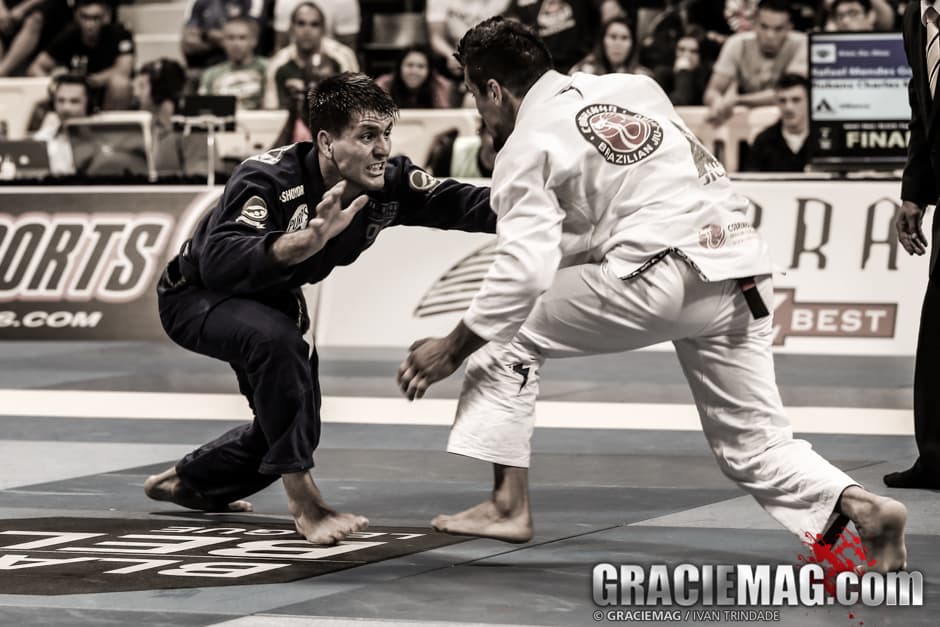
Rafael Mendes won six featherweight Worlds titles and retired at 27. Explore his ADCC rivalry with Cobrinha and the academy he helped build.
Comments (0)
Loading comments...