
You can train BJJ together without wanting the same thing
Quick answer: Couples can share jiu-jitsu without sharing a competition calendar, training pace, or preferred partners. Agree on practical arrangements and ask before offering technical feedback. Give each person room to develop their own relationship with the sport, including the option to attend different classes or stop training together.
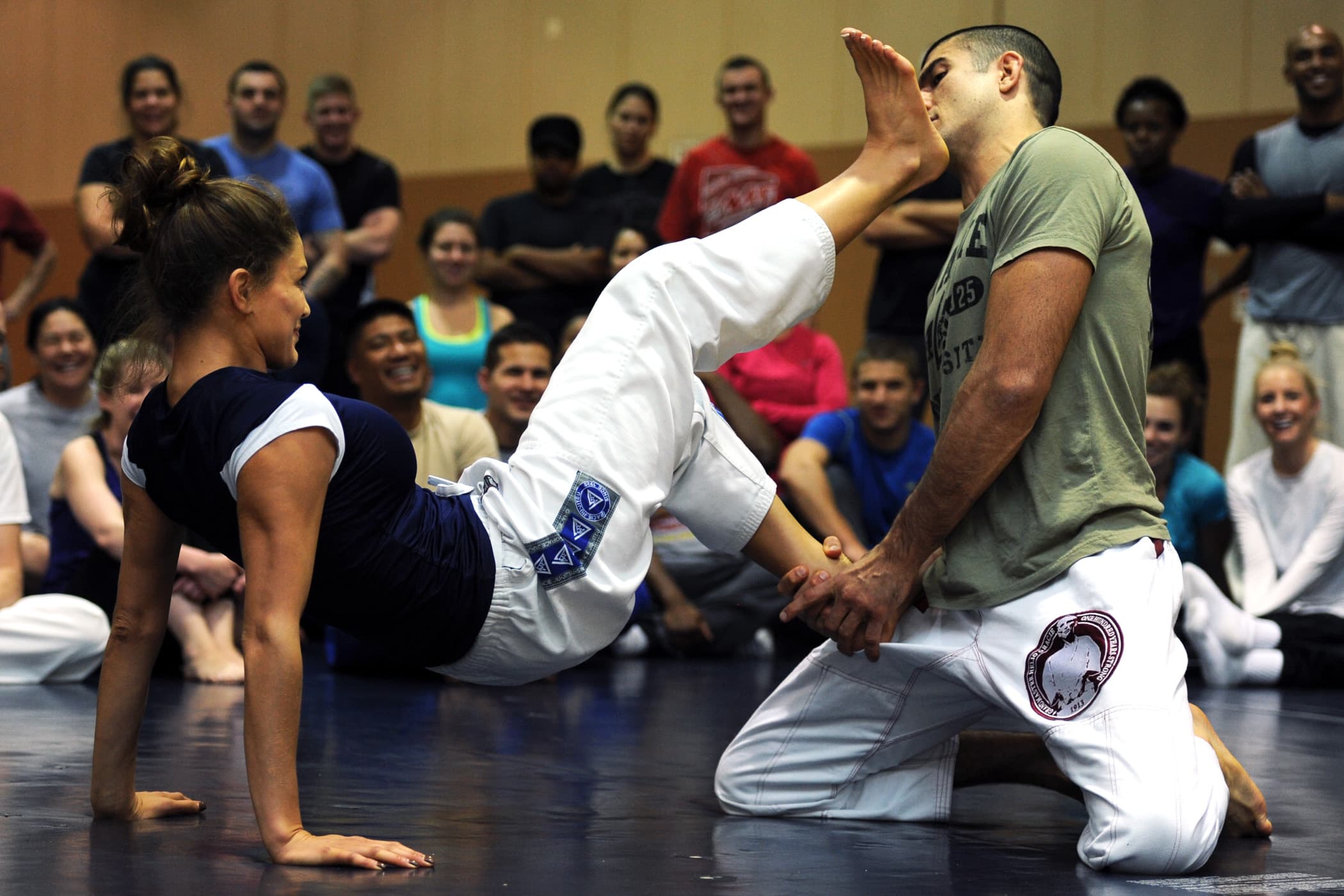
Two people can walk into the same gym with different ideas about a good evening. One wants hard rounds before a tournament. The other wants to understand the class, move a little, and get home in time for dinner. Neither has arrived with the wrong goal.
The awkwardness begins when the shared activity is treated as a shared assignment. Enjoying jiu-jitsu together does not require synchronized ambition. It requires enough conversation that one person's enthusiasm doesn't quietly become the plan for both.
Start with an invitation that permits a no
Introducing a partner to a sport you love can feel like offering them a piece of your life. They may experience it more simply: an unfamiliar room, physical contact with strangers, and something new to be bad at. Leave space for that first impression to differ from yours.
Make the first invitation concrete. Suggest a beginner class, explain what the gym says they should bring, and offer to help with the booking. Then let the answer stand. Repeatedly sending technique clips after someone declines is not a more persuasive version of the same invitation.
The topic is familiar enough that Gracie University offers a public lesson about teaching a significant other, featuring Rener and Eve Gracie's account. Its existence is a useful reminder that knowing jiu-jitsu and introducing somebody close to you to jiu-jitsu are different tasks.
You can enjoy a partner's interest without making its continuation a test of whether they understand you. A trial class is allowed to remain a trial.
Let the instructor handle the first explanation
If one person already trains, it is easy to arrive with a complete private syllabus. You know which mistakes you made, which position you like, and which detail you think would save a beginner three months. That information may be useful eventually. The first class already has an instructor.
Introduce your partner, then let them speak for themselves. They can explain their experience and ask their own questions. Resist translating every answer or supplying a running commentary while the coach demonstrates. Being familiar with someone doesn't mean knowing which explanation will make sense to them today.
If you partner for a drill, follow the class task. Ask before adding a variation. A beginner who is trying to remember where one hand belongs rarely needs three alternative entries and a warning about an advanced counter. Help with the problem in front of them.
This also gives the newer student a direct relationship with the coach. They shouldn't need to pass every technical question through the person they arrived with.
Decide whether you actually make good training partners
Being close outside the gym doesn't automatically make two people well matched for every drill. Size, experience, preferred pace, and the exercise itself all matter. Sometimes another partner is simply a better choice for that session.
Before working together, settle a few ordinary details:
Is this a cooperative drill, positional practice, or an open round?
What pace is comfortable for both people today?
Does either person want feedback, and when?
Would it be more useful to pair with somebody else for this task?
Keep the answer easy to change. A round that isn't working can end without a debate about who should have adjusted. Tapping and asking to stop deserve the same immediate respect they would receive with any other teammate.
Don't use the round to resolve an argument from the car or prove a point about effort. If either person feels frustrated, choose another partner or take a break. A training session does not improve because it has acquired a second, unspoken contest.
Separate encouragement from coaching
A helpful observation can become unwelcome when it arrives after every repetition. Ask whether feedback is wanted before offering it. The difference can be as small as checking whether your partner wants to talk through the position or would rather keep practicing for now.
Give specific feedback if the answer is yes. Refer to the detail the instructor taught instead of making a broad judgment about talent or attitude. If you are unsure, ask the coach together. A belt difference does not require the more experienced partner to produce an answer to every question on demand.
After class, leave room for an account that is not a technical report. Your partner may want to describe a funny moment or say they enjoyed training with somebody new. You can listen without converting the conversation into a review of the round you watched.
The ride home is especially worth discussing in advance. Some people like immediate analysis; others want food and a different subject. Agreeing on that preference while everyone is calm is easier than discovering it halfway through an unsolicited breakdown.
Put the calendar on the table
Two memberships can create more than twice the scheduling work if both people assume the other will cover everything around class. Look at transport, household jobs, and any caring responsibilities before deciding how often you will train. The arrangement should work on an ordinary busy week, not only the unusually quiet one when you first discussed it.
A shared class can be convenient, but separate sessions may be more practical. One person might prefer mornings while the other can only attend evenings. You still share the sport even if you don't share every warm-up. Use the gym directory to compare realistic options rather than selecting a timetable neither person can sustain.
Be clear about the money too. Membership, equipment, and event costs can accumulate differently for each person. Discuss larger purchases before committing shared funds. A competition entry or seminar ticket should not arrive as a cheerful announcement after the household budget has already been spent.
Revisit the arrangement when work or family schedules change. Adjusting the week is easier when the original plan was treated as a practical agreement rather than a promise about how dedicated each person would remain forever.
Give competition its own conversation
A tournament introduces travel, preparation, and the possibility that one person's weekend will revolve around the other's match. Ask what support is wanted and what support is realistic. Attending can be a generous choice without becoming an automatic obligation every time an event appears.
If both compete, avoid using one result to explain the other. They entered different matches against different people. A medal for one doesn't make the other's disappointment excessive, and a difficult day for one doesn't require the other to hide a good performance.
If only one competes, agree on the practical plan before the event. Decide whether the noncompetitor is driving, watching, or enjoying a separate part of the day. A spectator should know roughly what they are signing up for, including the possibility of waiting around.
Afterward, let each person have the response they actually have. Celebration and frustration can occupy the same evening. Neither needs to become the official mood of the household.
Keep some training relationships of your own
A gym becomes easier to inhabit when you know people independently. Introduce yourselves, work with different partners when the class allows it, and let each person find their own conversations. Arriving together needn't mean moving through the room as a permanent pair.
That independence can also make attendance simpler. If one person misses class, the other still knows where to go and whom to greet. Their place in the gym doesn't depend on arriving with a social translator.
Be thoughtful about what you share outside the room. Ask before posting a training clip or describing your partner's difficult round to friends. An amusing moment to one person may be something the other would rather keep private. The same courtesy applies to milestones: let them decide how a promotion or first competition result is announced.
A shared activity gives you things to talk about. It doesn't remove the right to have parts of it that belong to you individually.
Allow the two paths to change
One person may become more interested while the other settles into a lighter routine. Someone may prefer gi after initially joining for no-gi. A partner who once wanted to compete might decide that regular classes are enough. Treat those changes as information rather than evidence that the original plan failed.
Ask what each person enjoys now. The answer may point toward a different class, another training partner, or a break. Avoid turning a conversation about current preferences into a trial of past enthusiasm. People can mean what they said at the time and want something different later.
There is also room for one person to stop. The sport can remain part of the relationship through occasional conversation or attendance at an important event, or it can become mostly one person's activity again. Continuing to train should be a choice each person can make without managing the other's disappointment first.
What you shared still happened. It doesn't require an identical future to have been worthwhile.
The takeaway
Training together works best when both people can describe what they want and change their minds without a penalty. The practical agreements matter: who attends which class, whether feedback is welcome, and what the week requires outside the gym.
Let jiu-jitsu add something to the time you spend together. It doesn't need to organize all of it. A good shared session may end with two different lessons learned and no technical conversation at dinner.
Find a session that fits both schedules
Explore open mats, then ask the host about experience requirements and the kind of training offered before planning a visit together.
FAQ
Should couples always drill together? No. The class task, size, experience, and each person's preference can make another partner a better choice. Training in the same room is still a shared activity when you work with different people.
What if one partner has a much higher belt? Let the instructor lead the class and ask before adding feedback. Experience can be helpful, but it doesn't make constant coaching welcome or require the newer student to learn through their partner.
Do we need the same competition goals? No. Discuss the time, cost, and support involved in each person's plans. One can compete while the other enjoys regular classes, provided those choices work with shared responsibilities.
What if my partner tries BJJ and doesn't enjoy it? Accept the answer without treating it as a rejection of your own interest. You can keep training and share other activities. A trial class doesn't create an obligation to continue.

Rafael Moura
Rafael Moura profiles competitors as people with lives outside the bracket. Some of those stories are comebacks. Most are not, and he does not force them.
Related Posts

Mikey Musumeci gives up the belt to make room for MMA
Musumeci is vacating his UFC BJJ title to focus on MMA training. What he is leaving, what continues, and why the transition matters.
IBJJF membership: finish the paperwork before the deadline
IBJJF membership and tournament entry are separate steps. Plan documents, professor approval, renewals, and junior accounts before registration closes.
Choosing a BJJ seminar worth your time and travel
Choose a BJJ seminar by the subject, teaching format, access, and total cost. Know what to ask the host before buying a ticket.
Comments (0)
Loading comments...