

Checkmat Jiu-Jitsu: the name, the team, and your first class
Quick answer: Checkmat is an international jiu-jitsu team founded in 2008 around Leo Vieira, his brothers, and fellow instructors. Its name draws on the comparison between grappling and chess. A local Checkmat academy may welcome complete beginners as well as competitors, so check the actual program rather than assuming the team is only for elite athletes.
The chess comparison arrives early in a jiu-jitsu education. Someone explains that you should think ahead, anticipate a response, and stop chasing the first move you recognize. Then you spend a round trying to remember which direction your own knee is pointing.
Checkmat puts the comparison in its name. The idea is appealing because grappling does involve decisions that depend on another person's reply. It also makes a useful introduction to the team, provided the metaphor does not become a substitute for learning who teaches at the school down the road.
There is an organization behind the word, and there are individual academies inside that organization. Understanding both will get you further than treating a patch as a complete description of what happens in class.
The name has a chess connection
Checkmat Brownsville's team page explains the name through the similarities between jiu-jitsu and chess. It identifies the organization as an international competition team with affiliated gyms. That is the documented connection; there is no need to invent a more elaborate origin story.
The analogy works best when it points toward a practical question. If you attempt one action and your partner responds, what becomes available next? A technique demonstrated alone can look complete. A partner's resistance reveals that it belongs inside an exchange.
For a beginner, that does not mean planning six submissions ahead. It might mean recognizing that a grip is gone and asking the instructor what to do before repeating the same movement. One useful response is plenty of progress for a lesson.
The metaphor also has limits. Training partners are people who can misunderstand a drill, need a pause, or be working on a different task. Treating every exchange as an opportunity to outsmart them misses the cooperative part of practice. You need their help to learn the position before you can make good decisions within it.
The team began with more than one teacher
The Checkmat Brazil history dates the team's beginning to 2008. It names Leo Vieira alongside Ricardo Vieira, Leandro Vieira, Chico Mendes, and Sebastian Lalli in the formation of the new group.
That detail matters because a team history can shrink into one famous face if repeated carelessly. The named instructors and students describe a group becoming an organization. Each connection gives the story a more useful shape than a claim that a brand simply appeared and spread.
For someone investigating a local academy, follow the teaching relationship. Who is the instructor? How do they describe their connection to Checkmat? What role does the affiliation play in the school's instruction, events, or competition preparation?
These are ordinary questions, not a request for the coach to defend a family tree. A clear answer helps you understand the room you are considering. It can also make later team events more meaningful because the names on a poster belong to people whose relationship to the academy you already understand.
A famous roster can hide the beginner doorway
Checkmat's public team material includes well-known competitors such as Marcus “Buchecha” Almeida and Lucas Leite. The sporting association is real, but it can produce an unnecessary leap in a prospective student's thinking: if champions represent the team, perhaps everyone in the class must already be exceptional.
A local beginner program exists to answer a different problem. It introduces people who have not yet learned the basic positions. The presence of experienced competitors does not tell you whether the first class will be appropriate; the program description and the instructor's reply do.
For a concrete example, Checkmat Los Angeles describes fundamentals for people without prior martial arts experience, alongside more advanced and competition training. That is information about those academies, not a claim that every affiliate uses an identical timetable.
When contacting a school, say you are new. Do not disguise it with terminology gathered from videos. A coach can recommend an entry point more easily when the message contains your actual experience instead of the experience you think a prestigious team expects you to have.
An affiliation and a facility are different things
Checkmat Los Angeles also lists striking programs alongside jiu-jitsu. This illustrates a useful distinction: an academy can belong to a grappling team while operating a facility with several kinds of classes. The affiliation does not make every item on the timetable a jiu-jitsu session.
Read the class name and format before booking. If your aim is gi training, confirm that the available session uses the gi. If you want no-gi, ask which clothing the host requires and whether the class is suitable for your level.
A trial offer needs the same precision. It may apply to one program, one location, or a particular introductory arrangement. Ask what is included instead of assuming a button marked trial covers every class advertised on the site.
This becomes especially useful when comparing prices. A membership that includes several programs is different from one covering a particular set of grappling sessions. Compare what you would actually use. The longest menu is not automatically the best fit for the two evenings you have available.
Watch one problem instead of collecting a team's techniques
If the competition side drew you to Checkmat, choose a narrow way to explore it. Watch one complete match from a competitor who interests you. Follow a repeated position or transition, and notice what happens immediately before it becomes available.
Avoid treating every successful move as a purchase order for your own game. The athlete may be responding to circumstances you have not learned to recognize yet. Bring a specific question to your coach rather than trying to reproduce the finish without its setup.
For example, you might ask why a competitor changed grips after an opponent moved their hips. That question gives the instructor a visible moment to discuss. A request to learn an entire champion's style leaves both of you with a much larger and less definite job.
Keep the technical study separate from expectations about a local class. Joining the same team does not mean your instructor will reproduce a famous athlete's competition sequence on demand. It gives you a connection to investigate while you continue learning the material appropriate to your own level.
Make the first visit easy to arrange
A short message should settle the practical details before the day arrives. Include your rank, recent experience, intended date, and preferred format. If you have never trained, that sentence is enough to establish the starting point.
Confirm these items with the host:
The appropriate session and whether a reservation is needed.
The full trial or visitor charge.
Clothing, patch, and loan-equipment requirements.
Arrival time and any waiver to complete.
Whether the planned class includes practice you need explained beforehand.
If you belong to another Checkmat academy, mention it without assuming the visit is free. A shared affiliation can help introduce you, but the receiving school still sets its attendance arrangements. It is easier to ask about a drop-in fee in advance than to discover a misunderstanding while everyone else is warming up.
The drop-in etiquette guide covers the broader visiting routine. The small local details still come from your host: which entrance to use, where to leave belongings, and how they want visitors to join the class.
Decide based on the class you can repeat
After a trial, separate the excitement of the team name from the information you gathered. You can enjoy both without asking either to do the other's job. A history that interests you is a good reason to investigate; a workable class is a good reason to return.
Think about whether the instruction gave you something identifiable to practice. Did you understand your partner's role? Could you get help when you lost the sequence? Was the next step explained well enough that you know how to book it?
Then look at the calendar. A school can be appealing and still be difficult to reach from work. Check the actual class times you would use, including the trip home and the time needed to change. Training is easier to plan honestly when the entire appointment is visible.
You do not need a dramatic verdict after one visit. A sensible outcome might be booking another introductory class and resolving one remaining question about membership. Choosing a gym is allowed to be a practical decision. The chess metaphor can wait until you know where the changing room is.
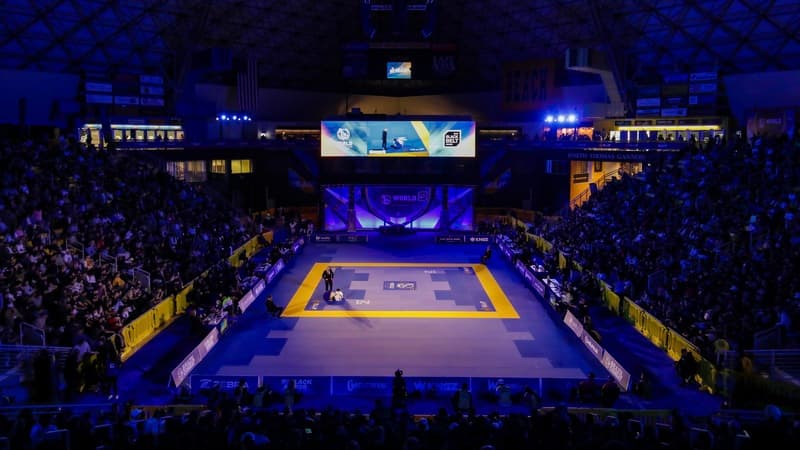
Main photo: Checkmat Brasil.
The takeaway
Checkmat's name points to a recognizable idea about grappling, while its history connects a group of teachers and a wider competition team. Neither requires a beginner to arrive with an advanced game or a list of famous athletes memorized.
Identify the local program, contact the instructor, and try the right class. The team connection becomes more meaningful when it leads to actual instruction and people you train with regularly. That is where the patch starts to acquire a personal history of its own.
Find your next class
Search the gym directory, then confirm the school's current affiliation and the session suitable for your experience.
FAQ
What does Checkmat mean? The team's published material connects the name to chess and the similarities between strategic exchanges in chess and jiu-jitsu. It is the name of an international team, not a separate set of competition rules.
When did Checkmat begin? The Checkmat Brazil history dates the team's formation to 2008 and names Leo Vieira, Ricardo Vieira, Leandro Vieira, Chico Mendes, and Sebastian Lalli in its beginning.
Do I need competition experience to join? Ask the local academy about its beginner program. Some affiliates explicitly welcome people with no previous martial arts experience. A team's elite competitors do not establish an entry requirement for every class.
Can I visit any Checkmat gym with my membership? Confirm with the receiving school. Shared affiliation does not automatically mean free access, reciprocal membership, or permission to attend every session. Agree on the class and fee before arriving.

Kit Langford
Kit Langford covers the louder parts of jiu-jitsu — the marketing claims, the arguments, the gear that promises more than gear can deliver. The jokes are expected to survive a fact-check.
Related Posts

Mikey Musumeci gives up the belt to make room for MMA
Musumeci is vacating his UFC BJJ title to focus on MMA training. What he is leaving, what continues, and why the transition matters.
IBJJF membership: finish the paperwork before the deadline
IBJJF membership and tournament entry are separate steps. Plan documents, professor approval, renewals, and junior accounts before registration closes.
Choosing a BJJ seminar worth your time and travel
Choose a BJJ seminar by the subject, teaching format, access, and total cost. Know what to ask the host before buying a ticket.
Comments (0)
Loading comments...