
Buying a used BJJ gi: what the listing leaves out
Quick answer: Judge a used BJJ gi by its current condition and measurements, not the original size label or retail price. Ask for clear photographs of high-wear areas and compare the garment with one that fits you. Confirm your gym's uniform policy and the competition rules before buying it for either purpose.
A used gi advertised as nearly new may have spent more time in a hot dryer than on a mat. Its seller can be perfectly honest about the number of classes and still be describing a garment that fits differently from the day it left the shop.
Secondhand gear can make sense. The useful question is what you are buying now: an actual jacket and pair of trousers, with a particular fit and a particular amount of life left. The manufacturer's launch photograph has already completed its part in the transaction.
Decide what the gi needs to do
Start with the purpose. A spare for ordinary classes, a first uniform while you decide whether to continue, and a competition gi are different purchases. Write down the requirement before a discount persuades you to acquire something that solves a less useful problem.
For training, ask the academy about colors, patches, and permitted repairs. A functional garment may still conflict with a school's uniform expectations. That conversation is easier before money changes hands, especially when the seller does not accept returns.
Competition adds a separate inspection standard. The IBJJF uniform page says gis cannot have mending or tears and must meet its other requirements. A jacket that your coach accepts for class is therefore not automatically a suitable tournament purchase. Other organizers may publish different standards.
Avoid describing a used gi as approved simply because the same model appeared at an event. Approval concerns the garment presented for inspection, including its fit and condition. The version in your shopping cart has a history the product model cannot answer for.
Ask for measurements taken now
The size printed inside the collar is a clue, not the final measurement. Fabric can change through use and laundering, and people measure clothing differently. Ask the seller to lay the gi flat and show where the tape begins and ends.
Useful comparisons include jacket width, sleeve span, trouser length, and the waist arrangement. You do not need to invent a universal sizing system. You need the seller's measurements to use the same method as a gi you already know fits.
If you have no gi to compare, ask your academy whether you can try an appropriate loaner or consult the current manufacturer's chart. Our guide to choosing a BJJ gi explains why the cut matters alongside the letter and number on the label.
Treat missing measurements as unresolved information. “Fits like an A2” can mean exactly what the seller believes and still tell you very little. A short photograph showing the tape may prevent a much longer exchange about why the trousers stop above your ankles.
Look where people actually grip
A full-length photograph is useful for the overall shape. It is less useful for judging the places where wear tends to become apparent. Ask for close views of the collar, cuffs, armpit seams, knees, and trouser closures, with enough light to see the fabric rather than a filter.
You are looking for visible damage and the condition of stitching, not trying to diagnose the garment's future from a photograph. Thinning material, separated seams, and frayed edges deserve a closer inspection. Ask about anything that looks repaired instead of assuming the darker line is a harmless shadow.
The following details are worth requesting together:
Front and back photographs of the jacket and trousers.
Close views of worn areas, repairs, and the care label.
Current flat measurements using an agreed method.
Confirmation that the drawstring and any included belt are actually part of the sale.
The seller may not have photographed every detail because nobody asked. Be specific and courteous. You are evaluating a purchase, not conducting a cross-examination over a pair of cotton trousers.
Separate staining from structural wear
A faded patch, a discolored collar, and a torn seam are not the same issue. Decide what cosmetic wear you are comfortable wearing, then separately consider whether the garment remains suitable for training. Do not allow a bright white jacket to distract you from a weak cuff.
Photographs cannot establish that an item is clean or free of an unwanted smell. Ask how it has been washed and stored, and whether there are persistent odors or stains. If you can inspect it in person, do so before agreeing that its condition matches the listing.
Avoid treating a promised special wash as proof that a damaged or questionable garment will become acceptable. You cannot verify a cleaning claim from a sales description. If the item arrives in a condition you would not comfortably take onto a shared mat, resolve that before wearing it.
The same restraint applies to repairs. Some minor issues can be discussed with a competent tailor and your academy. Others make the purchase poor value. Include the likely cost and uncertainty rather than assuming every defect is an easy fix.
Ask about the care history without demanding a biography
A concise question about washing and drying can reveal more than a long discussion of the previous owner's training intensity. Ask whether the gi was tumble-dried, whether it was deliberately shrunk, and whether the jacket and trousers still match the original set.
Manufacturers' care guidance varies by product. For example, FUJI's Ultra Lite 300 product information recommends cold washing and hanging the gi to dry. That is guidance for that product, not a reason to assume every used gi has received the same treatment.
Read the actual label on the garment you are considering. If it has worn away, ask whether the seller can identify the model accurately enough to locate its instructions. Do not buy a badly fitting jacket on the assumption that a particular wash will reliably resize it.
The most useful care history is modest and concrete: what was done, whether the fit changed, and whether any problem remains. A seller's confidence that the gi is indestructible is less valuable than a clear photograph of the seam you asked about.
Compare the complete cost
The advertised price is only the first number. Add shipping, any transaction fee, and the cost of a missing drawstring or other required part. If a repair is necessary, obtain a realistic estimate rather than mentally assigning it a convenient price of zero.
Then compare the total with a new alternative that meets the same need. The fair comparison is not always the used gi's original premium retail price. A less expensive new model with a return policy may compete directly with it as a practical training uniform.
Suppose, hypothetically, a used gi costs forty dollars and requires twenty dollars in shipping and alterations. Its useful comparison is a sixty-dollar purchase with uncertain fit, not a forty-dollar bargain. Whether that is worthwhile depends on the alternatives available to you.
A good deal does not require the lowest possible number. It requires a price that makes sense for the actual condition, fit, and protections in the transaction. Leave room for the possibility that the right purchase this week is no purchase at all.
Agree on the transaction before paying
Keep the description, photographs, and agreed measurements together. If you are using a marketplace, understand how its payment and dispute process works before moving the conversation elsewhere. Do not assume that every way of sending money offers the same recourse.
Ask whether returns are accepted and what happens if the item differs materially from the description. A private seller may be unwilling to accept a return just because the cut does not suit you. That makes the earlier measurement work more valuable, not less.
For an in-person exchange, arrange a sensible public meeting and leave enough time to inspect the item. Avoid feeling obliged to buy because somebody has traveled. Equally, do not agree to a meeting you have no intention of attending. Clear communication saves both people an irritating afternoon.
Keep the discussion focused on the garment. You do not need the seller's private training history or an argument about their belt. The evidence that matters is the condition of the gi and whether the transaction matches what was agreed.
Give it a proper first check at home
Open the package promptly and compare it with the listing while the details are fresh. Check both pieces, the measurements, and any areas that were described as worn. If something is wrong, document it before altering or laundering the item and follow the seller's or platform's process.
Once you have accepted it, clean it according to the relevant care instructions before taking it to class. Try it on again after laundering. Move through ordinary comfortable positions and notice whether the sleeves, trousers, or closures create a problem.
Do not make a tournament the garment's first real outing. A normal class gives you an opportunity to find an annoying drawstring, restrictive shoulder fit, or other practical issue when replacing the gi is still easy. Ask your coach about anything that affects suitability.
For the longer view, our guide to repairing or replacing a gi helps separate a tolerable cosmetic change from a reason to stop using it. Secondhand equipment deserves the same ongoing inspection as something bought new.
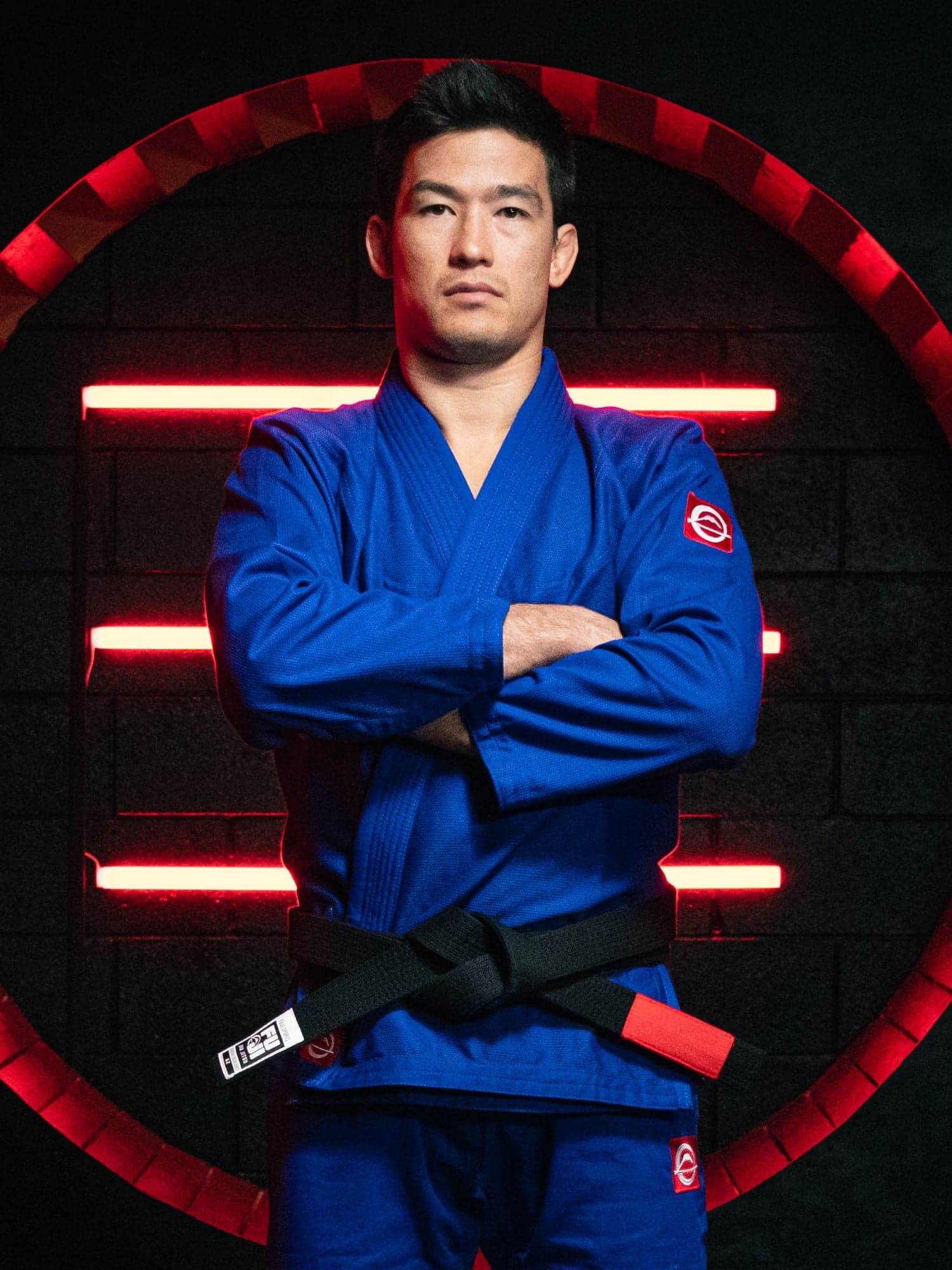
Main photo: FUJI Sports; product photograph illustrating a gi, not a secondhand listing.
The takeaway
A used gi can be a sensible purchase when its present measurements, visible condition, and total cost fit a clear purpose. Ask for the details that a standard listing leaves out, and judge competition suitability separately from ordinary training use.
The goal is a uniform you can wear without an unresolved problem following you into every class. If the seller cannot answer the questions that determine fit or condition, keep looking. There will be another gi with an enthusiastic description.
Check the uniform before your first visit
Find a nearby academy through Let’s Roll, then ask its staff which uniforms and repairs they accept before buying for that room.
FAQ
Is a used BJJ gi worth buying? It can be if the fit, condition, and full cost suit your needs. Compare it with a suitable new option, including return terms. An impressive original retail price does not establish present value.
Should I trust the size on a secondhand gi? Use it as a starting point. Ask for current measurements and compare them with a garment that fits you. Washing, drying, and differences between models can make the label an incomplete guide.
Can I compete in a repaired gi? Check the organizer's rules. The IBJJF prohibits mending and tears in its uniform requirements. A repair accepted at your academy does not establish that the gi will pass a competition inspection.
Should I wash a used gi before training in it? Yes, follow the garment's care instructions after checking and accepting its condition. If it arrives unlike the listing, document and resolve that issue first rather than changing the item immediately.

Kit Langford
Kit Langford covers the louder parts of jiu-jitsu — the marketing claims, the arguments, the gear that promises more than gear can deliver. The jokes are expected to survive a fact-check.
Related Posts

Mikey Musumeci gives up the belt to make room for MMA
Musumeci is vacating his UFC BJJ title to focus on MMA training. What he is leaving, what continues, and why the transition matters.
IBJJF membership: finish the paperwork before the deadline
IBJJF membership and tournament entry are separate steps. Plan documents, professor approval, renewals, and junior accounts before registration closes.
Choosing a BJJ seminar worth your time and travel
Choose a BJJ seminar by the subject, teaching format, access, and total cost. Know what to ask the host before buying a ticket.
Comments (0)
Loading comments...