

The purple belt plateau: why progress stalls and what fixes it
Quick answer: The purple belt plateau is the stall that hits when you're good enough to survive almost anyone in the room but not good enough to beat the browns and blacks, and the weekly improvement you got as a beginner has quietly stopped. It happens because your A-game has been solved, your gains are no longer visible, and purple usually lands at the busiest stretch of adult life. The fixes are narrowing your game rather than widening it, deliberately starting in bad positions, changing partners, giving yourself a competition deadline, teaching, and staying for another eighteen months.
The hardest belt to wear turns out to be the one everyone told you was the best belt to have.
Purple is supposed to be the good part. You have a guard that works and a pass that works and you don't get flattened by the athletic new blue belt anymore. Then somewhere in the first year of wearing it, a lot of people notice they haven't gotten better in months.
It's common enough to have a name in most academies, and it's the second big attrition point after the blue belt exodus. Here's what drives it, and what the people who got through it did.
The plateau isn't "I stopped improving"
Describe it accurately first, because the wrong diagnosis gets the wrong medicine.
Purple belts are almost always still improving. What stopped is noticing. As a white belt, every month produced an obvious change: the first time you swept a blue belt, the first armbar you hit on someone trying, the week mount escapes stopped being a coin flip.
At purple, the improvements are two inches of hip position and half a second of timing. They're real. They don't feel like anything, and they're invisible to everyone including you. So the plateau is a measurement problem sitting on top of a genuine slowdown. Only one of those is fixable with a training change.
Your A-game got solved
Here's the mechanical version. You spent four or five years building a game that works: a guard you trust, one pass, two submissions, a set of scrambles that reliably beat white and blue belts. That game is why you're a purple belt. From here it's also a liability.
Brown and black belts don't beat you with athleticism. They beat you by recognizing your entry in the first fifteen seconds and removing the one grip the whole thing depends on. The upper belts in your gym know you go to the same hook every time, because they've watched you do it in the 6pm class for two years. Meanwhile you've stopped smashing lower belts, because they've adapted too.
That's the miserable middle. Too good to get wrecked, not good enough to win, and no longer surprising anybody.
Purple belt arrives at the worst possible moment
There's a scheduling problem no one built on purpose.
The IBJJF's graduation system sets a minimum age of 16 for purple, 18 for brown, 19 for black, and a minimum of a year and a half at purple before brown. Add the years most people spend at white and blue and the arithmetic puts a typical adult past four or five years of training before they ever tie on purple, often well past. (The IBJJF has since dropped the minimum period for adult blue, purple, and brown belts who win an adult World title, which is a decent reminder that these numbers are floors for administrators, not a schedule for you.)
Five years in means you're five years older than the person who fell in love with this. For most hobbyists that's the stretch where the first kid arrives, or the promotion with travel attached, or the parent who needs looking after. The six-day-a-week purple belt is usually someone whose life allowed six days, and lives change.
Then the body. In a 2017 survey of 140 US practitioners published in Sports, white and blue belts most often reported hand and finger injuries, while at purple and brown the knee had climbed to the top of the list. The injuries stop being jammed fingers and start being the kind that cost you six weeks and change what you're willing to play.
Narrow the game. Do not widen it.
The instinct at purple is to add. New guard, new instructional, new leg lock system, the entire back catalogue of whoever is winning right now. It's the most common mistake at this belt. Adding leaves you with eleven mediocre things instead of four good ones, and it feels like work while producing nothing.
Narrow instead. Pick one position and make it absurd. Not "half guard" — pick deep half from knee shield when they're standing, and spend three months there. Every round from there. Every drilling block from there. Keep a list of the specific ways people beat you and solve them one at a time. Three months of that gives you a position browns and blacks have to respect, which is a different life than being generically decent everywhere.
Our guide to building a BJJ game has the full structure. The purple belt version is: subtract, then go deep.
Lose on purpose, for a whole block
The other version of narrowing is picking what you're worst at and living there. Spent five years avoiding bottom side control? Start every round in bottom side control. No takedown? Start standing and refuse to pull guard for eight weeks. Back defense held together by prayer? Give people your back on purpose.
You will lose, a lot, and for about six weeks you'll be measurably worse than you were while blue belts start beating you. That isn't a side effect, it's the mechanism. The plateau feels flat because you built a game engineered to avoid the exact positions where learning is still available.
One practical warning: tell your coach and your regular partners what you're doing, or half the room will assume you fell off a cliff.
Change the room, not the art
Same twelve people, same three rounds, same 7pm slot, five years running. Of course it plateaued. Concrete changes, easiest first:
Train a different class. The morning crowd is a different population from the evening crowd, with different games and different intensity.
Go to open mats at other gyms. A stranger doesn't know your setups, so you find out fast whether your game is good or just familiar.
Ask the two people who beat you most to roll every week. Not the ones you can beat. The ones who solve you.
Travel and drop in. A week of training somewhere else does more for a stale purple belt than a month of instructionals.
If the gym itself is the problem, no upper belts and no one pushing you, that's worth admitting too. Changing academies is allowed and it isn't betrayal.
Put a date on the calendar, then teach the thing
Two levers, working for different reasons.
The deadline: sign up for a tournament eight to twelve weeks out and pay the entry fee. A registered bracket converts vague training into a block. Suddenly there's a reason to fix your takedown, cut the fluff, and roll hard with the people who beat you. Purple divisions are smaller and sharper than white belt divisions, which is the point.
The teaching: ask your coach for a class, or take the white belts through basics on a Saturday. Teaching exposes every part of a technique you were doing by feel and couldn't explain. Most purple belts who start teaching say the same thing, that their own fundamentals got audited whether they wanted it or not.
The boring answer is eighteen more months
Everything above helps. None of it is the actual answer.
The actual answer is that you keep going, and a year or eighteen months later you notice you're catching people who used to catch you, and you can't name the week it changed. Every brown belt has this story. It's the least satisfying advice in jiu-jitsu and it has the best track record.
Which brings up the thing people don't say out loud: some people quit at purple, and it isn't a moral failure. The reasons blue belts quit are mostly ego and expectation. The reasons purple belts quit are usually arithmetic. Four hours a week for another three years, a knee that's already unhappy, kids who need collecting at six. Someone who trained for six years, got good, and stopped because their life changed did not fail at jiu-jitsu. They did jiu-jitsu.
The ones who stay didn't out-discipline anybody. They made training cost less: fewer sessions but protected ones, one project at a time, three rounds instead of six, an honest conversation with their coach about what they can give this year.
The takeaway
The purple belt plateau isn't a sign you've hit your ceiling. It's the predictable result of an A-game that's been solved, feedback that's gone invisible, and a life stage that got heavier. All three are structural, which means none of them are about how much you want it.
Fix them structurally. Narrow to one position for a quarter instead of adding five. Start where you've been avoiding and eat the losses. Roll with different people in a different room. Put a bracket on the calendar. Teach something. Then keep showing up while the returns are invisible, because invisible returns are still returns and they land on the ledger about eighteen months later.
And if the real answer this year is two classes a week instead of five, take the two. Purple belts rarely quit because they trained too little. They quit after trying to train like the version of themselves who had more time, failing, feeling like a fraud, and stopping entirely.
Make the invisible progress visible
The plateau is partly a measurement problem, and measurement is solvable. Log your sessions on Let's Roll and in six months you'll have an actual record of what you worked on instead of a vague feeling that nothing changed.
FAQ
How long does purple belt take in BJJ? Most people spend two to three years there, and the range is wide. The IBJJF sets a minimum of a year and a half at purple before brown plus a minimum age of 18, but those are administrative floors, not targets. Our guide to purple belt requirements covers what coaches look for.
Is purple belt the hardest belt in jiu-jitsu? Plenty of practitioners say so, and not because of technical difficulty. Purple is where visible weekly improvement ends, where your existing game stops working on the people above you, and where adult life is usually busiest. Brown gets described as easier, because by then the plateau has been survived.
Why did I stop improving at purple belt? Usually you didn't. Improvement at purple is small timing and positioning changes rather than obvious breakthroughs, so it stops feeling like progress. The genuine part of the slowdown is that a game built to beat lower belts gets read and shut down by higher ones, and that's fixed by going deeper on fewer positions rather than adding more.
Should I compete as a purple belt if I've never competed? It's one of the more reliable ways out of a stall, because a registered bracket eight to twelve weeks out turns aimless training into a block with a deadline. Purple divisions are smaller and much sharper than white belt divisions, so expect fewer matches and harder ones. Treat the result as information.
Related Posts

Mikey Musumeci gives up the belt to make room for MMA
Musumeci is vacating his UFC BJJ title to focus on MMA training. What he is leaving, what continues, and why the transition matters.
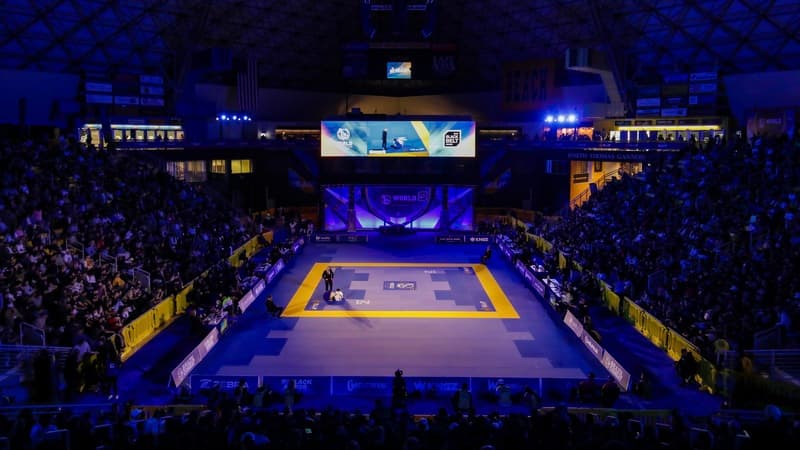
IBJJF membership: finish the paperwork before the deadline
IBJJF membership and tournament entry are separate steps. Plan documents, professor approval, renewals, and junior accounts before registration closes.
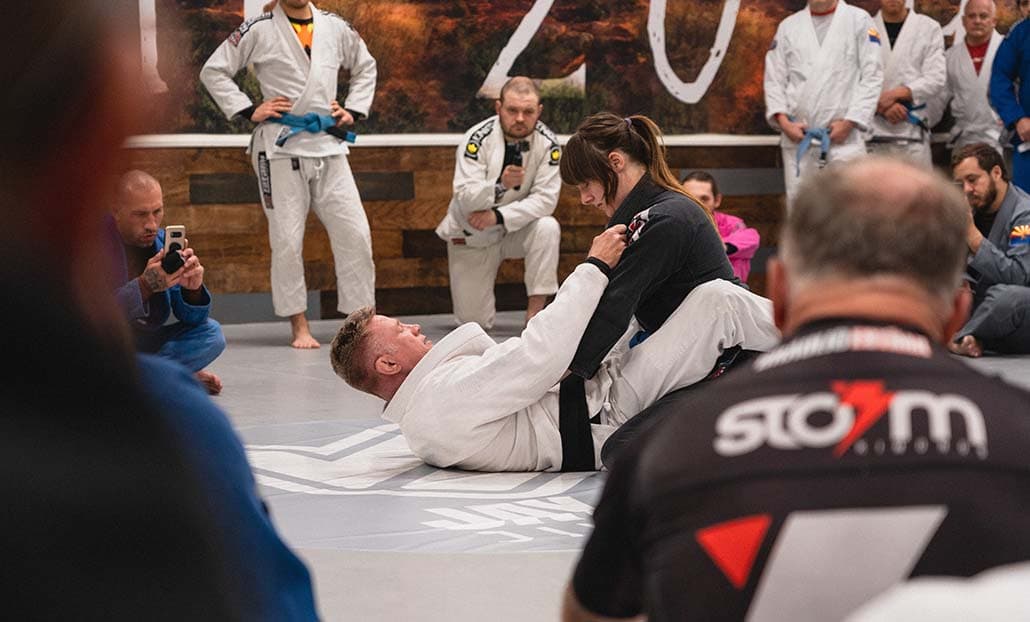
Choosing a BJJ seminar worth your time and travel
Choose a BJJ seminar by the subject, teaching format, access, and total cost. Know what to ask the host before buying a ticket.
Comments (0)
Loading comments...