
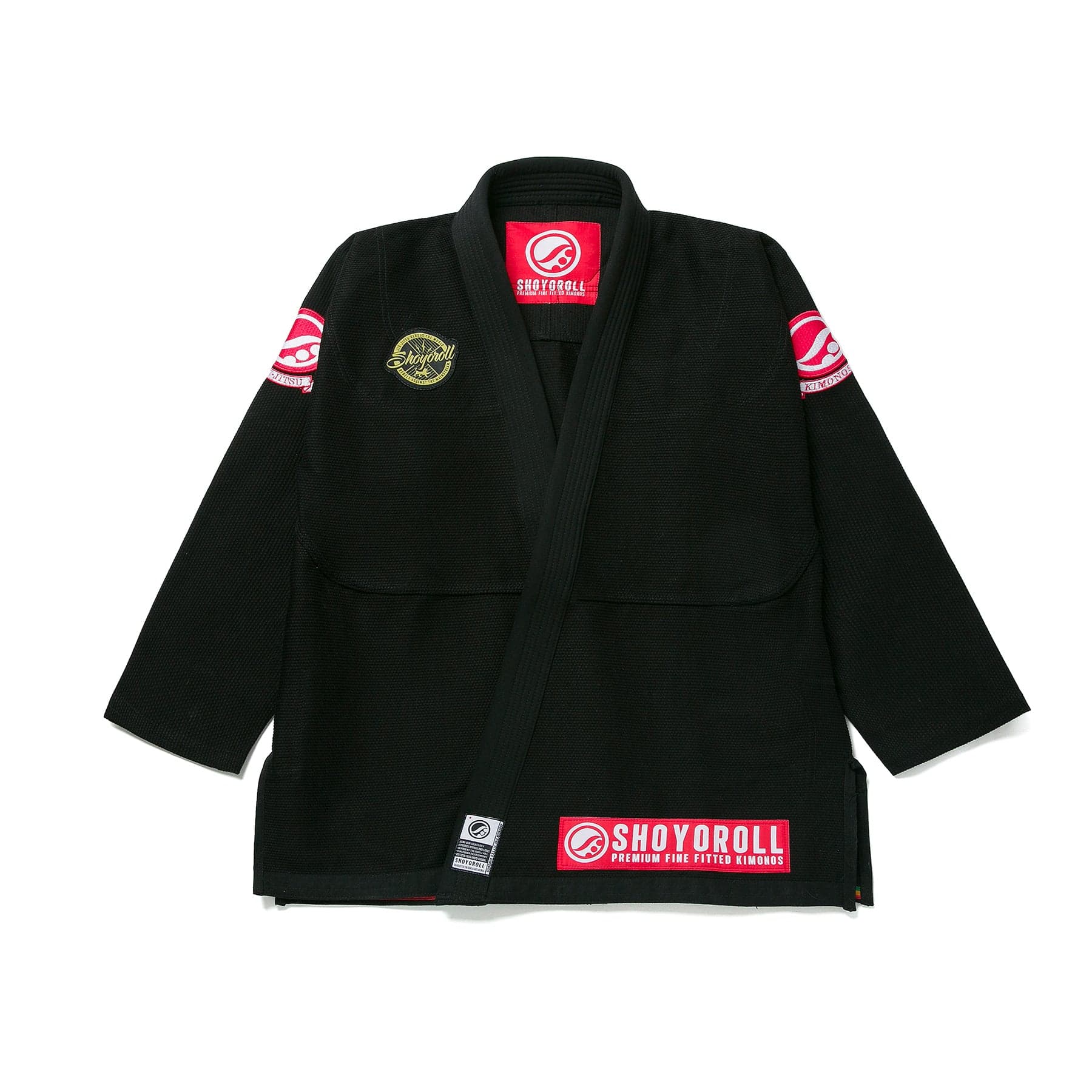
The limited-edition gi still has to survive laundry day
Quick answer: A limited-edition BJJ gi can be worth buying because you enjoy the design, but scarcity does not answer questions about fit, care, or where you can wear it. Decide whether you want a training uniform or a collectible before paying. If it is for training, make sure you will actually be willing to wash and use it.
The release timer does not know your sleeve length. It will happily reach zero while you are still deciding whether an unfamiliar size chart applies to the jacket already hanging in your closet.
A special gi can be a pleasure to own. There is nothing inherently silly about caring how training clothes look, or enjoying the work behind a design. The trouble begins when the urgency of buying replaces the ordinary questions that make the purchase useful.
The uniform still has to accompany a person to class. It has to move with them, meet the relevant rules, and return from the laundry ready for another session. Limited availability does not grant an exemption from any of those jobs.
Decide whether this is equipment or a collection
Start with an honest answer about what you want. A gi purchased to wear several times a week has a different job from one purchased because it marks a collaboration, event, or personal interest. Both are recognizable reasons to buy something. Confusing them makes evaluation harder.
If the gi is equipment, judge it as equipment. The jacket and pants need to fit your training, not merely your preferred photograph. You should be comfortable with the idea that a partner will grip it and ordinary use will change its appearance.
If it is a collectible, give it a collection budget. Do not justify it by pretending it replaces a uniform you still need for class. A carefully stored jacket cannot also solve the problem of having nothing clean to wear on Wednesday.
There is room between those categories. You might own a special gi and wear it regularly because that is how you prefer to enjoy it. The useful distinction is your expectation, not a rule imposed by someone else about what a serious grappler is allowed to like.
Make the decision before the sale opens. A cart countdown is a poor place to discover that you have been shopping for two different things.
Compare the size chart with a uniform you already use
A familiar size label can create false confidence. Read the current product's measurements and fit guidance rather than assuming the label behaves exactly like the gi you bought several years ago.
Measure a clean uniform that fits you well, following the seller's stated measurement method where possible. Note how it fits after normal washing, not only how it looked on its first day. If the new product uses different jacket and pant sizing, evaluate both pieces.
Before ordering, check:
The model's actual size guide and any stated shrinkage allowance.
The jacket and pants measurements that matter for your proportions.
Whether an exchange is available if the chosen size is wrong.
Whether you would still buy the item if the size you prefer sells out.
That last question deserves an answer in advance. Buying the remaining size and planning to transform it later can turn an attractive purchase into an expensive experiment.
Do not make a hot wash the entire fitting strategy. Follow the garment's care label and ask the manufacturer about uncertainty. A jacket getting shorter does not promise that every other dimension will change in the direction you want.
The design needs somewhere to be worn
Before buying a distinctive color or heavily decorated gi, check the places where you intend to train and compete. An academy's clothing policy and a tournament's uniform requirements are separate matters. Permission in one setting does not establish permission in the other.
You do not need to turn a normal purchase into an investigation. Ask the academy about the proposed uniform, and read the current organizer's rules if competition is part of the plan. Provide a product link or clear photograph when asking about a specific detail.
A seller's description can help identify construction and design features. It should not replace the event's own requirements. If you expect to compete soon, leave enough time to resolve uncertainty before the gear check at the venue.
Some buyers will decide that a special gi is for ordinary training while another uniform handles competitions. That can be a perfectly workable division of use, provided the special one is welcome in the academy and the budget accounts for both.
The aim is to avoid purchasing a beautiful answer to a question your weekly routine never asks. Know where the gi will leave the hanger before choosing it for that role.
Read the care label before admiring the patchwork
The cleaning plan belongs in the buying decision. If a uniform needs care you cannot reasonably provide between classes, its design has not made it a better match for your week.
As an example, Shoyoroll's Competitor page includes care guidance on cold washing, gentle handling, and protecting patches or embroidery by turning the garment inside out. It also tells owners to check the instructions on the particular gi's label. This source was checked on October 10, 2026, as an update to the article's March publication date; it is a care example, not a claim about today's availability or a recommendation to buy that model.
Follow the instructions for the garment you actually own. Do not borrow a routine from another material simply because both items are called gis. If a mark or odor persists, ask the manufacturer about an appropriate cleaning method rather than improvising with harsh products.
Make enough drying time available for the next session. A special uniform does not become ready because it is the one you most want to wear. Keep a practical backup if your schedule depends on quick turnarounds.
The laundry is where the purchase stops being an image on a product page and becomes part of everyday training.
Count the amount leaving your account
Use the final checkout total, including the shipping and other charges shown to you, when deciding whether the purchase fits your budget. Comparing a headline price with the price of another item delivered to your door can make the difference look smaller than it is.
Also separate money already available for the hobby from money you are hoping to recover later. This article is not making a resale forecast. If you only feel comfortable buying the gi because you assume somebody else will eventually pay more for it, reconsider what you are asking the purchase to do.
A simple personal test is whether you would still want to own it if resale were unavailable. For a training uniform, ask the parallel question: would you still enjoy it after visible wear? Neither answer needs to satisfy a collector forum or a teammate.
Read the seller's actual return terms before ordering. Do not assume a limited release, a standard stocked item, and a secondhand purchase carry the same options. If something is unclear, ask while you still have a choice about buying.
Our guide to buying a used BJJ gi covers another route into gear ownership. A lower price can change the arithmetic, but it does not remove the need to assess fit and condition.
Let the first session make it ordinary
There is a peculiar point at which a new training item becomes too precious to train in. You have purchased equipment and acquired a museum policy.
If you intended to use the gi, inspect it, check the fit, and follow the manufacturer's preparation and washing instructions. Keep the order details and contact the seller promptly if something is wrong. Once it is ready and appropriate for class, let it do the job you bought it to do.
A partner should not have to modify normal, permitted gripping because a patch is special. You can care for the uniform without making everyone around you responsible for preserving its retail condition.
Pay attention to practical issues during that first session. Does a seam irritate you? Does the jacket stay arranged as expected? Are the pants comfortable through the movements your class uses? Those observations matter more than whether someone recognizes the release.
If the answer is that you prefer to preserve it, admit that and reclassify the purchase. There is no need to invent a technical reason for keeping a collectible. Just make sure your ordinary training needs remain covered.
A missed release should not rewrite the training week
If the item sells out, pause before treating the loss of an option as a new emergency. You can like a design and still decline the next available route to owning it.
Return to the questions you answered before the sale. Did you need a training uniform, want a particular artwork, or enjoy the anticipation of the release? Each answer suggests a different next step. Only the first necessarily leaves an equipment problem to solve.
Consider these alternatives without ranking them for everyone:
Buy a readily available gi that meets the actual training need.
Wait for a design you like in the right size and within budget.
Keep using the suitable equipment you already own.
There is no technical penalty for choosing any of those options. Your coach's next lesson will not require proof that you successfully checked out during a crowded online sale.
The pleasure in a special gi is real enough without turning scarcity into a command. A purchase can remain optional even when the product description is very good at making the moment feel final.
Main photo: Shoyoroll; The Competitor product photograph, illustrative gear image.
The takeaway
Buy a limited-edition gi for a reason you are willing to name. Enjoying its design is a valid reason. Expecting it to fit, wash well under its stated care instructions, and serve your intended training is a separate set of requirements worth checking before payment.
If you plan to wear it, let the purchase become ordinary equipment once it is ready for class. If you plan to collect it, budget accordingly. Either choice is clearer than owning a uniform that is too precious to use and too inconvenient to justify.
Put the uniform to use
Find local open mats on Let's Roll, then confirm the host's visitor and clothing policies before bringing a new gi into the room.
FAQ
Are limited-edition BJJ gis better for training? Limited availability alone does not establish better fit or construction. Judge the specific garment, its care requirements, and whether it suits the classes you attend.
Should I buy a different size if mine sells out? Only if the actual measurements and fit guidance support that choice. Do not assume washing or alterations will reliably turn the remaining size into the one you needed.
Can I compete in a special-edition gi? Check the current rules for your event and the actual garment. A product's popularity or acceptance at your academy does not settle tournament eligibility.
Is it wasteful to keep a gi as a collectible? That is a personal spending choice. Be clear that it is a collectible, budget for it as such, and do not count it as solving a shortage of usable training clothing.

Kit Langford
Kit Langford covers the louder parts of jiu-jitsu — the marketing claims, the arguments, the gear that promises more than gear can deliver. The jokes are expected to survive a fact-check.
Related Posts

Mikey Musumeci gives up the belt to make room for MMA
Musumeci is vacating his UFC BJJ title to focus on MMA training. What he is leaving, what continues, and why the transition matters.
IBJJF membership: finish the paperwork before the deadline
IBJJF membership and tournament entry are separate steps. Plan documents, professor approval, renewals, and junior accounts before registration closes.
Choosing a BJJ seminar worth your time and travel
Choose a BJJ seminar by the subject, teaching format, access, and total cost. Know what to ask the host before buying a ticket.
Comments (0)
Loading comments...