
Buying BJJ gym merch without buying a second uniform problem
Quick answer: Decide whether gym merchandise is for training, everyday wear, or a souvenir, then check the exact garment and size. Confirm pickup or delivery and any special return conditions. Buying the logo does not automatically buy an approved uniform for every class.
The gym shirt has a demanding job description. It may be expected to support the academy, commemorate a trip, fit under a jacket, and somehow survive as no-gi kit. A cotton souvenir can reasonably decline the last assignment.
I like the ordinary reason people buy these things. A small object can remind you of a place you enjoyed, or put a familiar team name into the rest of your week. The purchase becomes less satisfying when nobody checks which kind of garment is actually being sold.
Give the garment one primary job
Start with where you intend to wear it. An everyday T-shirt, a rashguard, and an academy gi are different products even when the same artwork appears on all three. Compare their fit and care requirements as clothing, rather than treating the crest as the complete specification.
If the item is for training, ask the academy whether it meets the relevant class policy. A garment sold by a gym can still be lifestyle merchandise. A team shop can carry several categories without implying that every one belongs on the mat.
If it is a souvenir, it does not need to solve an equipment shortage. Buying something because the design means something to you is a coherent decision. Calling it necessary kit simply hides the budget choice and can leave you with no useful replacement for the item you actually needed.
The same distinction helps with gifts. Ask whether the recipient wants a particular academy's clothing, and whether they need training gear or everyday wear. A surprise becomes less charming when it comes with a uniform problem to solve.
The academy logo does not standardize the fit
Read the chart for the garment in front of you. A gym may source different products from different manufacturers or change suppliers between runs. A medium shirt bought years ago does not establish the dimensions of the new release.
Ask whether the chart describes body measurements or the finished garment. Those are different kinds of information. Comparing a favorite shirt laid flat with a body-size recommendation can produce an answer that looks precise while measuring the wrong thing.
For a gi or rashguard, consider how it will be used. A standing photograph cannot show whether the item stays in place through the movements you need. If trying it on is possible, ask how to do that without compromising the item's condition or return eligibility.
Our rashguard-fit article looks at that practical test. The useful principle applies to other merchandise too. You are buying a particular garment with a logo on it, rather than a logo that will somehow arrange the garment around your body.
Pickup and delivery are different promises
An online shop attached to an academy does not necessarily mean stock is available at reception. Ask whether the product is held locally, shipped by a supplier, or produced after orders close. The answer matters if you expect to wear it during a short visit.
Carpe Diem's visitor page describes hotel delivery from its online store in Japan and identifies special conditions, including no returns or exchanges for hotel deliveries. That is a concrete example of delivery convenience coming with its own terms.
Keep the delivery date and the stay together. A hotel willing to receive a parcel still needs the guest name, booking details, and a plan if the parcel arrives after checkout. Ask the accommodation before using its address, and ask the seller what timing it can actually support.
If pickup is available, confirm the place and hours. A training timetable is not automatically a shop-opening schedule. The person teaching the late class may not be the person who can locate, exchange, or release an online order.
A preorder is a small project
A limited order can make sense for a gym. Producing only the requested sizes may reduce leftover stock and make an unusual design possible. That sensible business choice still changes what the customer should expect.
Find out when the order closes, when production is expected, and how updates will be sent. An estimated dispatch date is different from an arrival promise. If the item is meant for a tournament or trip, ask what happens if it is not ready in time.
Do not assume a size exchange will be possible after a custom run. FUJI's refund policy, for example, identifies custom and personalized team products among its ordinary return exclusions. Read the terms of the actual order before relying on a general retailer policy.
Our gear-preorder article covers the wider purchasing question. The useful approach is to treat the order as something awaiting production, rather than an item already on a shelf that happens to take longer to reach you.
Supporting the gym does not require guessing
People sometimes treat asking the price or return terms as an expression of distrust. I think that gives ordinary shopping a ceremonial burden it does not need. You can want the academy to do well and still ask what the product costs delivered.
The gym has costs too. Artwork, printing, storage, payment handling, and staff time can all sit behind an order. A small run need not match the price of a mass-market shirt to be fairly offered. The relevant question is whether the terms and item work for you.
Keep the choice voluntary. Buying every release is not a reliable measure of loyalty, and declining a purchase does not erase the membership you already pay. A student can support an academy in several ways without converting every announcement into another basket.
If the merchandise funds a stated project or charity, read what the organizer actually says. Do not invent a donation percentage or assume the whole sale goes to the cause. Share the published wording accurately if you help promote it.
Inspect the complete order
When you collect the item, check its model, color, size, and quantity against the confirmation. If several teammates are collecting together, keep orders identified until each person has checked theirs. A shared pile is an efficient way to create an accidental size swap.
Look at printing and visible condition before washing or wearing it. If something seems wrong, photograph the issue and contact the seller through the stated route. Distinguish a product supplied incorrectly from a change of preference about the design.
Keep the exact product and size confirmation.
Ask how the order is fulfilled and when it should be ready.
Read custom, preorder, pickup, and delivery conditions.
Check the item before removing tags, washing, or training.
If the order was organized informally by a teammate, make sure everybody knows who is handling corrections. A volunteer collecting names is not automatically responsible for manufacturing, refunds, or replacing an item ordered in the wrong size.
Let a souvenir be an ordinary object
A gym shirt does not need to prove that you belong to a place forever. You can have enjoyed a visit and keep the shirt after moving or changing schools. An object can record a real chapter without becoming a contract for the rest of your training life.
At the same time, respect the current academy's uniform policy. Ask where another team's garment is accepted if that question arises. The practical answer belongs to the host and the class, with no need to turn a change of shirt into an argument about loyalty.
Care for the item according to its label. Training frequency does not tell you how a print, embroidery, or fabric should be washed. Keep everyday merchandise separate from the assumptions you use for a different technical garment.
The successful purchase is often unremarkable afterward. You put it on because it fits, or see it and remember a good class. That is enough work for a shirt. It does not also have to explain your entire relationship with jiu-jitsu.
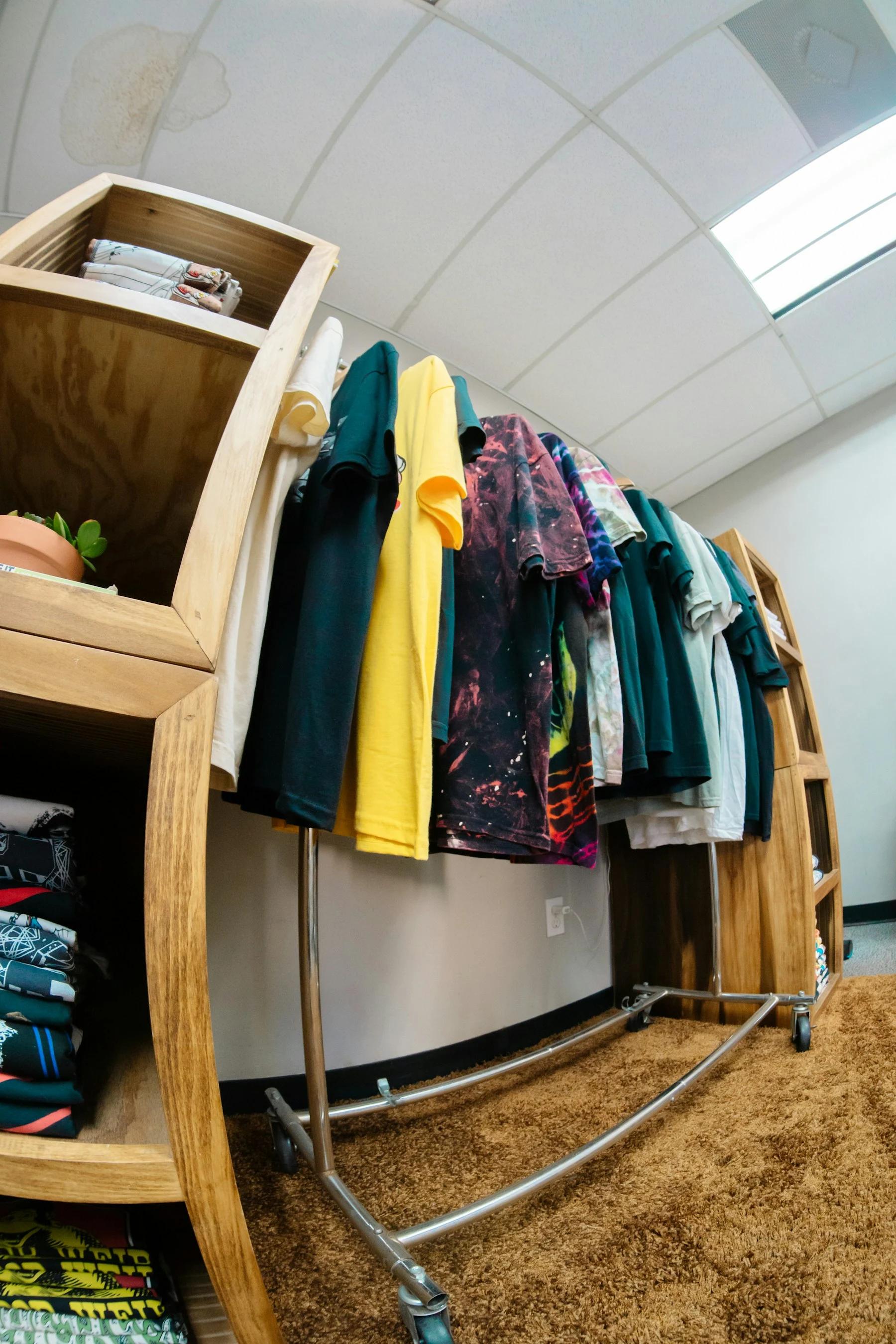
Main photo: Anthony Roberts. Printed T-shirts hanging on a retail rack. Illustrative photograph; does not depict a cited academy, product, or Let’s Roll writer.
The takeaway
Decide what the merchandise is for before deciding whether it is a good purchase. The exact garment, fit, and fulfillment terms matter even when you already trust the academy selling it. A familiar logo should make the object meaningful, rather than exempt it from ordinary checks.
Ask about the size and delivery, save the order, and check the item while a correction is still practical. Supporting the gym and shopping carefully can happen in the same transaction. Neither requires a speech at reception.
Find a room worth visiting
Use the gym directory to explore training options, then confirm the class before planning the souvenir.
FAQ
Can I wear a gym T-shirt for no-gi training? Ask the academy about its class policy and check the garment itself. Lifestyle merchandise and a training rashguard are different products, even when they share the same design.
Does an online gym shop guarantee pickup at reception? No. The order may ship from another supplier or be produced later. Confirm pickup location, availability, and the person handling the order before traveling to collect it.
Can custom team merchandise be exchanged? Read the specific terms. Custom and personalized products can be excluded from ordinary return arrangements, and a limited run may leave no spare size available.
Is it rude to ask what a gym preorder includes? No. Ask clearly about the item, price, expected production, fulfillment, and correction process. Those details help the customer and organizer work from the same understanding.

Kit Langford
Kit Langford covers the louder parts of jiu-jitsu — the marketing claims, the arguments, the gear that promises more than gear can deliver. The jokes are expected to survive a fact-check.
Related Posts

BJJ Black Friday gear: the saving has to survive checkout
Compare BJJ sale prices using fit, shipping, returns, and real need. A smaller discount can be the better purchase when the terms differ.

Freezing a BJJ membership: get the restart date in writing
Before pausing a BJJ membership, confirm eligibility, notice, billing, training access, and the restart date. A freeze is not a cancellation.

How to wash a BJJ belt and keep its fit
Check your BJJ belt’s care label, keep track of rank tape, and measure the ends after washing if you compete in the gi.
Comments (0)
Loading comments...