
The BJJ gi drawstring problem you can solve before class
Quick answer: A gi drawstring should hold the waistband securely without making the pants uncomfortable or impossible to untie. Before buying a replacement, check the pants’ fit, the routing through the waistband and loops, and the condition of the cord. A new string cannot fix pants that do not let you move.
A gi can survive years of gripping and still lose an evening to a missing drawstring. The fabric is fine. The knees are fine. One end of the cord has disappeared into the waistband, and suddenly getting dressed requires a small repair job.
The drawstring is easy to ignore until it becomes the most interesting object in the changing room. A few checks at home can keep it in its proper role: holding up your pants while you think about something else.
First identify which problem you actually have
Pants sliding down, a knot coming loose, and a cord refusing to move are different problems. Treating all three by pulling harder can turn a minor annoyance into a waistband that is uncomfortable and still unreliable.
Start with the pants untied. Check whether you can squat and bring a knee toward your chest without the fabric pulling sharply through the seat or thighs. If the pants restrict those movements before you tighten anything, the drawstring is not the main issue.
Next, inspect the cord and the route it follows. A section may be twisted, caught under a loop, or unevenly distributed so that almost all the usable length sits on one side. Lay the waistband flat and trace it slowly rather than yanking the short end.
Our gi pants fit guide covers the larger fit questions. Here, the aim is to separate a fastening problem from a garment problem before replacing a part that may still work.
Flat and round cords ask slightly different things of your hands
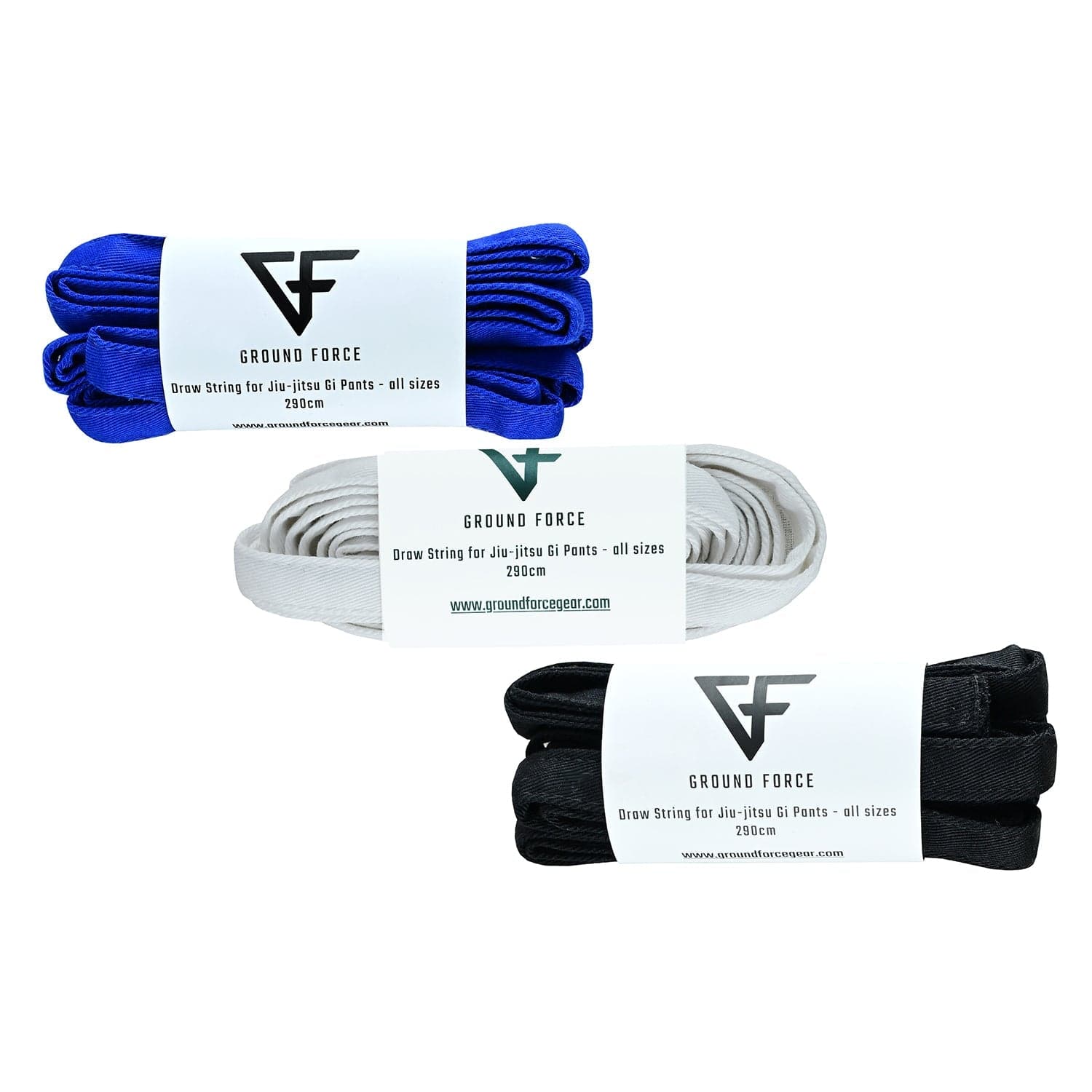
Replacement drawstrings are sold in more than one form. Ground Force offers a flat drawstring, while FUJI’s Australian store lists a bungee-style replacement cord. Those examples establish the options; they do not make either one the right choice for every pair of pants.
A useful comparison is how the cord behaves in your own waistband. Can you distribute the tension without twisting it? Does the knot sit comfortably? Can you loosen it after practice without a prolonged argument with the fabric?
Avoid treating a preference as a universal equipment rule. A familiar flat string may be perfectly satisfactory. A round cord may be easier for one person to handle and a poor fit through another waistband’s openings.
If you are replacing the original, ask the manufacturer which type and dimensions suit that model. The color is the easy decision. Length, thickness, and compatibility with the waistband deserve attention first.
Follow the pants’ routing rather than inventing a shortcut
Waistbands and loop arrangements differ. Before removing a cord, look closely at how it is threaded. A quick photograph of the original arrangement can save time when you reassemble it, especially if the openings are not symmetrical.
Use the intended channels and loops. Leaving out a loop because it is awkward to thread may move the knot or change where the waistband gathers. If the original route is unclear, ask the maker or someone familiar with the same model to show you.
Do not assume a video about another pair of pants applies exactly to yours. It may demonstrate a useful general method while using a different construction. Compare the actual openings and attachment points before copying it.
When the cord is back in place, check that both ends have enough working length and that the waistband can open normally. A replacement that technically passes through the channel but barely leaves room to tie is not ready for a training session.
Tie it, move in it, then decide whether it works
Test the fastening at home while wearing the pants as you would in class. Make a secure tie that you can release, then move through a few familiar positions at an easy pace. The waistband should remain where it belongs without demanding constant adjustment.
Notice whether the knot creates a hard lump in an uncomfortable place or whether long loops and ends hang where they can catch. Ask your coach to check an unfamiliar setup before rolling. Any adjustment should preserve the intended function of the garment.
A short test can answer several useful questions:
Does the waistband stay secure when you sit and stand?
Can you move your hips without the pants pulling against the tie?
Are the ends and loops contained appropriately?
Can you untie the cord without damaging it?
There is no prize for the most complicated knot. If your solution requires someone else to free you after every class, it needs another look.
Replace damage before it becomes a mat-side repair
Inspect the ends, the section that passes through the openings, and the area that repeatedly forms the knot. If the cord is fraying, narrowing, or visibly damaged, compare a suitable replacement rather than waiting for it to fail during a round.
Check the waistband, too. A damaged loop or torn channel is a separate repair. Threading a stronger cord through damaged fabric does not restore the fabric around it. A manufacturer or competent repair service can help assess whether the pants can be repaired sensibly.
Keep hard fittings, clips, and improvised fasteners out of a training solution. The waistband must remain appropriate for close contact with another person. If you cannot make the garment suitable, use another pair rather than asking a partner to work around an exposed repair.
For competition, confirm the organizer’s uniform requirements before altering equipment. A modification that seems convenient in your living room may not be acceptable at inspection. The event’s answer matters more than a product review.
A rethreading job belongs at home
If an end disappears inside the waistband, resist the urge to cut into the fabric immediately. First see whether the cord can be eased back through the existing opening. Work slowly so you do not drag the other end inside as well.
A purpose-made threading tool may help, but follow its instructions and remove every tool before wearing the pants. Do not leave a safety pin, needle, or other temporary aid attached as part of the finished setup. Check the full route afterward rather than assuming the tool emerged with everything intact.
If you cannot retrieve or replace the string without damaging the pants, stop and ask for help. Replacing a small cord is preferable to turning a serviceable waistband into a sewing project through impatience.
Keep the work separate from the training bag until it is finished. Half-repaired gear is easy to pack by mistake, particularly when it looks normal from the outside. A final movement and fastening check should happen before the pants return to the clean kit pile.
Laundry is a good time for a quick inspection
Follow the care label for the pants and any replacement cord. Avoid assuming that the original garment’s instructions automatically cover an aftermarket material. If the maker gives specific directions for the fastening during washing, follow those as well.
Before the next class, check that the cord is still accessible and the waistband opens as intended. That small inspection is easier while folding clean kit than while the instructor is waiting for the warm-up to begin.
The broader guide to washing a BJJ gi can help organize the routine. The drawstring check adds only a moment: look for damage, confirm the ends, and make sure the fastening is ready to use.
Do not store damp pants in a bag because the cord has become troublesome. Clean the garment appropriately and deal with the repair afterward. Equipment maintenance works better when one small problem does not postpone the rest of the routine.
Buy the spare that solves the likely failure
A compatible spare drawstring can be useful if this has been a recurring problem. Keep it with your clean equipment supplies, labeled if it fits only one model. A mystery cord that might be the right length is less helpful than it looks.
There is no need to turn every fastening into an upgrade project. If the original works comfortably, stays secure, and remains in good condition, replacing it because another option is fashionable adds a decision without solving anything.
When buying new pants, include the fastening in the fitting assessment. Check how it is routed and whether you can operate it easily. Product photographs tend to make every waistband look calm and cooperative; a movement test tells you more.
The purchase should leave you with fewer interruptions during training. That is a more useful standard than whether the cord looks more technical than the one it replaced.
Main photo: Ground Force; product photograph.
The takeaway
Diagnose the problem before replacing the drawstring. Check the pants’ fit, inspect the routing and fabric, and test the tie through ordinary movements. Choose a compatible replacement when the original is damaged or unsuitable.
Finish repairs at home, remove every temporary tool, and make sure the waistband is comfortable and secure before returning to class. The best outcome is a piece of equipment you can stop thinking about.
Bring the gear question to class
Find a BJJ gym near you and ask your coach to check unfamiliar equipment before you use it in live training.
FAQ
Is a rope drawstring better than a flat one? Neither is automatically better. Compatibility with the pants, comfort, ease of tying, and your ability to release the knot matter more than a general preference for one shape.
Can I replace a missing gi drawstring? Often, but check the manufacturer’s recommended type and dimensions. Inspect the waistband and loops before threading a new cord through them.
Why do my gi pants slip even when the string is tight? Check the overall fit and how the cord is routed. Pulling harder may not solve a fit problem or uneven tension, and it can make the waistband uncomfortable.
Should I try a new drawstring at a tournament? Test it during normal training first and confirm the event’s equipment rules. Competition day is a poor time to discover that a fastening is uncomfortable, unreliable, or unsuitable for inspection.

Kit Langford
Kit Langford covers the louder parts of jiu-jitsu — the marketing claims, the arguments, the gear that promises more than gear can deliver. The jokes are expected to survive a fact-check.
Related Posts
Competing in gi and no-gi on the same day takes two plans
Prepare for gi and no-gi competition on the same day with separate rule checks, complete outfits, schedule coordination, and a realistic second-bracket plan.
Jiu-jitsu in Montreal: build the visit around a real class
Plan BJJ training in Montreal around confirmed classes, language arrangements, winter travel, visitor policies, and equipment that is ready to use.
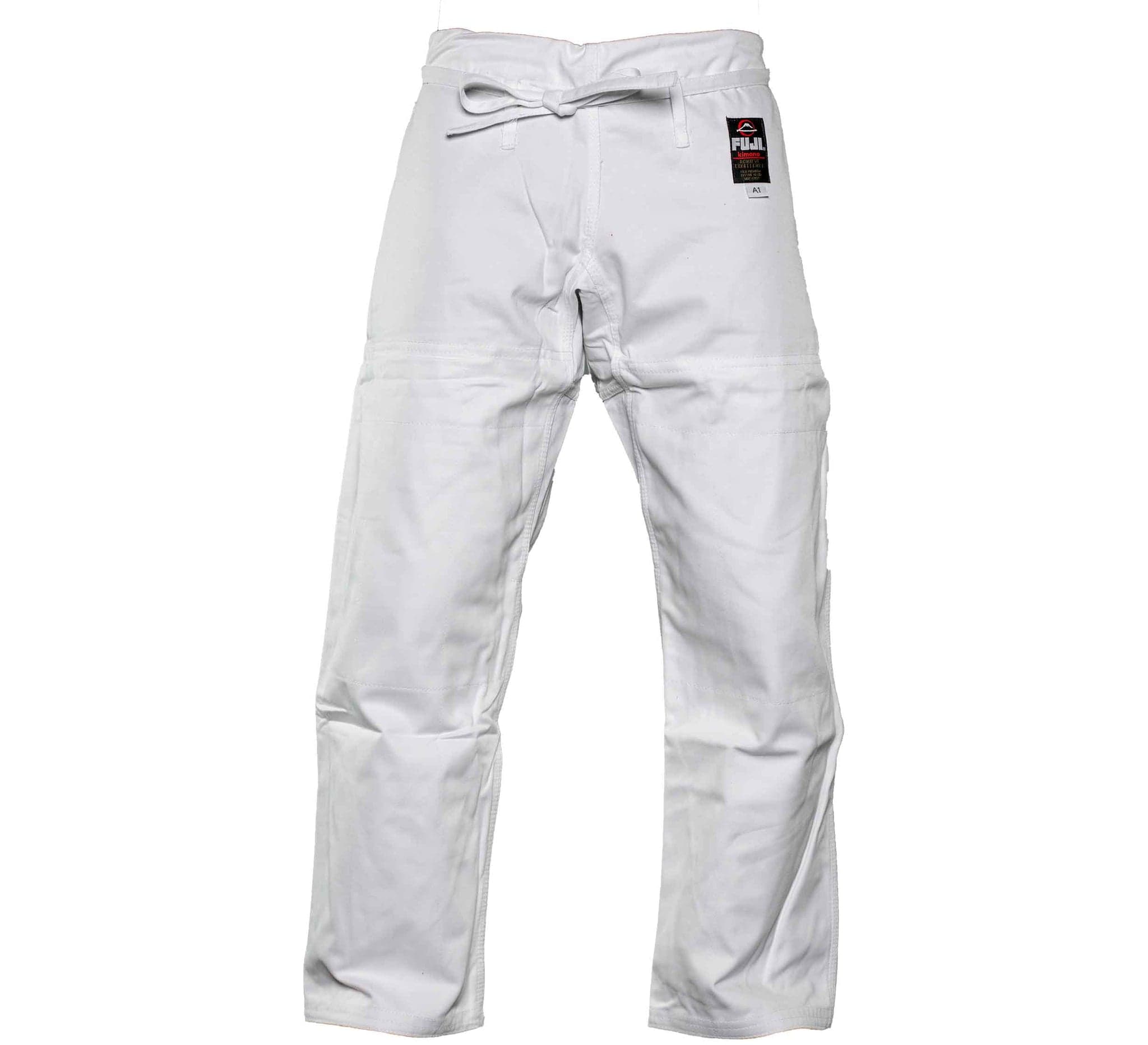
BJJ gi pants that fit standing up can still fail on the mat
Check BJJ gi pants at the waist, rise, knees, and cuffs so a good-looking size label becomes a uniform you can actually move in.
Comments (0)
Loading comments...