
BJJ is like chess, until somebody moves both pieces
Quick answer: Calling BJJ physical chess can help explain planning, threats, and responses, but the comparison has limits. Grapplers move simultaneously, deal with incomplete information, and have to make their plans work through contact, balance, and fatigue.
Chess is a useful comparison for jiu-jitsu until the person across from you moves several pieces at once and sits on your bishop. At that point, the metaphor needs supervision. It can still explain something about planning, but it has stopped describing the whole activity.
That is not a reason to retire it. It is a reason to use it more carefully. A good comparison makes one part of a subject easier to understand. It becomes less useful when it starts excusing every detail that refuses to fit.
The comparison gets planning partly right
Jiu-jitsu does involve choices that affect what becomes available next. An athlete can establish a grip because it supports a later action, threaten one route to invite a response, or abandon an immediate opportunity for a more useful position. That is a reasonable place to use the language of planning.
The trouble begins when planning is described as knowing exactly what another person will do several moves ahead. A partner can react unexpectedly, fail to react, or change the physical situation while the plan is still being assembled. The useful skill includes adjusting to that information.
A beginner does not need an elaborate sequence to start thinking ahead. One clear next action and an alternative when it is unavailable can be enough. The plan becomes valuable when it helps identify a decision in a real exchange.
Treat a sequence as a conditional proposal. If the position and response are present, this may be a suitable action. If they are absent, something else is required. That is less cinematic than predicting every move, but it is much closer to a training task a partner can actually help you practice.
The other person does not wait for a turn
A chess player ordinarily completes a move before the opponent makes theirs. Grapplers do not extend that courtesy. Both people can change grips, shift weight, and alter position at the same time. Your next action arrives inside their current action.
That makes timing part of the decision rather than an optional finishing touch. A technically appropriate movement may be unavailable if the relevant space has already closed. A plan that was sensible a moment ago can become unsuitable before it is completed.
This is one reason a clean demonstration can feel so different from a live round. In the demonstration, the important information has been arranged so the learner can see it. Under resistance, the learner has to recognize that information while another person is changing it.
The answer is not to abandon demonstrations or accuse the partner of ruining the technique. Practice the transition between those conditions. A controlled round with a limited response can help the student recognize when the planned action is available, without requiring them to solve the entire sport at full speed.
The board changes shape under pressure
A chess square stays where it is. In grappling, distance and available space can change as bodies move, grips tighten, and weight shifts. A route that appears open from one angle may be blocked from another.
This makes position a physical relationship rather than a diagram. Knowing the name of a guard or pin is useful, but it does not describe every relevant detail. Two exchanges can share a label while differing in grips, alignment, and freedom to move.
A student who treats the label as the whole position may try to run a familiar sequence from the wrong starting conditions. The movement fails, and the student concludes the technique is unreliable. The missing information may be the control that the original lesson assumed.
Ask what makes the action possible. Which limb is free? What prevents the opponent from turning? What supports your balance while you move? Those questions help restore the physical detail that the chess comparison tends to leave out. The board is not merely occupied by pieces. In this sport, the pieces keep changing the board.
Information is something you feel as well as see
A grappler cannot always see every relevant contact. A grip may be behind the body, a leg may be hidden, or the opponent's weight may be shifting outside the field of view. The athlete uses contact and movement to learn about the position.
That does not require mystical language. It means noticing what a partner's pressure and resistance reveal. A movement that meets a firm obstruction presents different information from one that finds space. With instruction, the student can learn to connect that information to a more appropriate decision.
The process also creates uncertainty. Feeling resistance does not automatically explain its source, especially for a beginner. A coach or partner may need to help reconstruct what happened. Guessing confidently can be less useful than admitting that the relevant control was not understood.
After a round, describe the uncertainty specifically. You could not turn toward the opponent, or a foot would not clear, or a grip disappeared before you expected. Those observations give instruction somewhere to begin. Saying the opponent was thinking ten moves ahead may be flattering, but it leaves little to work on.
A useful analogy should produce a useful drill
If the chess comparison helps, it should lead to something more concrete than calling jiu-jitsu intellectual. Choose a position with your instructor and identify a small decision the partner can make visible.
A simple practice plan can ask:
What action are you trying to make available?
Which response from the partner changes that plan?
What observable condition tells you which option to choose?
Where should the partners reset so the decision appears again?
The result might be a short positional round with two permitted responses. The student learns to recognize a condition and act appropriately, rather than reciting a long sequence while the partner cooperates with every step.
Our guide to keeping a BJJ training journal can help record the experiment. Write the condition you noticed and the choice you tested. A page headed strategy is less useful if everything beneath it is a list of moves that never states when to use them.
The analogy has done its job when it improves the question. It does not need to survive every detail of the answer.
Physical effort does not cancel technical thought
The phrase physical chess can sometimes carry an unhelpful implication: that the sport is respectable because it is secretly an intellectual activity, and that strength or effort somehow contaminates the explanation. Grappling does not need that defense.
Bodies matter. So do choices. A technical account can examine both without treating either as an embarrassment. The athlete still has to maintain position, move, and respond under the conditions of the round. Understanding an action does not remove the work required to perform it.
This is also a reason to avoid ranking training partners by an imagined measure of intelligence. A difficult round can reflect experience, familiarity, physical differences, or a specific technical mismatch. It is not an intelligence test administered through a rashguard.
A more useful response is to identify what the partner did that you could not solve. Ask for help, choose a suitable practice task, and keep the conclusion proportional to the evidence. You encountered a grappling problem. You do not need to turn it into a verdict on the quality of your mind.
Keep the metaphor, lose the obligation to perform it
There is room for a casual comparison without making every class prove it. If physical chess helps someone understand that jiu-jitsu involves decisions, it has supplied a useful introduction. The next explanation can become more precise as the person learns.
The same is true of other sporting metaphors. They can direct attention toward rhythm, pressure, space, or timing. None is required to account for the whole activity. A metaphor is a temporary aid, not a membership rule.
For the practitioner, the useful question is what happened in the actual round. Which control mattered? What response changed the plan? What could be practiced next? Those details remain available whether the exchange resembles chess, wrestling, a puzzle, or a minor dispute over who gets to keep their elbow.
Enjoy the strategic side without pretending the physical side is incidental. Make plans, test them, and allow the partner to supply information the plan did not contain. The sport is interesting enough in its own terms. It does not become less thoughtful when the comparison runs out of squares.
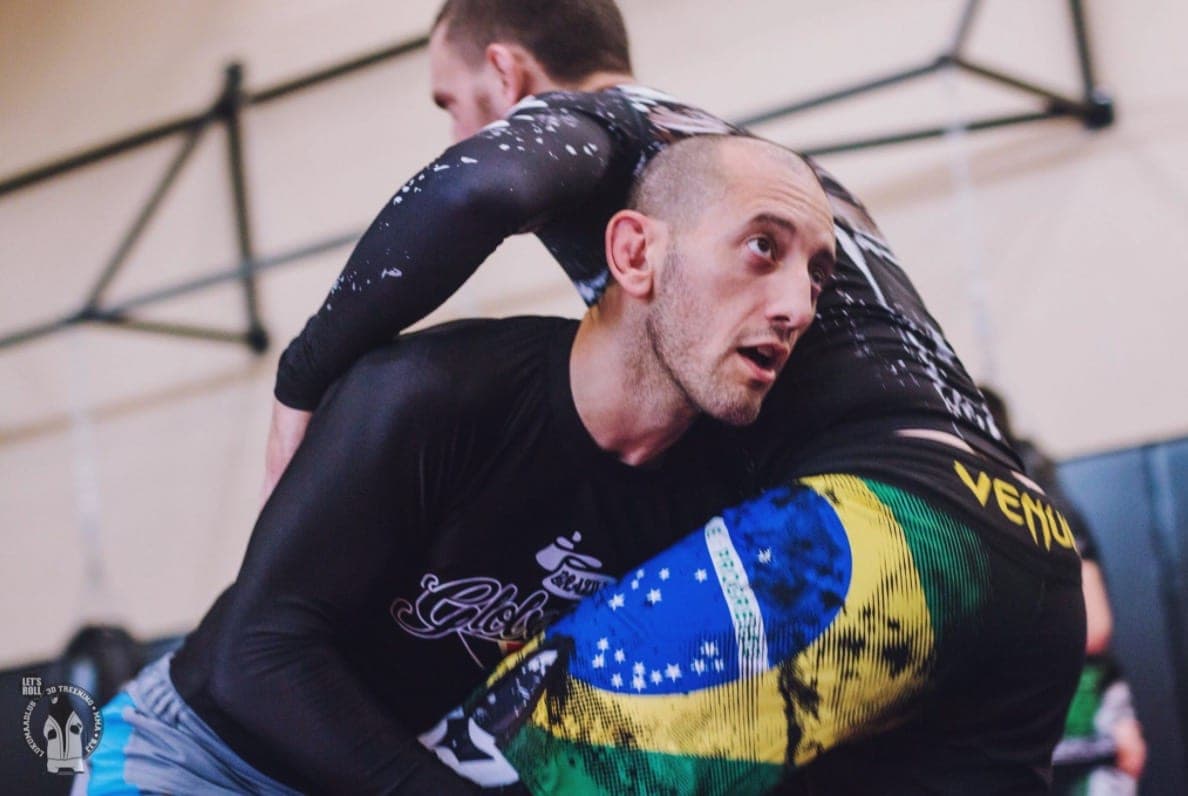
Main photo: BJJ Globetrotters; illustrative archive training photograph.
The takeaway
Physical chess is a helpful introduction to planning and responses in BJJ. It is a limited description of an activity in which both athletes move together, information arrives through contact, and every decision has to work in a changing physical position.
Use the comparison when it helps you ask a better question. Then return to the actual grips, angles, timing, and choices in front of you. A modest plan you can test is more useful than an impressive claim about thinking many moves ahead.
Find a place to test the next decision
Explore BJJ gyms on Let's Roll and look for instruction that connects technical explanations to clear, appropriate practice with a partner.
FAQ
Why is BJJ called physical chess? The comparison points to planning, threats, and responses. It can help introduce the decision-making side of grappling, provided it is not treated as a literal description of how a round unfolds.
Do good grapplers always think several moves ahead? They may plan sequences, but they also respond to changing positions and unexpected reactions. A useful plan includes recognizing when its starting conditions are no longer present.
Does the comparison mean strength is unimportant? No. Physical attributes and effort remain part of grappling. Technical analysis can consider them alongside positioning, timing, and decisions without reducing the sport to any one factor.
How can a beginner train the strategic part of BJJ? Ask an instructor for a small positional task with a clear decision and a limited partner response. Practice recognizing the condition that makes an action appropriate, then review what changed.

Kit Langford
Kit Langford covers the louder parts of jiu-jitsu — the marketing claims, the arguments, the gear that promises more than gear can deliver. The jokes are expected to survive a fact-check.
Related Posts

Mikey Musumeci gives up the belt to make room for MMA
Musumeci is vacating his UFC BJJ title to focus on MMA training. What he is leaving, what continues, and why the transition matters.
IBJJF membership: finish the paperwork before the deadline
IBJJF membership and tournament entry are separate steps. Plan documents, professor approval, renewals, and junior accounts before registration closes.
Choosing a BJJ seminar worth your time and travel
Choose a BJJ seminar by the subject, teaching format, access, and total cost. Know what to ask the host before buying a ticket.
Comments (0)
Loading comments...