

A work trip can fit one good BJJ class
Quick answer: Build a work-trip BJJ visit around one confirmed class, including travel, changing, and the return journey. Tell the host your experience and constraints, check visitor requirements, and leave enough flexibility for the work schedule to change.
The class may last an hour. Attending it takes longer. There is the trip from the office, the first-visit paperwork, changing, and whatever time you need before the next commitment. A free hour in the calendar is not automatically a free training session.
That does not make work-trip training impractical. It makes the full appointment worth planning. One well-chosen visit can be more enjoyable than carrying equipment across a city while trying to fit three gyms into a schedule that barely contains dinner.
Start with the time you can genuinely protect
Look at the work itinerary before looking at famous academies. Identify the window that is least likely to move and include the obligations on either side. If a meeting often runs late, treat the end time as uncertain rather than building a class booking around its most optimistic finish.
Work backward from the next fixed commitment. Include returning to the accommodation, changing, and getting to the next location if necessary. The training session has to fit inside that complete sequence. Removing the inconvenient minutes from the estimate does not remove them from the evening.
Choose one primary session. You can keep an alternative in mind, but avoid making several commitments you may not honor. A host that has arranged a visitor place should not have to guess whether you are still comparing options across town.
If there is no realistic window, leave training for another trip. A missed opportunity to visit a gym is less costly than creating a rushed day that undermines the work you traveled to do. The next invitation to roll does not need to become a test of priorities.
Search from the place you will actually leave
The hotel is not always the right starting point for the journey. You may leave directly from an office, conference venue, or client site. Search from that location at the relevant time, then check the return trip separately.
Compare travel methods realistically. A short distance on a map may involve a transfer, difficult parking, or a walk with your work bag and training kit. Do not assume that the transport you prefer at home will be the best option in a different city.
Keep the exact academy location clear. Some organizations have several branches, and the class that suits you may not be at the address you first saved. Match the session, booking, and route to the same branch before confirming.
The broader training-while-traveling guide covers visitor planning. For a work trip, the added constraint is that your day may begin somewhere you did not choose and end with another obligation. Build the route around that reality.
Send the host a useful first message
Introduce yourself briefly, give your training experience, and state the date and class you hope to attend. Ask whether visitors can join that session and how to book or pay. Mention any hard departure time if it will affect your participation.
Keep the message specific enough to answer. A request to train sometime next week gives the staff more work than a proposed session with a clear alternative. You can be friendly without asking the host to design the whole trip.
Confirm the practical details:
The correct branch, class, and arrival time.
Visitor eligibility and any booking or waiver requirement.
Gi or no-gi equipment and uniform policies.
Payment arrangements and what happens if work forces a cancellation.
A confirmation from the academy matters more than an old schedule screenshot. Save it with the address. If the plan changes, tell the host through the agreed channel instead of assuming that not appearing will communicate everything they need to know.
Choose a class that suits a first visit
A session’s title may not explain its entry requirements. Advanced, competition, fundamentals, and open mat can mean different things across academies. Ask the host which option suits your experience and the kind of training you want that day.
Do not exaggerate your level to access a particular room. A clear description helps the instructor organize a useful visit and suitable partners. If you mainly train no-gi, say so when asking about a gi class rather than expecting belt terminology to explain the difference.
A first visit also includes learning local procedures. Arrive with enough time to understand where to change, how rounds are organized, and who to ask when something is unclear. Cutting the arrival margin can turn ordinary onboarding into a distraction for the instructor.
You can want a demanding session while still recognizing the limits of a short visit. You have not learned every partner’s pace or preferences. Start with clear communication and let the round develop within the host’s instructions rather than trying to demonstrate your whole game immediately.
Plan the equipment after the class, too
Work-trip kit has two stages: getting clean clothing to the gym and managing used clothing afterward. Bring a way to separate the training outfit from work items during transport. Arrange washing and drying if another session is planned.
Check whether the host has changing facilities and what you need to bring. If you must return to the hotel before the next appointment, include that journey in the original plan. Do not discover the missing step when you are already late.
Think about what happens to your laptop, documents, or other work belongings. Ask about storage, and follow your employer’s requirements for handling work equipment. A gym’s welcome does not automatically make its changing room the right place for every item in your business bag.
Pack only for confirmed or genuinely practical sessions. Carrying several uniforms can be worthwhile on a training trip, but a work itinerary may not justify the space. The point is to make the class easy to attend, not to transport evidence of an ambitious plan.
Protect the rest of the day from the training plan
Tell the relevant people about the time you are unavailable when that is appropriate. Do not disappear from a shared work itinerary and expect colleagues to infer that you have gone to an academy across town. Clear arrangements prevent an optional activity from becoming somebody else’s scheduling problem.
Avoid promising a precise post-class arrival if the journey is uncertain. Give yourself a workable margin and communicate it. A plan that depends on every round ending exactly on time and every connection arriving immediately is fragile before anyone has taken a grip.
Decide in advance what would make you cancel. A meeting running late, a changed location, or an unexpected obligation may be enough. Having that boundary makes it easier to notify the host promptly rather than trying to rescue the session through a series of increasingly rushed decisions.
Training can still be worthwhile when it is the only class of the trip. You do not need to compensate for missed opportunities by adding extra rounds or an unplanned second session. Enjoy the visit you can fit and leave the rest of the itinerary intact.
Make the visit easy to repeat
After training, thank the host and settle any outstanding practical details. If you expect to return to the city, ask how best to arrange a future visit. Do not assume that one welcome creates permanent walk-in permission or that the same class will always be available.
Record the useful details while they are fresh: the branch, arrival process, uniform policy, and realistic travel time from the location you used. Treat changing information as something to reconfirm. Your notes should reduce the next round of questions, not replace contact with the academy.
Keep any public review grounded in the visit you actually made. You can describe the booking process or your experience of that class without claiming to know every program or every instructor. A brief, specific account is more useful than ranking a whole academy after one evening.
If you could not attend, close the loop anyway. A courteous cancellation and a later rebooking are ordinary parts of travel. The aim is to become a reliable visitor, not the person whose enthusiastic messages repeatedly end with an unexplained absence.
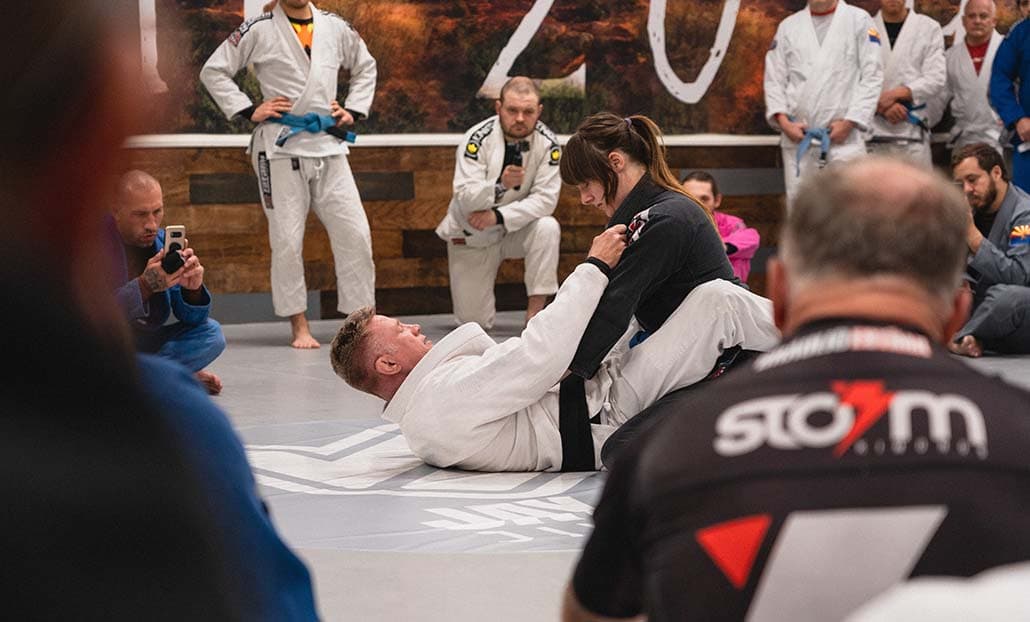
Main photo: BJJ Globetrotters; illustrative archive travel photograph.
The takeaway
Start with a realistic work window, then find a class that fits the full journey. Confirm the host’s requirements, plan the equipment after training, and know when a changed itinerary should trigger a cancellation.
One good visit is enough. It can give you a useful session and a place to return without forcing the rest of the trip to orbit a gym timetable. The best travel plan leaves room to keep the commitments that brought you there.
Find a nearby academy
Use the gym directory to search near your actual work location, then confirm the session and visitor arrangements directly with the host.
FAQ
Should I choose the gym closest to my hotel? Not automatically. Compare the trip from where you will actually leave, such as an office or conference venue, and the journey afterward. The most convenient complete route may start elsewhere.
Can I leave a class early for a work commitment? Ask the instructor before booking and again on arrival if needed. Some activities are easier to leave than others. Give a clear departure time rather than interrupting unexpectedly.
Is an open mat easier than a class on a work trip? It depends on the host’s format and visitor policy. An open mat may offer flexibility, but it still needs confirmation and suitable partners. Do not assume the title means unrestricted drop-in access.
What should I do if a meeting runs late? Follow the host’s cancellation instructions and notify them promptly. Avoid rushing into an unsuitable arrival simply to preserve the original plan. A later visit can be arranged when the schedule allows it.

Maya Corbett
Maya Corbett answers the questions you have before walking into an unfamiliar academy — what to book, what to bring, who to ask. Every detail in her guides traces back to something the gym published itself.
Related Posts

Mikey Musumeci gives up the belt to make room for MMA
Musumeci is vacating his UFC BJJ title to focus on MMA training. What he is leaving, what continues, and why the transition matters.

IBJJF membership: finish the paperwork before the deadline
IBJJF membership and tournament entry are separate steps. Plan documents, professor approval, renewals, and junior accounts before registration closes.
Choosing a BJJ seminar worth your time and travel
Choose a BJJ seminar by the subject, teaching format, access, and total cost. Know what to ask the host before buying a ticket.
Comments (0)
Loading comments...