

BJJ Brown Belt: The Forgotten Belt Between Purple and Black
Quick answer: Brown belt is the refinement belt — typically reached after six to eight years of training and held for one to two years before black. Almost nothing new gets added at this stage; the work is sharpening what already exists, closing the last defensive gaps, and learning to teach. Its reputation as the "dangerous belt" is mostly earned.
Every other belt has a mythology. White belt has survival stories, blue belt has its famous quitting problem, purple belt gets called the belt of creativity, and black belt is the destination. Brown belt gets... skipped.
Ask around and people struggle to say what brown belt is for. So here's an honest attempt at the belt nobody writes about.
The forgotten belt
Part of the invisibility is structural: brown is the shortest major stop on the adult ladder. Where purple can stretch on for years, brown is often a one-to-two-year bridge, and everyone — including the brown belt — is already squinting at black.
That's a shame, because treating it as a waiting room wastes what the belt is actually for. Brown belt has a specific job, and it's different from every belt before it. (For how the whole ladder fits together, see the BJJ belt system explained.)
Refinement over accumulation
From white through purple, progress mostly means adding: new guards, new submissions, new systems. At brown, the arrow reverses. The work becomes subtraction and sharpening.
Your A-game gets smaller and meaner. Brown belts typically attack less variety than purple belts, but each attack has fewer holes, better timing, and more connected follow-ups.
The last gaps get closed. Everyone arrives at brown with a few positions they've quietly avoided for years. This is the belt where coaches expect those debts paid.
Efficiency replaces effort. The visible difference between a brown belt and a purple belt is rarely knowledge. It's how little wasted motion the brown belt needs.
If you think, you are late. If you are late, you use strength. If you use strength, you tire. And if you tire, you die. — Saulo Ribeiro
That famous line describes exactly the transition brown belt demands: moving techniques from things you think about to things that simply happen.
The "dangerous belt" reputation
Brown belts carry a reputation on the mats: black belt weapons without black belt calm. There's truth in it.
A brown belt has nearly all the technique they'll ever have, plus something still to prove — the promotion is close, the comparison to black belts is constant, and rolls can carry an edge that mellows a year or two later. Ask upper belts who gives the hardest rounds in the room and a surprising number will point at the brown belts, not the black belts.
It's not malice. It's the last stretch of climbing before someone realizes there was never a summit to defend.
Teaching: the job you didn't apply for
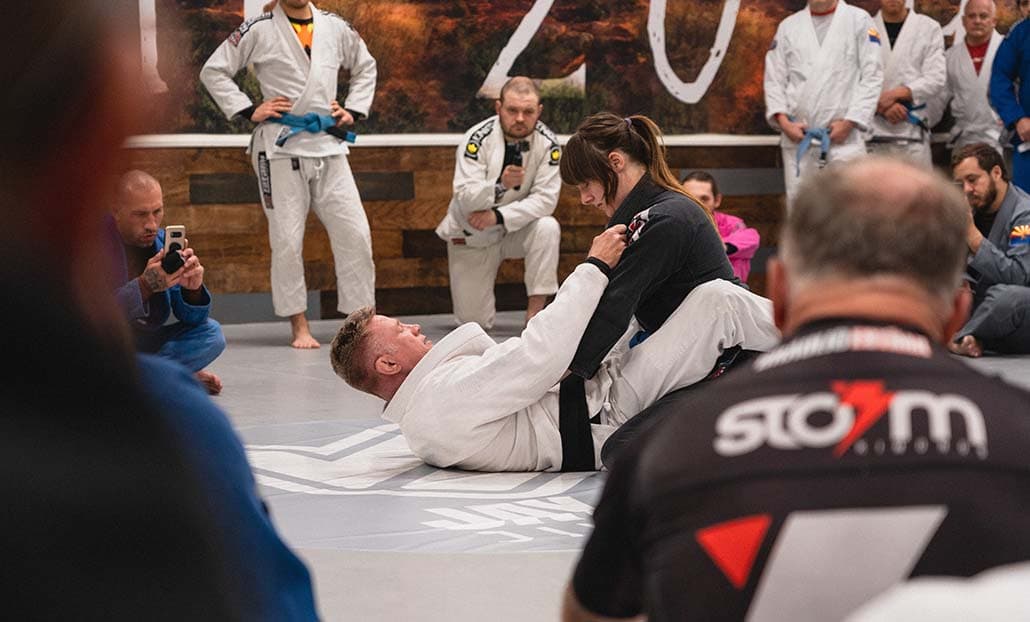
At most academies, brown belt is where teaching stops being optional. You'll be asked to cover classes, run warm-ups, walk white belts through fundamentals, and answer the endless "but what if they do this?" questions.
The honest surprise is how much it improves your own jiu-jitsu. Explaining a technique to a day-one beginner exposes every step you've been doing on autopilot, and half-understood details don't survive being taught. Most black belts will tell you their tightest fundamentals were rebuilt during their brown belt years, standing in front of a class.
Timeline honesty
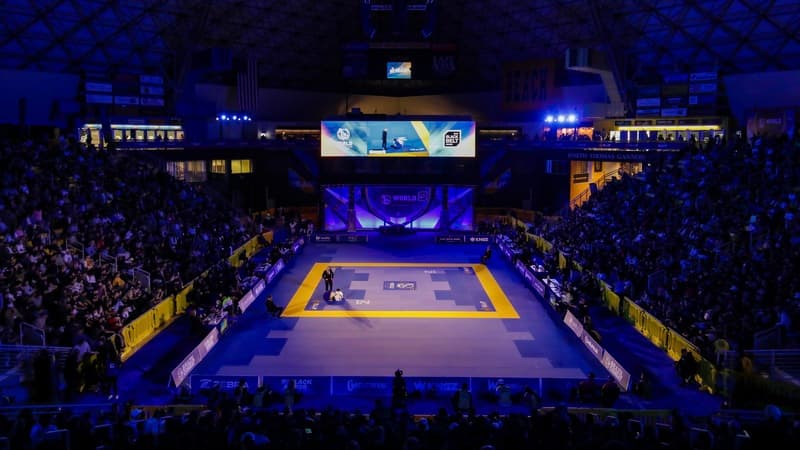
The typical path: six to eight years of consistent training to reach brown, then one to two years wearing it — though "typical" hides huge variance. The IBJJF requires a minimum of one year at brown before black, and most people exceed that comfortably.
Life pace matters more than talent here. A three-day-a-week hobbyist might reach brown in year nine or ten and that's a normal, healthy trajectory — the same refinement work laid out in purple belt requirements just spreads across more calendar. Nobody worth training under is checking a stopwatch.
Giving back to the room
There's a quieter expectation at brown that has nothing to do with technique: you become infrastructure. Brown belts set the room's tone — how hard rounds go, how beginners get treated, whether the culture stays generous or curdles.
The best ones spend rounds giving lower belts exactly the resistance they need to grow rather than the resistance that flatters a brown belt's ego. It's an apprenticeship in the last skill black belt actually requires: making other people better.
The takeaway
Brown belt is forgotten because it's a bridge, but it's where jiu-jitsu gets finished — games sanded down to what works, gaps paid off, technique converted from thought to reflex, and the first real reps of teaching. The dangerous-belt edge is real, and so is the growth hiding under it.
If you're there now: it's short. Don't sleepwalk through it staring at the black belt.
The right room makes the belt
Refinement needs honest training partners and a coach who still corrects you at brown. Find a BJJ gym near you on Let's Roll →
FAQ
How long does it take to get a brown belt in BJJ? Most people who train consistently reach brown after six to eight years, though hobbyists training two or three times a week often take longer. There's no fixed clock — promotion tracks demonstrated skill.
How long do you stay at brown belt? Commonly one to two years. The IBJJF requires at least one year at brown before black belt eligibility, and most instructors take longer than the minimum.
Why is brown belt called the dangerous belt? Because brown belts combine nearly complete technical knowledge with the hunger of someone still proving themselves. The result is often the hardest rounds in the gym — harder, sometimes, than rolling with black belts.
Do brown belts have to teach? At most academies, some teaching is expected — covering classes, mentoring lower belts, running fundamentals. It's partly service and partly preparation, since teaching sharpens your own technique more than almost anything else.
Related Posts

Mikey Musumeci gives up the belt to make room for MMA
Musumeci is vacating his UFC BJJ title to focus on MMA training. What he is leaving, what continues, and why the transition matters.
IBJJF membership: finish the paperwork before the deadline
IBJJF membership and tournament entry are separate steps. Plan documents, professor approval, renewals, and junior accounts before registration closes.
Choosing a BJJ seminar worth your time and travel
Choose a BJJ seminar by the subject, teaching format, access, and total cost. Know what to ask the host before buying a ticket.
Comments (0)
Loading comments...