
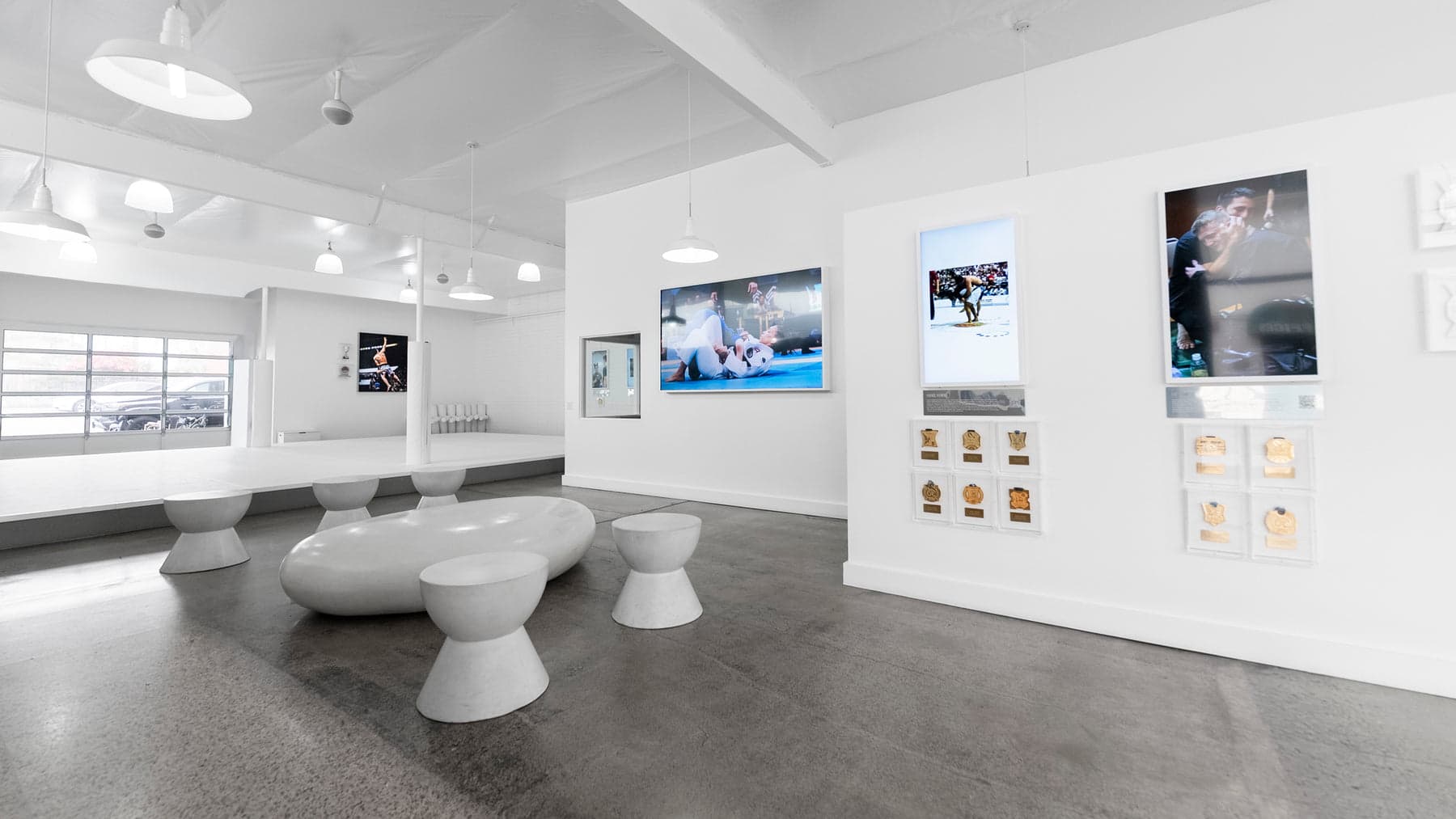
An AOJ visit starts before you reach the white mats
Quick answer: A visit to Art of Jiu Jitsu in Costa Mesa should start with the academy's guest-pass process and a class recommendation for your experience. Confirm the location, dates, and uniform arrangements before paying for travel. Build the rest of the trip around the sessions you can realistically attend.
411 East 17th Street is the address to put in the map. A saved clip of an AOJ training session may be what starts the trip, but the visit itself comes down to less cinematic details: which academy you booked, when your pass starts, and whether the class you want fits the student you are.
Getting those details settled makes more room for the good part. You can arrive ready to learn instead of trying to solve a booking problem with a gi over one shoulder. This is a planning guide based on the academy's published information, with a few decisions worth making before the suitcase comes out.
Choose Costa Mesa on purpose
AOJ's Costa Mesa location page identifies the academy at 411 E. 17th Street, Costa Mesa, California 92627, and dates its opening to 2012. The organisation also has a Mission Viejo location. Treat the choice between them as a real booking decision, not an interchangeable label.
Start with where you will sleep and how you will get to training. Plot the route for the time of the session you intend to take. A place that appears nearby on a small map may still be awkward when the day includes another person's work commitments, school pickup, or a rental-car arrangement.
If training is the main reason for the trip, choose accommodation after checking the class plan. If it is one stop during a family holiday, work the other way around: find a session that fits the trip already being taken. Both are reasonable visits. The trouble starts when a one-class opportunity is planned like a full training camp, or a training camp is squeezed into the margins of an unrelated holiday.
Save the confirmed address with the booking, so a generic search for AOJ does not make the decision again on arrival day.
Read the pass as a calendar commitment
The guest-pass booking page offers one-day, seven-calendar-day, and thirty-calendar-day options. Read the available dates and current price at checkout before choosing the length. Count the days you can attend rather than the number of sessions you hope an especially enthusiastic version of yourself might attempt.
For example, a seven-day stay does not necessarily contain seven training days. Arrival, departure, and existing plans can reduce the useful portion of that week. Write down the actual class opportunities first. Then compare the pass options against that list.
AOJ's visitor FAQ says passes cannot be paused once activated and apply only to the location where purchased. That makes the start date worth confirming. Ask how activation works if your flight lands late or you arrive on a day when you do not intend to train.
Keep the confirmation somewhere easy to retrieve. An email buried beneath boarding passes is still technically available, but the front desk is a poor place to discover your phone has no connection. A saved copy of the booking and the academy's reply removes a small, avoidable delay.
Use the visitor route if you are visiting
AOJ distinguishes local residents from short-term guests. Its trial-class page reserves free trials for verified Orange County residents and surrounding local communities, and says temporary residences do not qualify. A holiday rental is therefore not a shortcut into a local trial offer.
This is straightforward once you know which process applies. A traveller purchases the appropriate guest access. Somebody genuinely moving to the area can ask the academy about the membership process and the evidence it requires. There is no advantage in turning up under the wrong category and sorting it out when class is about to begin.
Send a short message with the details staff can act on: your dates, belt, approximate training experience, preferred gi or no-gi sessions, and any class you are considering. If children are coming to train too, include their ages and experience separately. Adults and children may need different arrangements even when they share a hotel room.
A useful reply should leave you knowing what to book next. If something remains ambiguous, ask that one question rather than sending your entire sporting biography. Staff do not need every tournament result to help you choose a class.
Pick the class for the work you need
The academy's program overview includes adult, kids, and no-gi training, along with private lessons and small groups. A visitor has more to decide than whether the gi goes in the bag. The right session is the one where the instruction and expected pace match what they can use.
Tell staff what you actually want from the visit. A newer student might want a clear introduction to the school's approach. An experienced hobbyist may want focused technical practice. A competitor may be looking for a specific training environment before an event. Those are different requests, and a belt colour alone may not communicate all of them.
Do not book the most advanced-sounding class simply because the trip feels important. A class with fewer unfamiliar demands can leave more attention available for the detail you travelled to learn. Conversely, an experienced student should explain their background so the recommendation is based on useful information.
Check the instructor and class arrangements for your dates if a particular session is central to the trip. An academy's roster introduces its team; it is not a personal appointment with every person listed. Make the confirmed session the basis of the plan, then let any additional encounters be a pleasant extra.
Settle the uniform question before packing
The visitor FAQ lists gi and no-gi uniform rentals. Availability, sizing, cost, and the gear required for your particular class are still worth confirming directly. A listed service tells you what to ask about; it does not reserve your size.
Pack from the answer you receive. Bring the correct belt with a gi, clean gear for every planned session, and ordinary clothes for leaving the academy. Separate used training clothing from the rest of the bag. If you intend to train repeatedly, establish where it will be washed and dried rather than relying on a hotel chair to do a washing machine's job.
A compact pre-departure check can cover most of the loose ends:
Save the academy's confirmation of class eligibility and the pass start date.
Confirm the uniform requirements and any rental arrangement, including size.
Check the route from your accommodation for the actual time you need to arrive.
Leave enough room in the day for check-in, changing, and getting somewhere afterward.
Nothing on that list is glamorous. All of it protects time that could otherwise be lost once the trip is underway. Our drop-in etiquette guide covers the small courtesies that help the first session run smoothly for the host gym as well as the visitor.
Leave space around the training
A holiday schedule can become a competition against itself. A morning class gets followed by an ambitious drive, an afternoon plan, and a return to the academy that assumes everything before it finishes exactly on time. The sessions may all fit on paper while the person attending them does not get a usable break.
Choose an anchor session for each training day. Arrange the rest around it, including food and transport. Add another session only if the academy recommends it and the day genuinely has room. Paying for access does not create a duty to attend every minute the doors are open.
If travelling with someone who does not train, make the arrangement specific. Tell them when you will be occupied and when you will be available, including the trip back and time to change. A two-hour absence should not be described as a quick hour on the mat. Clear times make it easier for the other person to enjoy their own plans.
For a short visit, one well-chosen session can be enough to make the stop worthwhile. A longer stay can allow repetition and a more settled rhythm. Neither version needs to imitate the schedule of a full-time athlete living nearby.
Bring home something you can explain
Decide before class how you will retain what you learn. A few notes afterward can capture the position being taught, the cue that helped, and the part that still needs clarification. You do not need to leave with an entire new style of jiu-jitsu.
Keep filming separate from learning. Ask the instructor and any training partner before recording; permission to attend a class does not automatically include permission to publish other people in it. If recording is unavailable, a written description and a question for your regular coach can still carry the lesson home.
The most useful souvenir may be a precise correction to something already in your game. A hand placed differently. A better way to begin a drill. An explanation that makes a familiar movement easier to understand. These are examples of what to look for, not promises about what any particular class will cover.
Back at your home academy, introduce the idea as something you would like to explore, with credit to where you learned it. Give it a few appropriate practice opportunities before deciding whether it fits. The visit has more room to matter when it becomes part of normal training afterward.
Main photo: Art of Jiu Jitsu; academy photograph, photographer not identified on source page.
The takeaway
An AOJ Costa Mesa visit is easier to enjoy when the booking has already answered the practical questions. Choose the location deliberately, align the pass with usable training days, and let the academy help match you to a class. Confirm the details directly before committing money, since schedules and arrangements can change.
Then leave enough space in the trip to pay attention. The aim is to arrive ready for a class and leave with something you can use, rather than measure the visit by how many sessions you managed to fit between other obligations.
Plan the rest of your training trip
Browse gyms in your destination, then contact each academy directly to confirm its visitor process and current schedule.
FAQ
Where is AOJ Costa Mesa? The academy lists 411 E. 17th Street, Costa Mesa, CA 92627. Confirm that this is the location selected in your booking rather than the separate Mission Viejo academy.
Can a tourist use a free local trial? AOJ's published trial policy is for verified local residents and excludes temporary residences. Visiting practitioners should use the guest-pass process.
Does one guest pass cover both locations? The visitor FAQ says a pass is valid only at the location where it was purchased. Confirm any other arrangement directly before planning sessions at both academies.
Do I have to bring my own uniform? AOJ lists gi and no-gi rental uniforms. Ask about your size, availability, cost, and class requirements before travelling; the listing itself does not reserve gear.

Maya Corbett
Maya Corbett answers the questions you have before walking into an unfamiliar academy — what to book, what to bring, who to ask. Every detail in her guides traces back to something the gym published itself.
Related Posts

Mikey Musumeci gives up the belt to make room for MMA
Musumeci is vacating his UFC BJJ title to focus on MMA training. What he is leaving, what continues, and why the transition matters.
IBJJF membership: finish the paperwork before the deadline
IBJJF membership and tournament entry are separate steps. Plan documents, professor approval, renewals, and junior accounts before registration closes.
Choosing a BJJ seminar worth your time and travel
Choose a BJJ seminar by the subject, teaching format, access, and total cost. Know what to ask the host before buying a ticket.
Comments (0)
Loading comments...