
Pan No-Gi 2026: the results worth a second look
Quick answer: Pawel Jaworski and Sarah Galvão won their weight divisions and the adult black belt open classes at the 2026 Pan No-Gi. Elijah Dorsey, Helena Crevar, and several emerging brown belts supplied other reasons to revisit the event. The results also reward looking beyond individual champions to the academy standings.
Two gold medals can conceal very different afternoons. One title might arrive through a submission; another might require a referee to separate athletes after the final horn. Put the medals beside each other and that distinction disappears.
The October 2–4 Pan No-Gi in Secaucus, New Jersey, supplied plenty of both. The IBJJF's event summary reports more than 2,300 athletes and 19 adult black belt divisions. Rather than turn that weekend into one long list, start with the performances that open a useful next question: which matches should you watch, and what should you be looking for?
Jaworski still has one more event to solve
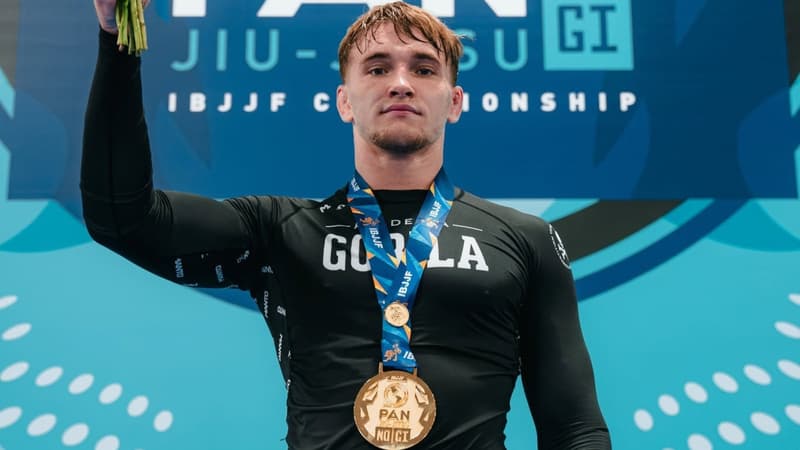
Pawel Jaworski left with medium-heavyweight and open-class gold. The result continued a run that already had an unusually clear destination before anyone arrived in New Jersey.
The IBJJF's pre-event account traced his Grand Slam pursuit through the 2025 No-Gi Worlds and the 2026 Brasileiro No-Gi. Pan No-Gi was another required stop; European No-Gi remained ahead. That season crosses the calendar-year boundary. Calling this a completed Grand Slam would skip the last assignment.
The distinction matters because a sequence of titles creates its own temptation for spectators. Once a favorite has won often enough, the remaining event starts to sound like an administrative appointment. It still contains opponents. It still requires making weight, arriving ready, and finding answers within a particular bracket.
For a replay, start with the difference between his two finals. FloGrappling's live finals report records a triangle against David Garmo for the weight title and a referee's decision against Wallisson Tarta in the open class. The same champion had to reach two different endings. That is more instructive than treating the entire weekend as one extended submission highlight.
Sarah Galvão's two finals ask different questions
Sarah Galvão won middleweight and the open class. Against Nadia Frankland in the weight final, the points finished level at 2–2; Galvão prevailed 3–1 on advantages. Her open-class final against Maria Ruffatto-Gilpin ended 12–2 on points, according to the same FloGrappling report.
Those scores make a good paired viewing assignment. Begin with the close match. Watch how much work can happen without a large numerical separation. Then watch the open-class final and track where a lead becomes a sequence rather than a single scoring action. Resist the urge to begin with the finish and work backward only far enough to confirm who was better.
A scoreboard is a summary, not a complete description of a performance. An advantage win does not explain every exchange any more than a ten-point margin explains every escape. The useful material lies in the choices that produced those numbers.
Galvão's weekend also belongs in a team story. Atos finished first in the adult female academy standings. Her individual medals are an obvious entry point, but the overall team result deserves its own line, rather than being treated as a footnote beneath a recognizable surname.
Dorsey's middleweight title took five victories
Elijah Dorsey won five matches in a middleweight field the IBJJF's standout-performances report describes as 23 competitors deep. Two of those victories came by submission.
The federation's division breakdown fills in the shape of the run: an opening shoulder lock, an advantage win, a 2–0 quarterfinal, a 21–0 semifinal, and an armbar in the final. There is a substantial range between the narrow quarterfinal and the semifinal score. Both counted as one step forward.
This is a useful antidote to watching only a champion's most decisive match. The large score supplies an easy clip. A two-point match may supply the better explanation of how someone stayed in the tournament long enough to produce it.
If you have time for only two of Dorsey's matches, choose one from each end of that range. Look at how the opening exchange changes the work each athlete must do afterward. Does the trailing athlete need to create an entirely new situation, or can they keep pursuing an existing attack? Those are viewing questions, not claims about an exchange unseen. The full matches, rather than a results column, should supply the answers.
Crevar made a short bracket even shorter
Helena Crevar won the women's super-heavyweight division with two submissions totaling one minute of match time, according to the federation's standout report. The division breakdown lists an armbar in the semifinal and an ankle lock in the final.
That compact run is worth watching in full. In a very short match, the setup can take up more of the available footage than the submission itself. Beginning the video at the moment a grip is already secure removes much of what makes the finish interesting.
Watch the first contact, the first change of level, and the distance between the athletes before the attack develops. Rewind there, rather than replaying only the tap. A short match is unusually convenient for this kind of study because there is little footage to get through and nowhere to hide an assumption about how the position appeared.
It would be a mistake to use elapsed time as a universal ranking system. A fast finish and a long, difficult final test different circumstances. Crevar's speed belongs to this performance. It does not make every athlete who needed the full clock less accomplished, or every longer match less worth a viewer's attention.
The brown belts deserve space before their promotions
Sebastian Patyk won brown belt middleweight and open-class gold for Academia Gorila. Lauriane Stavacz took the women's brown belt heavyweight and open-class titles for Gracie Barra. Those are results from this weekend, not predictions requiring a future black belt promotion to become interesting.
The official division report lists seven wins for Patyk. Stavacz won her two heavyweight matches by a combined 18–0 and submitted three opponents in the open class. That contrast gives a viewer a reason to follow both paths through the bracket: one athlete's accumulated workload, another's different routes through weight and open competition.
Prospect coverage can get impatient. Every achievement becomes evidence for the next rank, the next opponent, the next headline. It is possible to appreciate these performances without assigning either athlete a future championship or a deadline for reaching one.
Save the names with the event and division attached. When another result arrives, there will be something concrete to compare. A remembered clip without its competitive context is much less useful than a small record of what actually happened and where.
The academy table changes the scale
The official results put AOJ first in the adult male academy standings with 52 points. Atos led the adult female standings with 37. Renzo Gracie topped the master team table, while Gracie Barra led the juvenile table.
These are separate categories, and keeping them separate is part of reporting the result accurately. An adult male team title is not an overall title for every athlete at the event. Nor should a black belt headline erase the contribution of other belt divisions to an academy's weekend.
For someone watching because their own gym traveled, the academy table may be the most recognizable part of the tournament. It gathers individual results under a shared name. That creates another route into an event that can otherwise seem to belong entirely to famous athletes.
A useful follow-up is to choose one academy and read across its results, rather than scanning only the gold-medal column at black belt. The names will be less familiar. That is the point of the exercise. It makes a large competition easier to understand as a collection of teams doing work across many divisions, rather than a handful of stars surrounded by anonymous brackets.
Build a replay list with a reason for each match
A manageable viewing list beats an ambitious promise to watch the entire weekend. Give each selection a different purpose:
Compare Jaworski's weight and open-class finals for their different routes to victory.
Pair Galvão's close middleweight final with her higher-scoring open-class final.
Choose a narrow Dorsey win as well as a decisive one.
Watch Crevar's short run from the opening contact, not just the finishes.
Add a brown belt match before familiar names fill the queue.
Keep the official bracket beside the video. It helps distinguish a submission, a decision, and an advancement that did not involve a contested match. The super-heavyweight final, for example, was an Atos closeout involving Nata Tenca and Andre Galvão. It should not be described as though one defeated the other in a fought final.
If tournament viewing is new to you, start with the event and division rather than trying to learn every athlete at once. You can also use the tournament directory to connect this level of competition with events closer to home. Watching becomes easier when the basic shape of a tournament feels familiar.
Main photo: IBJJF; Pawel Jaworski at the 2026 Pan No-Gi.
The takeaway
The headline from New Jersey is double gold for Jaworski and Galvão. The fuller story includes Dorsey's five-match run, Crevar's rapid finishes, brown belt champions worth following now, and academy results that reach well beyond the most familiar names.
Read the result, then choose a match that might complicate your first impression of it. A medal tells you where a competitor finished. The replay can show how much work that tidy ending leaves out.
Find the next event near you
Browse upcoming tournaments to find a local competition to watch or enter.
FAQ
Who won the adult black belt open classes at Pan No-Gi 2026? Pawel Jaworski won the men's open class, and Sarah Galvão won the women's. Both also won their weight divisions.
Did Jaworski complete the No-Gi Grand Slam at this event? No. European No-Gi remained ahead in the season described by the IBJJF. The sequence includes No-Gi Worlds from the previous calendar year.
Which teams won the adult academy categories? AOJ won adult male, and Atos won adult female, according to the official academy standings. These are separate team categories.
Where can I check every division? The official IBJJF results page includes academy standings and athlete placings across the event. FloGrappling carries match coverage; check its current replay access terms before subscribing.

Miles Serrano
Miles Serrano writes about competitors and the decisions that shaped their careers. He is more interested in the adjustment someone made in the third minute than in the medal count afterward.
Related Posts
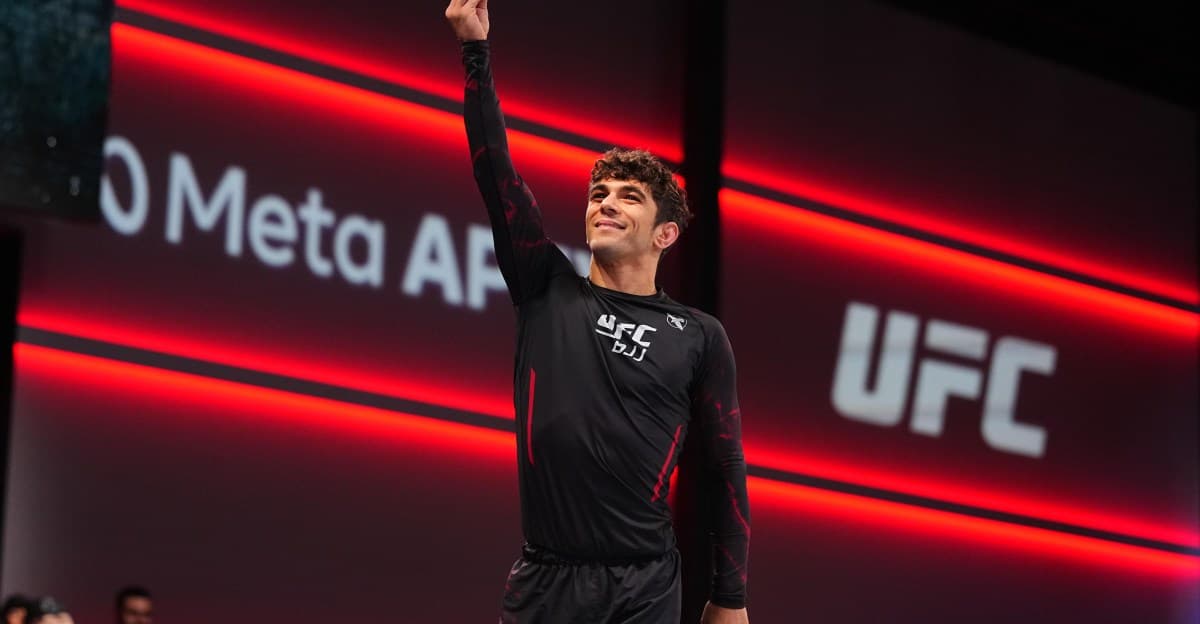
Mikey Musumeci gives up the belt to make room for MMA
Musumeci is vacating his UFC BJJ title to focus on MMA training. What he is leaving, what continues, and why the transition matters.
IBJJF membership: finish the paperwork before the deadline
IBJJF membership and tournament entry are separate steps. Plan documents, professor approval, renewals, and junior accounts before registration closes.
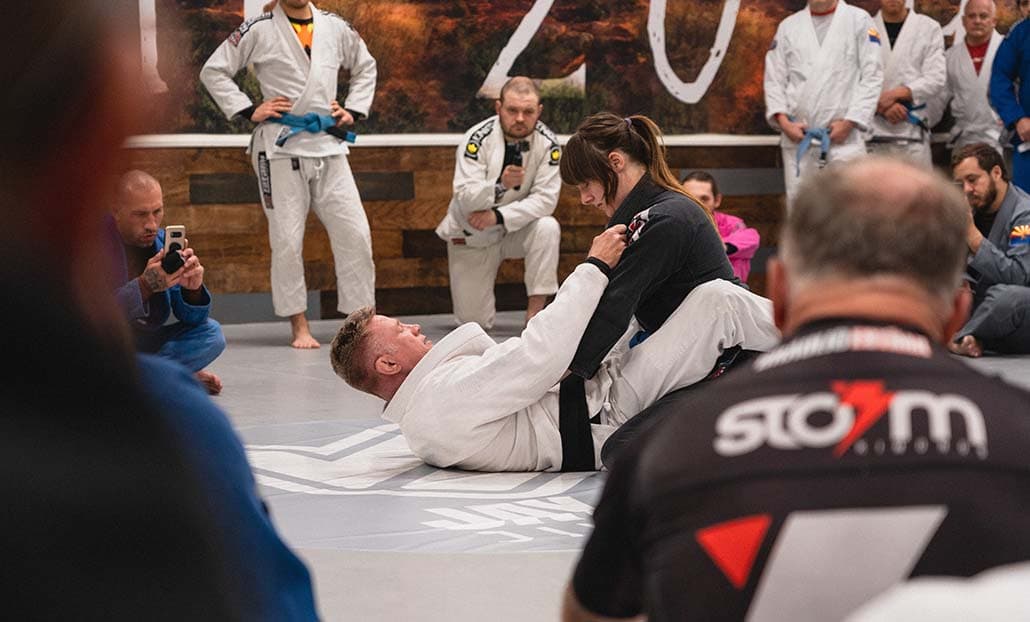
Choosing a BJJ seminar worth your time and travel
Choose a BJJ seminar by the subject, teaching format, access, and total cost. Know what to ask the host before buying a ticket.
Comments (0)
Loading comments...