
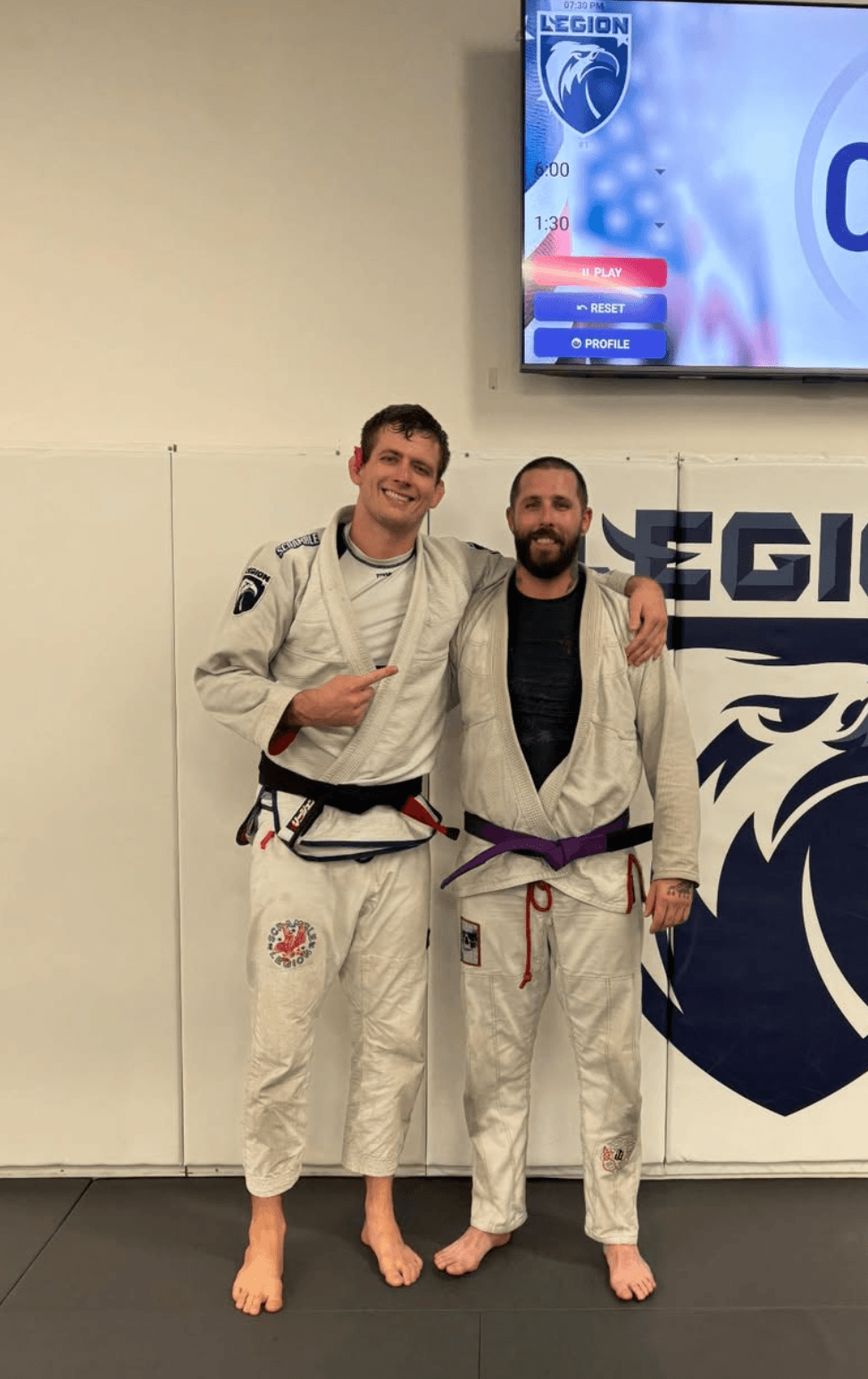
Legion Jiu-Jitsu: Keenan Cornelius and the American jiu-jitsu fight
Quick answer: Legion American Jiu-Jitsu is Keenan Cornelius's academy on Miramar Road in San Diego, opened in late 2019 after he split from Atos. Cornelius is the grappler who swept the major IBJJF titles at purple and brown belt and then rewired gi jiu-jitsu with the worm guard and the lapel systems that came after it. The academy's name is also an argument about who the art belongs to now, and plenty of people in the sport reject it.
In 2012 a twenty-year-old purple belt from Hawaii entered the four biggest tournaments in gi jiu-jitsu and won both his weight class and the open division at every one of them. Europeans. Pans. Brazilian Nationals. Worlds.
Then he moved up a belt and did most of it again.
Keenan Cornelius has been running his own academy in San Diego since the back half of 2019. The sign outside says American Jiu-Jitsu. That wording is the whole point, and it has cost him friends.
The colored-belt run that made his name
Competing out of Team Lloyd Irvin, Cornelius took weight and absolute gold at the 2012 IBJJF Europeans, Pans, Brazilian Nationals and Worlds at purple belt. Wikipedia files that under the Double Grand Slam; BJJ Heroes lists the same four events with the weight-and-absolute marker beside each one. He had already won the No-Gi Worlds at purple in 2011.
At brown belt in 2013 he took the Europeans and the Pans in weight and absolute and won his weight class at the Worlds, dropping only the brown belt absolute final. BJJ Heroes still calls him the most accomplished brown belt of all time, which is the sort of line that usually ages badly and so far hasn't.
Legion's own site puts his colored-belt records at 109-1 as a purple belt and 118-1 as a brown belt, which are the gym's numbers rather than audited ones. The medal list underneath them is real enough.
Lloyd Irvin, then Atos, then neither
The lineage question follows Keenan around, and the order matters.
He found jiu-jitsu at fourteen in Hawaii, trained under Cassio Werneck, then spent a couple of years at BJ Penn's academy in Hilo, where he earned his purple belt. Then he moved to Maryland for Team Lloyd Irvin, and that is where the winning started. Irvin promoted him to brown in June 2012.
In February 2013 he announced he was leaving. The academy was in the middle of a period of serious public controversy at the time, and several of its best competitors walked out over the course of a few weeks. Keenan was one of them.
He landed at Atos under André Galvão in San Diego, and Galvão promoted him to black belt on September 14, 2013. His formal lineage runs Carlos Gracie to Reyson Gracie to Osvaldo Alves to Luis Dagmar to Galvão to Cornelius.
That ended in April 2019. FloGrappling reported the split first. BJJ Heroes describes a slow-building clash between Galvão's traditional master-and-student mat culture and Keenan's preference for a flatter athlete-and-coach arrangement, with an argument about lateness as the last straw. He went to that year's Worlds without a team, preparing at Ribeiro Jiu-Jitsu and Gracie Barra Northridge and competing under the BJJ Globetrotters banner. Four months later he announced he was opening his own academy.
Worm guard, and the year everyone had to learn to read a lapel
Before any of the business drama, Cornelius changed what a gi match looks like.
The worm guard is the one people name. You feed the opponent's own lapel behind one of their legs, grip it from underneath, and now they are tied to their own jacket while you have two free limbs working one side. Galvão gave it the name. Keenan built the rest: reverse de la worm, rear worm, and the squid guard, which wraps the lapel between your leg and theirs before you turn to face them.
It hit competition around 2013 and 2014, and the early matches were lopsided because no one had answers yet. There was loud talk about whether the IBJJF should legislate against it, which is the real measure of how disruptive it was.
The lapel family it opened up is now standard equipment in the gi, and his instructional catalog leans on it hard; the Lapel Encyclopedia alone runs thirteen hours.
If you want the broader map of how San Diego's academies differ from each other, we broke that down in our guide to finding a gym in San Diego.
What "American jiu-jitsu" is actually claiming
Keenan did not invent the phrase. Jake Shields used it before him. What Keenan did was put it on a building.
The argument, as he has laid it out publicly, has two halves. The first is practical: a large share of top American competitors now learn from American coaches who learned from American coaches, often with heavy wrestling in their background, and the resulting game does not look much like traditional Brazilian gi jiu-jitsu. Calling it Brazilian is a description that stopped being accurate.
The second half is historical, and it is the part that made people angry. In a widely shared video he searched the Library of Congress newspaper archive for "Brazilian jiu-jitsu" and got nothing, then searched "American jiu-jitsu" and found hits back to 1914, including a wrestler named Len Lanius billed as its originator. Hélio Gracie was born in 1913. Therefore, Keenan argued, American jiu-jitsu predates Brazilian jiu-jitsu by at least fifteen years.
Decide for yourself how much that proves. Old newspapers used "jiu-jitsu" loosely for basically any grappling with a Japanese flavor, so a 1914 hit is not evidence of a lineage.
The pushback was immediate and personal
Brazilian black belts did not take it as a fun historical footnote.
The most quoted response came from Vinicius "Draculino" Magalhães, who wrote, in remarks circulated by BJJ Eastern Europe: "There is no American, Brazilian, Japanese, Russian, Planet or any other name. THERE IS ONLY JIU JITSU!" His point was that no one in Brazil ever said jiu-jitsu brasileiro. The adjective was added in the United States as a marketing move, and swapping in a different one fixes nothing.
Keenan's former Atos teammate Gustavo Batista went after him directly. The whole argument sits in the same family as Eddie Bravo's 10th Planet naming twenty years earlier, and it will probably still be unresolved in another twenty.
Worth saying plainly: reasonable people land on both sides. The people who dislike the branding are not all thin-skinned traditionalists, and the people who like it are not all disrespecting Hélio.
Inside the room on Miramar Road
Strip away the argument and Legion is an unusually structured beginner gym.
The centerpiece is the 5-Week Beginner Course, a ten-class sequence with a fixed start date, so everyone in the room is on day one at the same time. That solves the most common reason people quit in week two, which is walking into an all-levels class and getting steamrolled by a two-stripe blue belt with something to prove. Legion's FAQ says there is no live rolling on the first day, just supervised positional work that scales up.
The academy sits at 7550 Miramar Rd, Suite 330, on about 6,000 square feet of mat. Gi and no-gi run mornings and evenings, seven days a week. The kids program covers ages four to fourteen and the gym says more than 175 children train there. There is a Sunday open mat and a visitor policy the gym advertises as one of the friendliest anywhere.
The bench is not all Keenan. Miha Perhavec, a judo black belt and Legion co-founder, was the first black belt Keenan ever promoted, in January 2021, and now runs the beginner course. Sloan Clymer, his second black belt, teaches no-gi. Paige Clymer, Fellipe Trovo and Rafaela Guedes round out a staff the gym says runs past ten coaches.
Where Keenan himself is at
Be careful with the present tense here.
His last IBJJF gold came at the 2020 European Championship. He was scheduled to face Haisam Rida at Who's Number One in 2021 and pulled out with a back injury he had aggravated deadlifting in May 2020. There has been no announced retirement and no high-profile competitive return since.
What is verifiable is that he still teaches, takes privates through the front desk, and travels for seminars. Legion's site lists him as a third-degree black belt and its founder. If you are picking a gym partly to learn from him, call and ask which classes he is on that week.
The takeaway
Legion is two things at once, and the loud one is not the important one. The loud one is a naming fight that has been running since 2019 and will not be settled by anybody's newspaper archive search. It gets the clicks. It also tells you very little about what happens on the mat on a Tuesday.
The quiet one is a beginner pipeline built by someone who spent his own early years getting thrown into rooms above his level and clearly thought about it afterward. Fixed-start cohorts, no live rolling on day one, a curriculum that goes in an order instead of whatever the coach felt like showing that night. Unglamorous decisions, from a guy whose reputation was built on the least unglamorous guard in the sport. If you already train, the draw is the lapel work and the bench. If you have never trained, the draw is that somebody built you an actual door.
Go look at the room
Legion's location, programs and details are on Let's Roll. Legion American Jiu-Jitsu San Diego HQ on Let's Roll
FAQ
Who is Keenan Cornelius and what did he win? Keenan Cornelius is an American black belt under André Galvão, born in Hawaii in 1992, best known for inventing the worm guard. At purple belt in 2012 he won weight and absolute gold at the IBJJF Europeans, Pans, Brazilian Nationals and Worlds, a sweep Wikipedia records as the Double Grand Slam, and he repeated most of it at brown belt in 2013. As a black belt he has won IBJJF European, Pan and No-Gi World titles and medaled at ADCC.
What does "American jiu-jitsu" mean at Legion? It is Cornelius's claim that the jiu-jitsu now produced in the United States, largely by American coaches with wrestling backgrounds teaching other Americans, has become distinct enough that the "Brazilian" label no longer describes it. He also argues the phrase appeared in American newspapers as early as 1914. Many Brazilian black belts reject the framing outright.
Is Legion good for complete beginners? That is the part of the gym built most deliberately. The 5-Week Beginner Course is ten classes with a set start date so beginners begin together, there is no live sparring on the first day, and a new cycle starts every two to four weeks. You can browse the whole county in the Let's Roll gym directory if you want to compare before you book.
Does Keenan Cornelius still teach and compete? He still teaches and is available for private lessons and seminars, per Legion's own site. Competitively, his last IBJJF gold was the 2020 European Championship, and a back injury kept him out of a scheduled 2021 Who's Number One match. He has not announced a retirement, and he has not had a high-profile competitive return either.
Related Posts
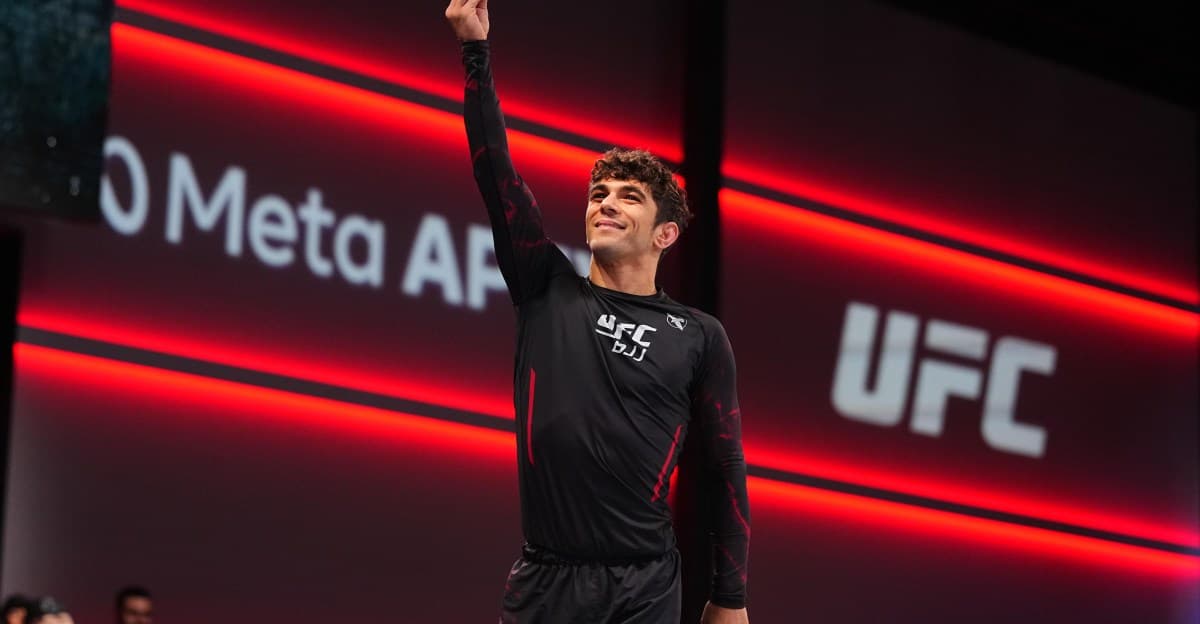
Mikey Musumeci gives up the belt to make room for MMA
Musumeci is vacating his UFC BJJ title to focus on MMA training. What he is leaving, what continues, and why the transition matters.
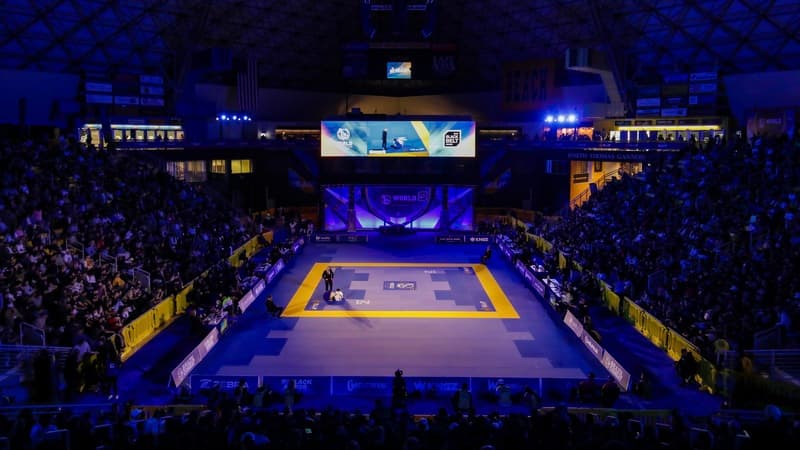
IBJJF membership: finish the paperwork before the deadline
IBJJF membership and tournament entry are separate steps. Plan documents, professor approval, renewals, and junior accounts before registration closes.
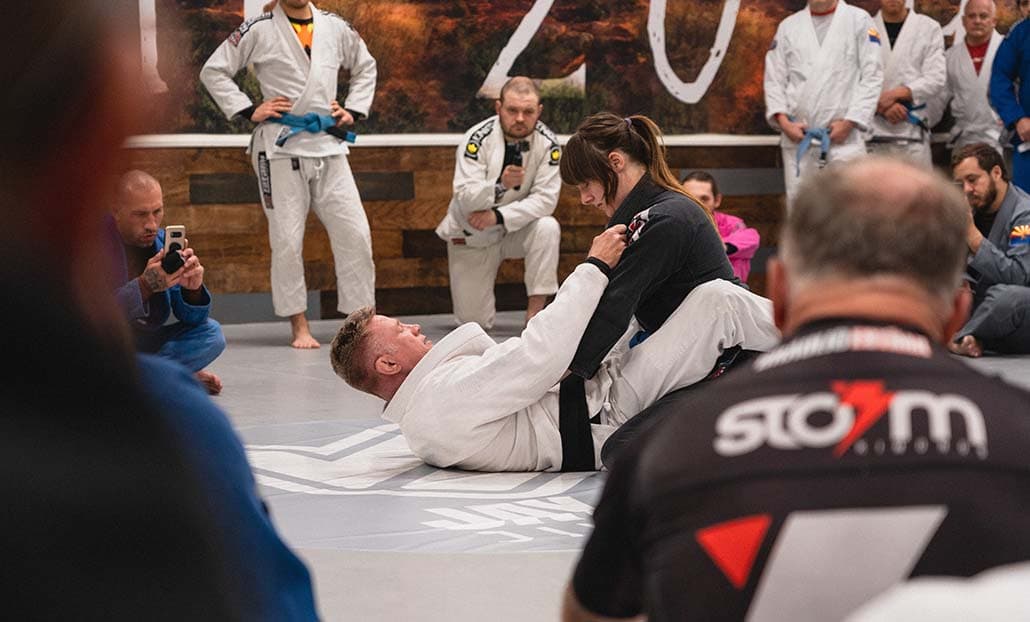
Choosing a BJJ seminar worth your time and travel
Choose a BJJ seminar by the subject, teaching format, access, and total cost. Know what to ask the host before buying a ticket.
Comments (0)
Loading comments...