
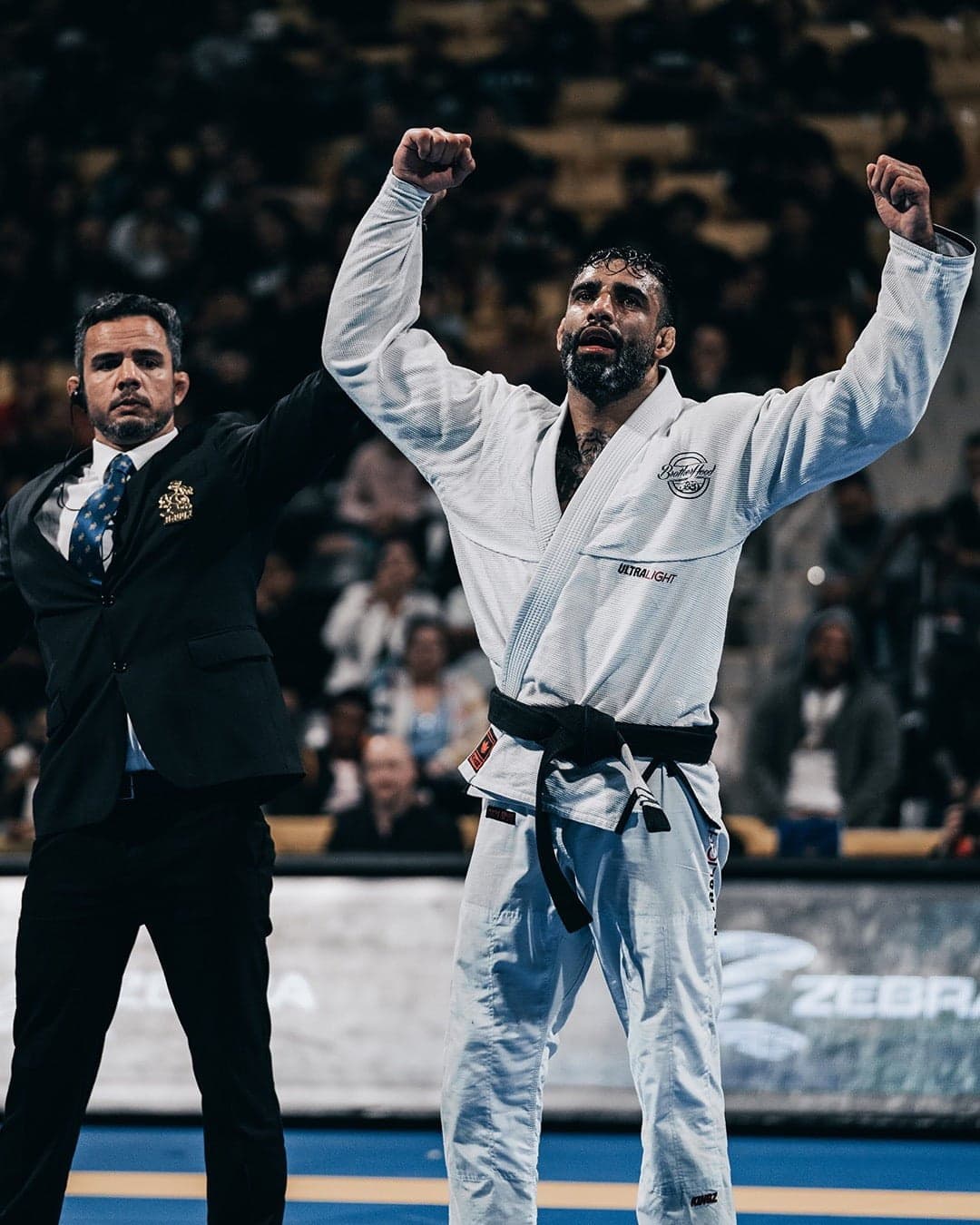
Leandro Lo: a career too large for one weight class
Quick answer: Leandro Lo won eight adult black-belt IBJJF World titles, with gold across lightweight, middleweight, medium-heavyweight, heavyweight, and the open class. That means four weight divisions plus the absolute, a distinction worth keeping clear. His career is especially useful to study through complete matches that show the relationship between his guard, passing, and standing work.
The first and last of Leandro Lo's adult black-belt World titles were separated by ten years. In 2012, he won at lightweight. In 2022, he won at medium-heavyweight. The number between those dates is impressive; the movement between divisions makes it harder to summarize.
A single image of Lo can become a shortcut for an entire career: the standing exchange, the open guard, or the passing sequence clipped at its most decisive moment. The record asks for a wider view. It belongs to an athlete who repeatedly found ways to compete successfully against different fields, in different parts of a match.
Begin with the categories behind the number
Lo's official website identifies World titles in light, middle, medium-heavy, heavy, and open divisions. The open class is not another fixed weight category. It brings the total to four weight divisions plus the absolute, rather than five progressively heavier weight limits.
That wording matters because broad claims can obscure the achievement they are intended to celebrate. A reader comparing careers needs to know what was counted. Keeping the absolute distinct makes the record more precise without making it less substantial.
It also prevents an easy mistake when discussing versatility. Moving between fixed weight divisions and entering an open class create different competitive circumstances. They can both be part of a remarkable record, but they should not be described as though they ask exactly the same question of an athlete.
The useful starting point is therefore the actual list. Once the categories are clear, you can look at the years, opponents, and matches within them. That sequence gives the discussion firmer ground than beginning with an argument about who deserves a superlative.
The early titles changed the shape of the record quickly
In its tribute to Lo, IBJJF records lightweight World titles in 2012 and 2013, followed by middleweight in 2014 and medium-heavyweight in 2015. Those results place several changes of division close together in the early part of his black-belt championship run.
A result alone does not explain why an athlete chose a division or how preparation changed. Avoid supplying those private reasons after the fact. What the sequence establishes is that the success was not confined to repeatedly returning to one weight-class field.
That makes chronological viewing useful. Compare matches from different points in the record instead of gathering only the most popular clips. Look for what remains recognizable and what changes with the opponent or situation. The question is not whether the athlete uses the same named move every time.
It is whether you can see recurring decisions: when contact is established, how an attack is connected to a follow-up, and what happens when the first route is blocked. Those questions allow the footage to provide evidence instead of asking it merely to confirm a reputation.
The 2022 final supplies a clear late-career example
The IBJJF's 2022 Worlds recap describes Lo's medium-heavyweight final against Isaque Bahiense. Lo worked from closed guard early, then scored with a double-leg takedown from standing and retained the lead to win his eighth World title.
The sequence is instructive because it crosses more than one phase of the match. It is not a story of an athlete restricted to a single preferred starting position. The recap gives a concrete example of guard work and a standing score appearing within the same successful final.
Do not read more into that account than it establishes. It does not reveal Lo's private tactical plan or prove that the takedown had been scheduled in advance. The visible result and the organizer's description are enough to identify what happened.
For a student watching the full match, the next questions should concern the transitions. How did the athletes return to standing? What contact preceded the score? What changed after the lead was established? Those details are harder to see in a short clip beginning just before the takedown lands.
Guard and passing belong in the same study
Lo's own site lists spider guard and the toreando pass among his favored positions and techniques. His published teaching material also covers both sides of that relationship. The BJJ Fanatics collection includes work on open guard and guard passing.
For a student, that creates two useful starting points. Choose a guard problem you encounter from bottom, or a passing problem you encounter from top, then compare the relevant instruction with match footage. Keep the question small enough that you can take it back to a coach and work on it in practice.
There is a practical reason to examine both guard and passing in one competitor. Each side exposes the problems the other side tries to create. Watching how an athlete establishes connections from bottom can make you more attentive to the connections they try to remove from top.
That does not mean copying an entire elite game at once. Pick a narrow relationship to study with your coach. You may learn more from understanding one grip exchange than from trying to reproduce every movement associated with a famous competitor in a single week.
Watch the work before and after the highlight
A highlight usually ends once the dramatic action has become obvious. For training purposes, the less dramatic seconds around it may be more useful. They show the starting distance, the opponent's response, and whether the athlete has to make another adjustment before the position is secure.
Use a complete match where possible and watch a short exchange several times with different questions. On one pass, follow the grips. On another, watch the relative positions of the hips and feet. Then consider the score and clock without assuming that every movement was chosen only to produce an immediate finish.
A focused viewing note can record:
The position before the attack begins.
The first connection that changes the exchange.
The opponent's response and the next adjustment.
The position reached after the apparent success.
This is a method for studying footage, not a claim that every Lo match contains the same pattern. Let the particular exchange determine the answer. If you cannot see a grip or an angle clearly, mark it as uncertain and ask a coach rather than filling the gap from memory.
Keep the 2018 absolute result in context
Lo's open-class title belongs in the record, but the manner of a final matters when describing a career. BJJ Heroes' account of his divisional record explains that Marcus Almeida conceded the 2018 absolute final after Lo had been injured in his weight-class final.
That does not remove the official title. It does mean a writer should not describe the absolute final as a match Lo won through a contested technical exchange. The distinction is ordinary accuracy, not a reason to dismiss the rest of the event or manufacture an argument about the athletes.
The careers of Marcus “Buchecha” Almeida and Lo crossed in ways that are not fully expressed by a single medal count. A results list records the placement; reporting provides the circumstances. Read both when the circumstances are relevant to the claim being made.
For fans, keeping that context can make the history more interesting. Sport contains friendships, decisions, and administrative outcomes as well as contested finishes. A careful account does not need to turn every part into the same kind of victory scene.
Remember the career without reducing it to its ending
Lo died in August 2022. The loss is part of any honest account of his life, but a training profile does not need to rehearse the circumstances at the expense of the work he left behind. The matches, results, and teaching material remain available for attention in their own right.
The IBJJF Hall of Fame includes him among the sport's recognized figures. Formal recognition is one part of remembrance. Another is the slower work of watching a complete match and noticing an adjustment that a highlight did not preserve.
There is no requirement for a viewer to extract a life lesson from every exchange. A technical question can be enough. The precision of a movement, the timing of a decision, or the way an opponent makes a familiar position difficult can reward close attention without an inspirational conclusion attached.
That is also a more durable way to introduce Lo to someone who did not follow his career as it happened. Give them a documented result and a full match to examine. Let the athlete's work occupy more space than the language used to praise it.
Main photo: Kingz; Leandro Lo tribute photograph.
The takeaway
Leandro Lo's eight World titles are clearer when the categories remain intact: four weight divisions and the open class. The sequence from lightweight success to his final medium-heavyweight title shows why one position or one season cannot adequately represent the career.
Study the complete exchanges around the famous moments. Read the result accurately, keep unusual circumstances in context, and use the footage to form specific training questions. There is enough detail in the work itself to sustain the interest.
Put one observation into practice
Find a suitable open mat, then ask a coach or experienced partner to help you examine one position from the matches you have studied.
FAQ
How many adult black-belt World titles did Leandro Lo win? He won eight IBJJF World titles. The organizer's 2022 recap identifies his medium-heavyweight victory that year as the eighth.
Did he win in five weight divisions? His titles covered four fixed weight divisions plus the open class. Some summaries group all five categories together, but the absolute is not a fixed weight division.
What happened in his final World Championship win? In the 2022 medium-heavyweight final, IBJJF reports that he scored a double-leg takedown against Isaque Bahiense and maintained the lead.
What should a beginner study from his matches? Choose one exchange and examine its starting position, grips, and follow-up. Ask your instructor to help interpret details rather than trying to copy an entire elite game at once.

Miles Serrano
Miles Serrano writes about competitors and the decisions that shaped their careers. He is more interested in the adjustment someone made in the third minute than in the medal count afterward.
Related Posts
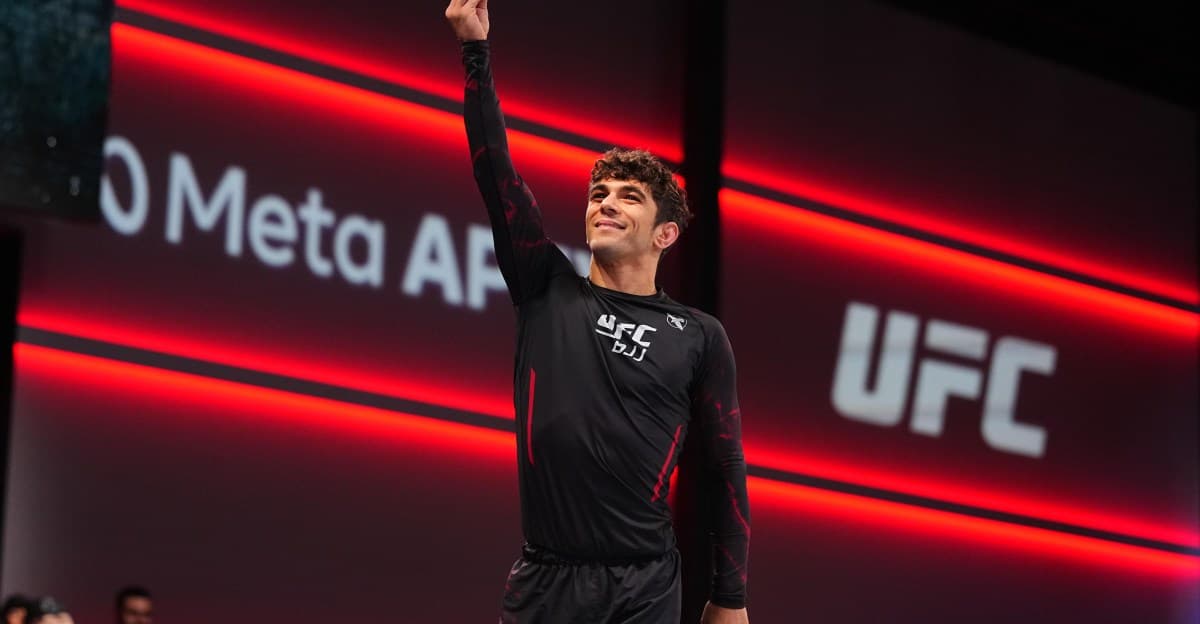
Mikey Musumeci gives up the belt to make room for MMA
Musumeci is vacating his UFC BJJ title to focus on MMA training. What he is leaving, what continues, and why the transition matters.
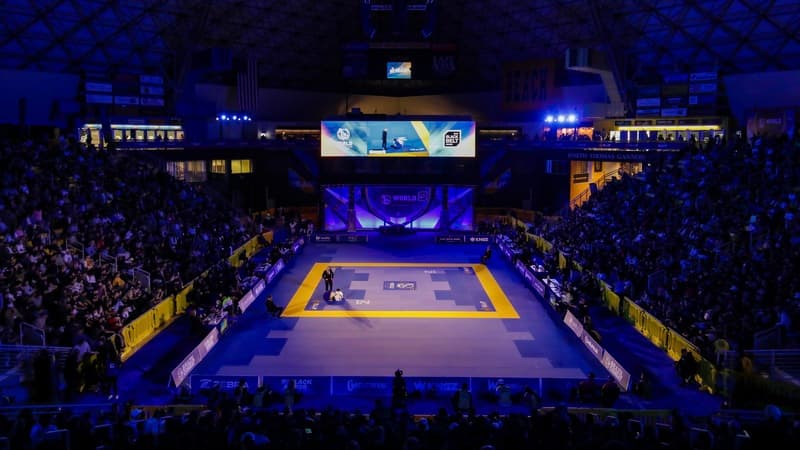
IBJJF membership: finish the paperwork before the deadline
IBJJF membership and tournament entry are separate steps. Plan documents, professor approval, renewals, and junior accounts before registration closes.
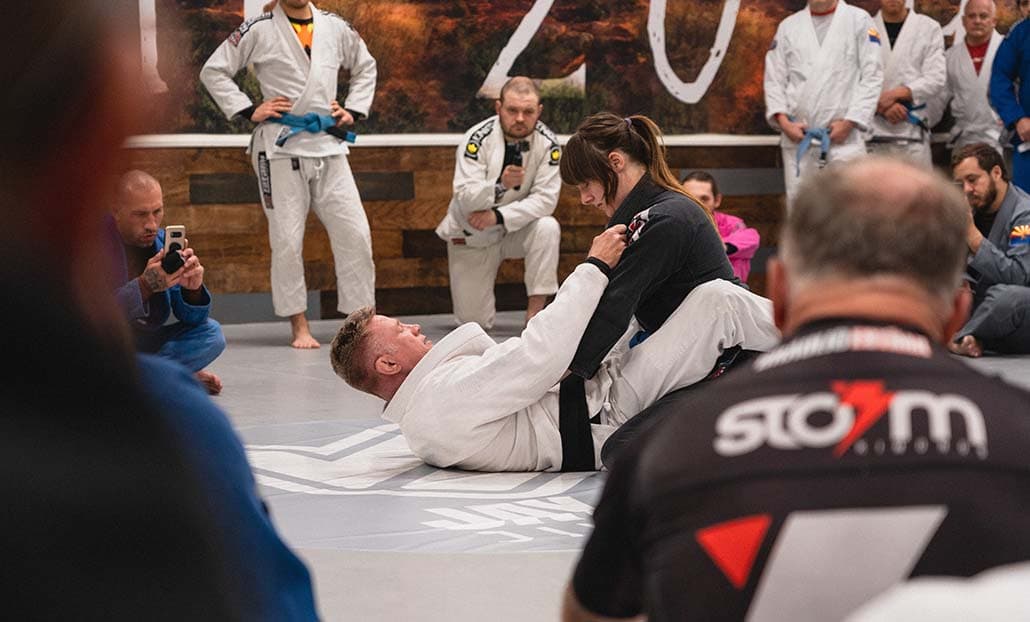
Choosing a BJJ seminar worth your time and travel
Choose a BJJ seminar by the subject, teaching format, access, and total cost. Know what to ask the host before buying a ticket.
Comments (0)
Loading comments...