
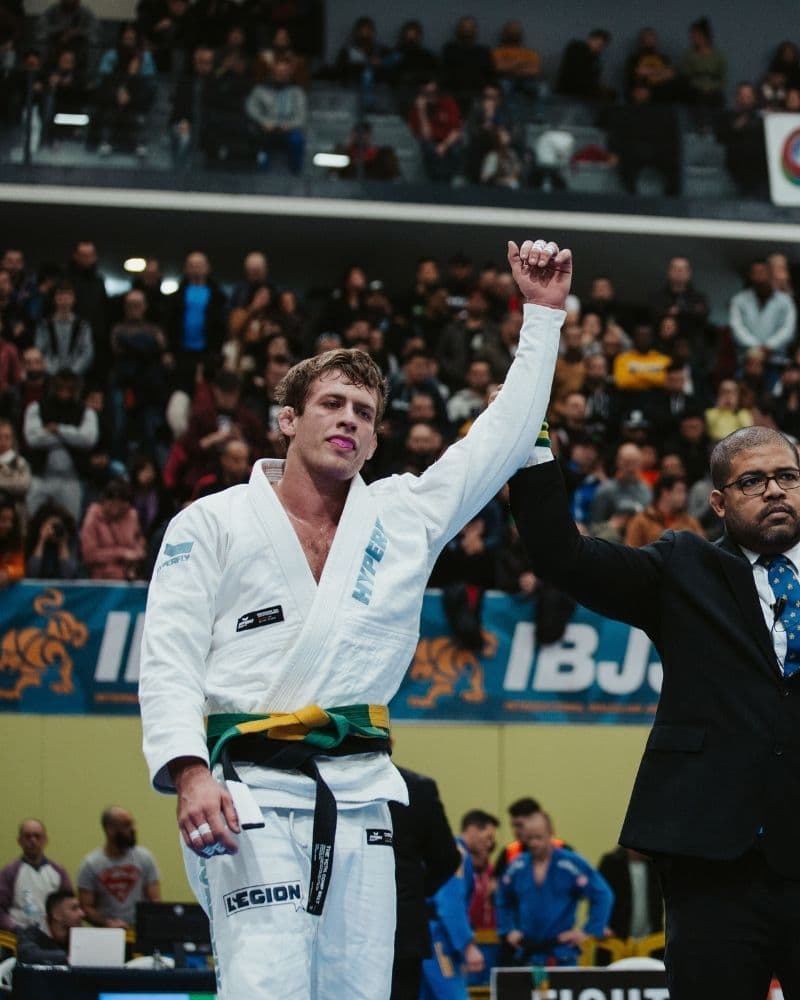
Keenan Cornelius: the experiment became an academy
Quick answer: Keenan Cornelius helped make experimental lapel guards part of mainstream competitive jiu-jitsu, but his career reaches beyond the gi. His ADCC results, teaching work, and San Diego academy offer three different ways to judge what he built.
Two medals from the same ADCC are an awkward detail to leave out of a story about a lapel specialist. Cornelius took bronze at both his weight and absolute in 2013. The jacket was nowhere in the rules.
His reputation can shrink to a single image: an opponent attached to a length of fabric, trying to identify which piece of the position needs removing first. That image explains the fascination. It does not explain the whole career.
The more interesting thread runs from a competitor looking for an answer, to someone teaching that answer, to an academy that has to serve people who arrived without knowing the question. Each stage demands something different from the same technical knowledge.
The black belt changed the standard
Cornelius received his black belt from André Galvão on September 14, 2013, according to his archived official biography. That date matters more than another vague description of him as a teenage prodigy. It marks the point at which colored-belt success stopped being the relevant comparison.
At black belt, an impressive earlier record does not place someone ahead on the scoreboard. Opponents have their own answers. A guard that separated a competitor from one field can become an ordinary problem for the next field to solve.
Cornelius's own retrospective describes that adjustment. On Keenan Online, he says competition became harder at black belt and connects his later improvement with developing unfamiliar positions. That is his account of the change, not a diagnosis of what he thought during any particular match.
The distinction is useful. Innovation sounds effortless once a position has a name. Before that, the athlete still has to decide whether a failed experiment needs more work or deserves to be abandoned. A difficult round cannot answer that by itself. Nor can a good one establish that the idea will survive against someone who has prepared for it.
A lapel is a piece of equipment with consequences
The attraction of a lapel-based guard is easy to understand without treating every configuration as a separate language. Cloth can provide an attachment that bare skin cannot. Where that attachment runs changes which movements remain available to the opponent.
This is the technical lens through which to watch Cornelius, rather than a step-by-step account of one of his matches. Watch the entry before looking at the final arrangement. An established grip may appear to do everything; the difficult work may have happened while the opponent still had room to refuse it.
Then watch the response. Does the passer stop to remove the connection, change direction, or continue trying to finish the original pass? Those are different problems for the guard player. A recognizable position is only the beginning of the exchange.
Cornelius associates his work with worm, squid, and gubber guards in his own account. Their memorable names helped give people a way to discuss the ideas. The names alone, however, cannot explain the placement of a knee or the timing of a grip change. For that, the position has to slow down enough to become teachable.
A useful viewing habit is to follow one connection through a sequence. Trying to identify every variation at once can leave a viewer knowing the vocabulary while missing the movement.
Beijing complicates the easy description
The official 2013 ADCC results place Cornelius third in the under-88kg division, behind Rômulo Barral and Rafael Lovato Jr. They also place him third in absolute, behind Roberto Abreu and Marcus Almeida. Two podium finishes belong in the same account as the lapel experimentation.
The results do not prove that every aspect of his gi game transferred to no-gi. They establish something simpler: his competitive record cannot be reduced to a tool unavailable in that event.
That distinction gets lost when an athlete's most recognizable work becomes a shorthand for everything they can do. A signature position is a useful introduction to a competitor. It is a poor boundary around the competitor's abilities.
For someone watching older footage, the contrast creates a better assignment than deciding which format is superior. Look at what the athlete must secure before advancing. In the gi, fabric may supply the connection. Without it, the same broad problem needs another solution. The actual grips differ; the need to manage an opponent who can move remains.
There is no need to convert this into an argument against specialization. Developing a distinctive game and competing successfully under another set of constraints can coexist. Cornelius's podium record makes that point without requiring a grand theory of his career.
A position has to survive an explanation
Winning with a technique and explaining it are separate tasks. A competitor can solve a situation through adjustments that never become conscious instructions. A student needs enough information to recognize why the same attempt has failed.
Cornelius's instructional work gives the technical experiment another life. His official site describes Keenan Online and the Lapel Encyclopedia as part of his teaching. An idea that appeared first as a competitive problem becomes material people can pause, repeat, and question.
That transition invites a different kind of evaluation. The relevant question is no longer only whether the instructor can execute the move. It is whether the explanation helps a student identify the next decision.
When choosing an instructional, look for:
An entry that begins somewhere you can actually reach in training.
Clear distinctions between the opponent's different responses.
An explanation of when the original plan should be abandoned.
A long library does not automatically answer those needs. Neither does a famous surname. An instructional earns its place when it makes an otherwise confusing exchange easier to examine on the mat.
For a student interested in Cornelius's work, there is little value in collecting every variation before testing one. Start with a coach-approved position, understand the relevant competition rules, and see what your partner can prevent. The lesson becomes specific once there is a real obstacle.
An academy changes who the explanation is for
Legion adds another audience to the story: people who may have no interest in professional brackets. The academy's current official site identifies Cornelius as its founder and Miha Perhavec as co-founder and beginner course director. It lists adult, children's, and no-gi programs alongside a structured beginner course.
Those details were checked on October 10, 2026, as an update to this profile's April publication date. They describe the academy's published offering, not an independent assessment of a class or a promise about who will teach a visitor.
The wider point is an editorial one. An academy needs an answer for the newcomer who cannot yet tell guard from mount. Competitive reputation may bring that person to the door. The class still has to make sense once they arrive.
This is a demanding translation problem. The instructor knows what a movement is preparing for; the beginner may not know which direction is forward. More detail can help, but it can also bury the immediate task. An organized introduction chooses what the student needs now and what can wait.
Our San Diego jiu-jitsu guide offers a broader starting point for comparing local training. A gym associated with a well-known athlete should still be judged against the classes a prospective member can attend.
The useful lesson is smaller than copying his game
A recreational student does not need Cornelius's competitive ambitions to take something from this career. Nor does the lesson have to be an elaborate lapel sequence. It can be the habit of describing a problem closely enough that a coach can help.
Suppose a passer repeatedly removes your preferred grip. That is a hypothetical training problem, not evidence that your entire guard is broken. You can ask whether the connection was poorly placed, established too late, or being used in a situation where another choice would be better.
The experiment then becomes manageable. Repeat the starting position with a willing partner at an agreed pace. Change one feature. Stop when the result is clear enough to discuss. This gives a coach something more useful than a complaint that a named guard never works.
Keep three brief notes if they help:
Where the exchange began.
What the partner did to prevent your intended action.
What you want to test next time.
None of this requires inventing a new system. Most students need an explanation for a familiar failure before they need a new name. An ambitious competitor's career can suggest a method without becoming a demand that everyone train like an ambitious competitor.
Main photo: Keenan Online; photographer not identified on source page.
The takeaway
Cornelius is worth studying across formats and roles. The lapel work explains much of his technical reputation. The ADCC podium finishes prevent that reputation from becoming a narrow caricature. Teaching and academy work raise a further question: can an idea remain useful when somebody else has to learn it?
That is a more interesting measure than simply counting how many unusual positions carry a memorable name. Watch the competitive problem, then examine how it is explained. For your own training, choose one part that fits the classes, rules, and partners available to you.
Find a room to test an idea
Use Let's Roll's gym directory to compare local academies, then ask which class is appropriate for the position you want to study.
FAQ
Who gave Keenan Cornelius his black belt? His archived official biography records his promotion under André Galvão on September 14, 2013. That historical detail should be kept separate from his later academy affiliation.
Did Keenan Cornelius compete successfully without the gi? Yes. ADCC's official 2013 results list him as the bronze medalist at under-88kg and in the absolute division. Those are two distinct podium finishes at that event.
What is Legion American Jiu-Jitsu? It is the San Diego academy whose official site identifies Cornelius as founder. Check the academy directly for current schedules, visitor arrangements, and instructor availability before planning a visit around a particular person.
Should a beginner start by learning worm guard? Ask the coach responsible for your training. A recognizable name is not a curriculum, and a beginner may need earlier skills to use the position meaningfully. Interest in a specialist can guide a question without deciding the entire training plan.

Miles Serrano
Miles Serrano writes about competitors and the decisions that shaped their careers. He is more interested in the adjustment someone made in the third minute than in the medal count afterward.
Related Posts
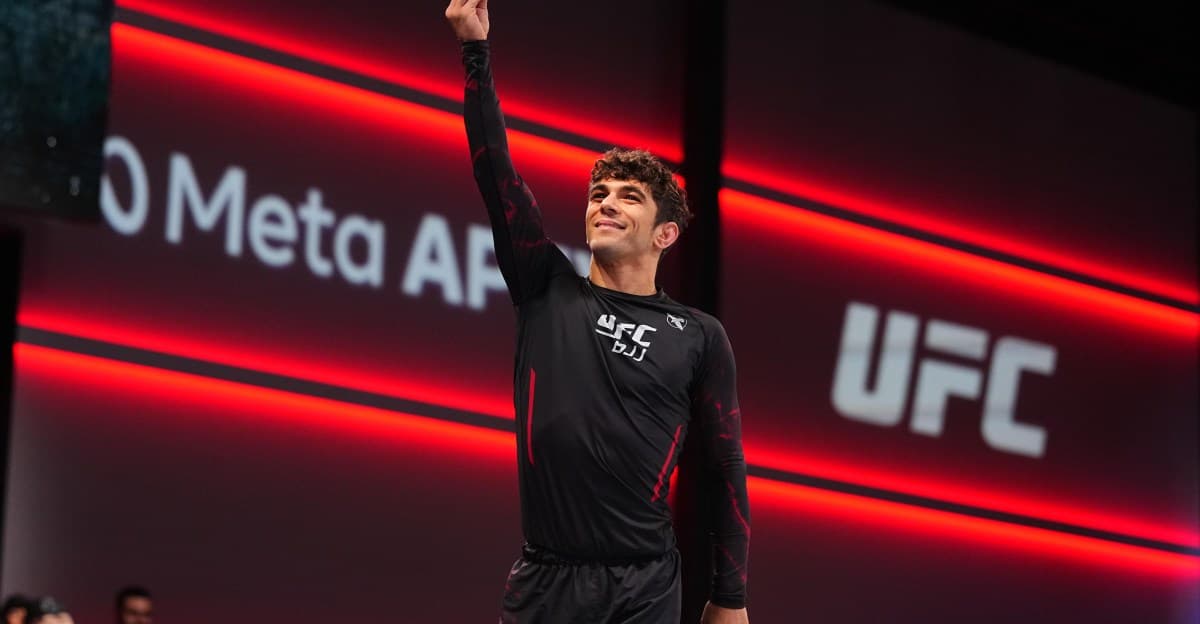
Mikey Musumeci gives up the belt to make room for MMA
Musumeci is vacating his UFC BJJ title to focus on MMA training. What he is leaving, what continues, and why the transition matters.
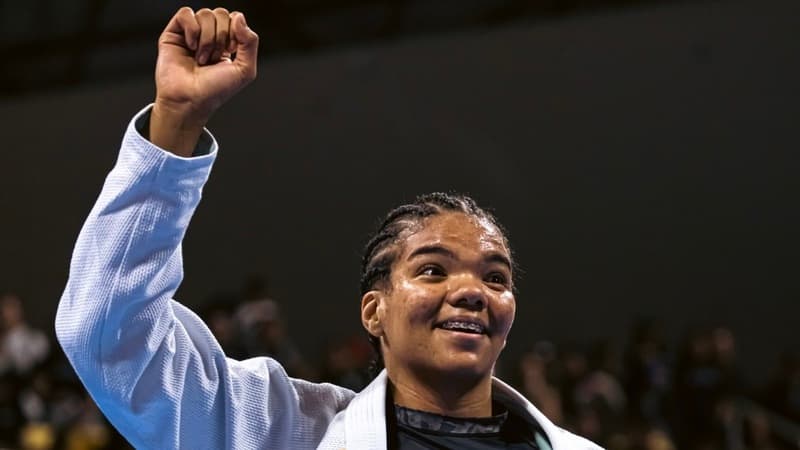
IBJJF membership: finish the paperwork before the deadline
IBJJF membership and tournament entry are separate steps. Plan documents, professor approval, renewals, and junior accounts before registration closes.
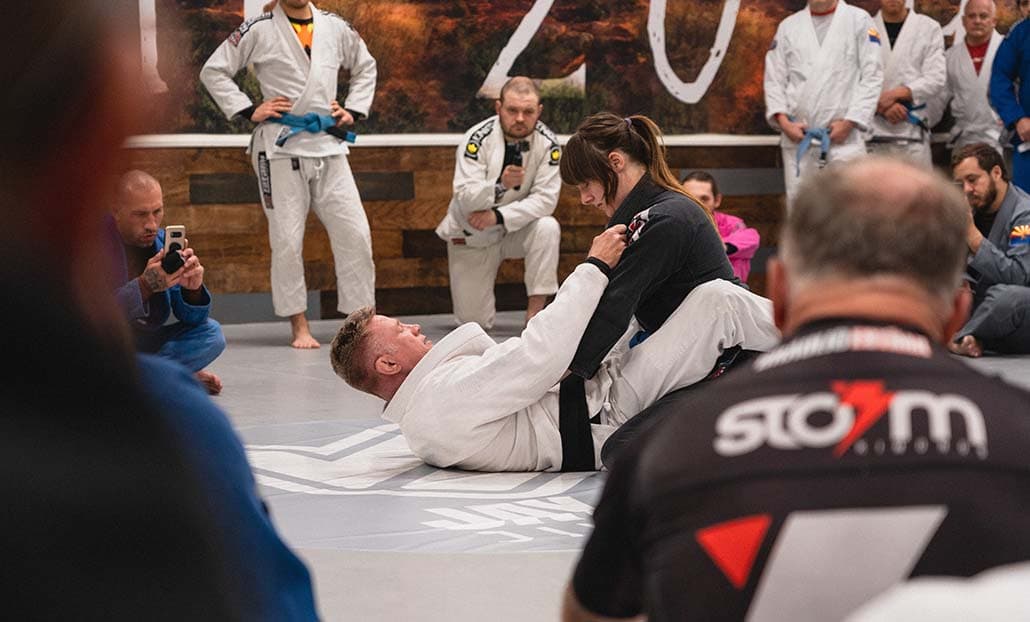
Choosing a BJJ seminar worth your time and travel
Choose a BJJ seminar by the subject, teaching format, access, and total cost. Know what to ask the host before buying a ticket.
Comments (0)
Loading comments...