
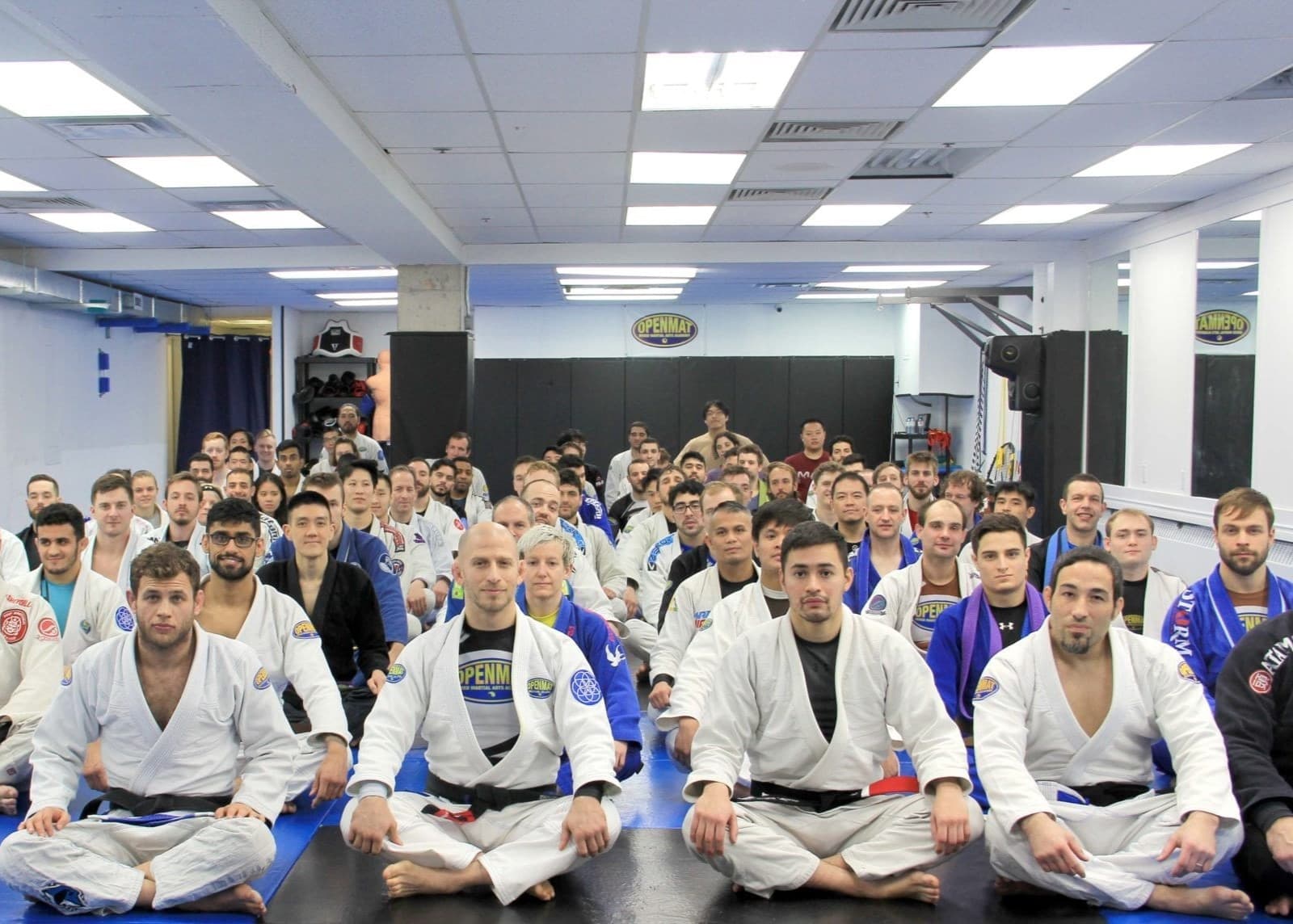
Jiu-jitsu in Toronto: narrow the neighborhood first
Quick answer: Narrow a Toronto BJJ search to the neighborhoods and routes you can realistically use before comparing academies. Check the exact address, suitable class times, visitor terms, and the trip home. A strong training choice is one you can reach consistently with your gear and ordinary weekly commitments.
The nearest academy on a citywide search may not be the easiest one to attend. The route matters: where you start, how you travel, and what the trip looks like after class.
Toronto gives a BJJ student plenty to investigate, but a useful shortlist is smaller than the map. Start with the part of the city that fits your week. Then ask the academy which session fits your experience.
The academy details below were checked on October 10, 2026, as an update to this guide's March publication date. Confirm current schedules, access, and prices directly before making a visit or joining.
Search from the place your training day begins
Home is not always the right starting point. If you train after work or university, the first trip may begin there, with the return ending somewhere else. Compare the complete route rather than checking a single distance from your front door.
Put two ordinary training days into a calendar. Include when you can leave, how much time you need to arrive and change, and when you must be home. This makes it easier to reject a theoretically convenient option that depends on everything going perfectly.
For a visitor, use the actual accommodation address and the commitments on the day. A class that looks accessible from a hotel may become a different proposition if you will leave from a meeting across the city. Plan the version of the day you expect to have.
Do not decide the whole membership question from this step. You are reducing the list to places worth contacting. Teaching, class format, and personal fit still matter once the travel is plausible. The route is a filter, not a complete assessment of an academy.
Keep the academy names and addresses distinct
Toronto BJJ's contact page lists 813 Bloor Street West. That is a specific academy name and address, not a generic label for every BJJ school in Toronto. Save both together when comparing options.
OpenMat's contact page lists 295 College Street, Level B. Include the level in your notes and ask about the entrance if you are unfamiliar with the building. A map pin can get you to the street without explaining where to report.
Toronto Jiu-Jitsu Club lists 2073 Danforth Avenue and describes the location as steps from Woodbine Station. Confirm the actual class and arrival instructions with the club rather than treating proximity to a station as the whole visit plan.
These are three starting points, not a ranking or a complete city directory. Their purpose here is to make the search concrete. Compare each with your available route, then contact the location that offers a plausible session for your experience and timing.
Check the return route as carefully as the arrival
Getting to class is only half the trip. Check how you will return at the time you expect to leave, including the walk from the academy and any transfers. A route that works well in one direction may require different planning later in the evening.
The TTC service-advisory page provides information about service changes, planned closures, construction, and alerts. Check the relevant current information close to departure instead of relying entirely on a route you saved several days earlier.
This is especially useful for a first visit, when you have less spare attention for finding a new entrance or correcting a missed stop. Leave enough margin that a small delay does not become an argument with the class start time.
If you drive or cycle, investigate the practical arrival arrangement too. Ask about parking or bicycle storage rather than assuming either is included. The aim is to know where you and your belongings will go before you reach the building, carrying a bag that already contains enough decisions.
Choose the program before buying the schedule
A large timetable is useful only if it includes sessions you can attend at your level. Ask which classes are appropriate for someone with your experience, whether gi and no-gi are separate, and how beginners enter the program.
OpenMat's program information lists gi BJJ, no-gi, and other martial arts, with beginner and advanced BJJ instruction described on the site. That makes the specific class label worth checking. An academy offering several disciplines is not promising that every evening slot is a BJJ session.
For any school, ask what a first visit involves. You may need to reserve, complete a waiver, or attend an introductory session before joining another class. Do not assume that a belt earned elsewhere automatically answers every question about placement.
Keep the first inquiry practical:
State your experience and whether you want gi or no-gi.
Name the day and class you hope to attend.
Ask about booking, arrival time, and clothing requirements.
Confirm whether you are a prospective member or a temporary visitor.
Those details help the academy answer the question you actually have, instead of sending information for a different kind of student.
A trial should test the week you intend to live
A trial visit is most informative when it resembles your future routine. If you expect to train after work, try an after-work class. A relaxed weekend visit may tell you little about whether you can manage the weekday trip repeatedly.
During the visit, notice practical details alongside instruction. Did you have enough time to change? Was the class suitable? Did the return trip fit your evening? These are observations you can make without pretending that one session reveals everything about the academy.
Ask about trial eligibility and terms before attending. A prospective-member offer may not be the same as a visitor pass. Tell the academy which situation applies so the cost and access arrangements are clear.
If you are considering membership afterward, read the written terms rather than treating the trial conversation as the entire agreement. The BJJ gym contract guide provides questions about commitments and changes. You can enjoy the class and still take time to understand the arrangement you are about to enter.
Carrying the kit is part of the commute
A BJJ bag changes the practical shape of a day. You may need to take it to work, store it during other commitments, and carry used gear home afterward. Plan that routine before promising yourself several classes a week.
Ask the academy about changing facilities and any storage rules. Do not assume that a place to train includes a place to leave a large bag all day. If you need a specific facility, confirm it directly rather than inferring it from photographs.
Bring a separate bag for used clothing and enough clean kit for the sessions you have arranged. For a visitor, decide where laundry will happen. A second class is easier to enjoy when it does not depend on yesterday's gear becoming dry on an improvised hotel-room hanger.
Weather also belongs in the packing plan, without needing to turn the trip into an expedition. Check conditions for the day and choose an outer bag and clothing that suit the route. You should arrive ready for the class you booked, not already occupied with how to get soaked belongings through the rest of the evening.
Compare the experience without writing a city ranking
After visiting, record a few concrete observations. Note the class format, how questions were handled, whether the session suited your experience, and whether the journey fit your week. These are more useful than trying to assign the whole academy a score after one class.
Separate preference from a claim about quality. You may prefer more instruction, a different pace, or another balance of gi and no-gi. Another student may want exactly what you decided against. A personal choice does not require a negative verdict about the room.
For long-term training, imagine an ordinary month rather than your most enthusiastic first week. Consider the commute, available sessions, and the written membership arrangement together. A plan that works only during an unusually quiet period may need adjustment before it becomes a commitment.
If you want occasional additional training, investigate open mats after establishing the basic routine. Confirm access with each host. A second room can add variety, but it should not become a way of avoiding the practical question of where you will train consistently.
Main photo: OpenMat Mixed Martial Arts; official academy photograph.
The takeaway
A Toronto BJJ search becomes useful when it moves from a citywide list to a few exact addresses and suitable sessions. Toronto BJJ, OpenMat, and Toronto Jiu-Jitsu Club offer concrete starting points to compare with your own route. Confirm the program and first-visit terms before traveling.
Then test the whole training day, including the return and the kit. The academy you choose should fit the week you actually have. A manageable routine gives you a better basis for a decision than a broad claim about which gym is best for everyone in the city.
Start with a reachable shortlist
Browse the gym directory, compare locations with your normal route, and contact the academy about a suitable first class.
FAQ
Where can I find BJJ in Toronto? This guide identifies Toronto BJJ on Bloor Street West, OpenMat on College Street, and Toronto Jiu-Jitsu Club on Danforth Avenue as starting points. Confirm the current address and class directly, and compare them with your own travel needs.
Can I visit a Toronto BJJ gym without joining? Ask the academy about its visitor policy for the session and date you want. A trial for prospective members and a short-term drop-in may have different conditions. Confirm the cost, booking process, and required equipment.
Should I choose a BJJ gym near home or work? Compare the complete route on your likely training days. Work may be the departure point while home is the destination afterward. Test the schedule you expect to repeat rather than relying on one map distance.
How do I plan a TTC trip to training? Use current route information and check TTC service advisories close to departure. Include the walk to the academy, arrival time, and the return trip after class. Confirm the academy's entrance separately if it is unfamiliar.

Maya Corbett
Maya Corbett answers the questions you have before walking into an unfamiliar academy — what to book, what to bring, who to ask. Every detail in her guides traces back to something the gym published itself.
Related Posts

Mikey Musumeci gives up the belt to make room for MMA
Musumeci is vacating his UFC BJJ title to focus on MMA training. What he is leaving, what continues, and why the transition matters.

IBJJF membership: finish the paperwork before the deadline
IBJJF membership and tournament entry are separate steps. Plan documents, professor approval, renewals, and junior accounts before registration closes.
Choosing a BJJ seminar worth your time and travel
Choose a BJJ seminar by the subject, teaching format, access, and total cost. Know what to ask the host before buying a ticket.
Comments (0)
Loading comments...