
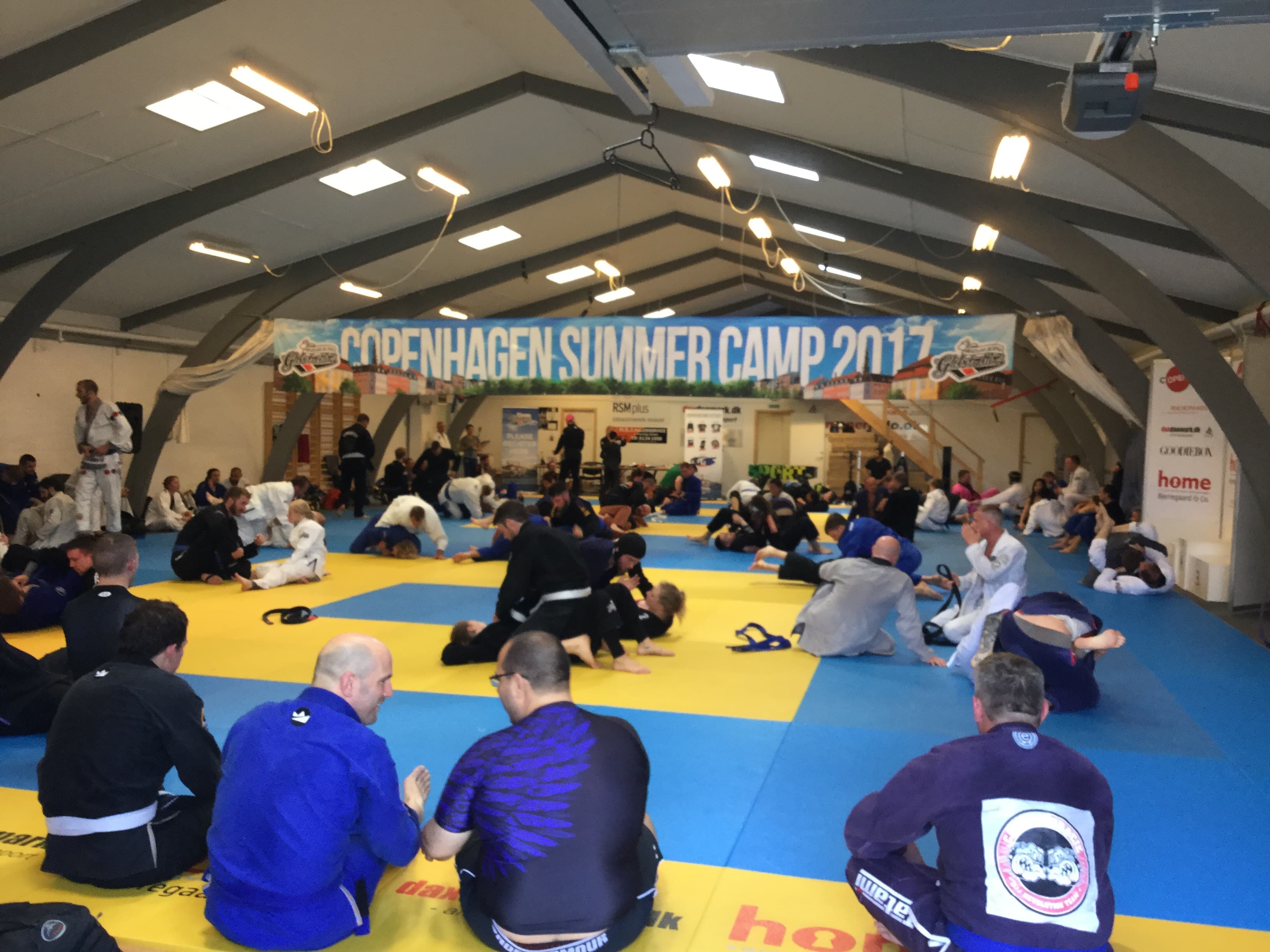
A Copenhagen BJJ camp leaves room for a second kind of trip
Quick answer: A city BJJ camp lets you combine a shared training schedule with a trip you still shape yourself. BJJ Globetrotters advertised its Copenhagen camp for September 14–19, 2026, with gi, no-gi, and open mats. The format works best when you choose a few priorities instead of treating every available class as an obligation.
A camp timetable can make a city disappear. Fill every gap with another session, and the place outside the gym becomes a route between the mats, the supermarket, and the room where your gi refuses to dry.
There is nothing wrong with traveling mainly to train. But a camp in Copenhagen creates another possibility: a week with jiu-jitsu at its center and enough unclaimed time to meet the city around it. The difference begins with what you decide to leave off the schedule.
This is a look at that format, using the published Copenhagen program and an earlier participant's account. It is not a firsthand review of the September 2026 event, and its past dates should not be mistaken for a current booking invitation.
Copenhagen belongs to the camp's early history
BJJ Globetrotters' 2026 Copenhagen listing described a return to the city where it held its first camp in 2013. The September program advertised six days, more than 45 gi and no-gi classes, and extensive open-mat time. Food, flights, and accommodation were separate from the camp ticket.
That structure leaves a meaningful part of the trip with the traveler. You choose where to sleep, how to reach the training venue, and how much of the city to explore between sessions. Two people at the same camp can have noticeably different weeks without either having attended it incorrectly.
The appeal is partly that shared center. A solo traveler has somewhere familiar to go each day and a subject in common with the people there. The rest of the day can remain open. You don't have to turn the entire holiday into a group itinerary to avoid spending it alone.
A large timetable is a menu, not an attendance record
The organizer's explanation of how its camps work says participants choose their sessions and describes a rotating group of instructors teaching their own material. It explicitly allows a lighter week. There is no single curriculum that requires everyone to attend everything in order.
That makes selection part of the experience. Pick a subject you already want help with, then allow room for something unfamiliar. If every session is chosen only because the instructor's name is recognizable, you can finish with a notebook full of interesting details and no clear idea where to begin at home.
One workable approach is to choose an anchor class each day. Treat the rest as options. That gives the morning a purpose without turning an unexpected lunch invitation into a scheduling failure. It also leaves time to return to a useful detail instead of immediately replacing it with the next class's material.
The camp fee buys access. It does not make each unused minute a financial loss. Evaluate the week by what you can remember and use, and by whether you enjoyed being there, rather than by the number of timetable boxes you managed to tick.
An older participant account gets the trade-off right
In his 2017 Copenhagen camp account, Mark Magpusao described choosing a limited number of classes and attending open mat while taking notes. Looking back, he wished he had joined more social activities earlier in the week. He also wanted to record himself reviewing techniques with a partner to support those notes.
The value of that account is its specificity. It doesn't promise that a camp automatically produces friends or that more training always produces a better trip. It describes choices made by one participant, including things he would change. His week should not be presented as evidence of what every attendee experienced nine years later.
For a future trip, the practical question is what you are likely to postpone until it is too late. A quiet traveler might plan to attend the welcome gathering. Someone who normally accepts every invitation might protect one early night. Neither needs to imitate somebody else's complete schedule to make use of the observation.
Choose accommodation around the day you will actually have
A room that looks close to the city center may still be inconvenient for the training venue. Plot both addresses before booking. Check the route at the times you expect to travel, including the return after the last session you might attend. A short line on a map is not a door-to-door estimate.
For a city camp, compare the following before deciding:
The trip between the room and the confirmed training venue.
Laundry access and somewhere permitted to dry training clothes.
The room's cancellation terms and actual check-in arrangements.
Nearby food options that fit the hours you intend to keep.
Ask about laundry directly if the listing is vague. A decorative photograph of a bathroom does not establish that a wet gi can dry there overnight. Sharing a room also means agreeing where clean and used equipment will go, especially when one person brings twice as much as the other.
Think about the arrival day separately. If the flight lands before check-in, you need a plan for luggage. If it arrives late, confirm how to get into the property. These details are easier to resolve at home than while searching a dark street with a training bag and a nearly empty phone.
Keep one piece of the city outside the training schedule
Choose something you want to do that doesn't depend on another camper joining you. It might be an unhurried walk, a museum visit, or lunch in an area you are curious about. The point is to give the place a role beyond serving the camp.
Put that activity in a realistic part of the day. A short break between classes is a poor home for an ambitious excursion. You will either rush back or spend the outing calculating how much of the next lesson you are missing. A free afternoon gives both the city and your attention more room.
Leave some choices until you arrive. Weather, a good conversation, or a useful recommendation may change what appeals. A tightly reserved sequence of attractions can be as restrictive as an overfilled class schedule. One thing you care about is enough to start with.
If you are traveling with someone who doesn't train, plan shared time before the camp starts. They should not have to wait each morning to learn whether another open mat has absorbed the afternoon you meant to spend together.
Make introductions while there is still a week ahead
A first conversation doesn't need a performance. Ask where someone trains or which class they just attended. If you enjoyed working together, suggest another round later or ask whether they are getting food. A specific invitation is easier to answer than an indefinite promise to hang out sometime.
Keep invitations easy to decline. Somebody may have a partner waiting, a call to make, or a quiet evening planned. A camp can be friendly without requiring constant availability. The same applies to rolling: explain what pace you want and respect the other person's answer.
Remember names in whatever simple way works for you. After several days, a room full of initially unfamiliar people becomes easier to enter if you can greet a few of them properly. You needn't collect everyone's contact details. A handful of conversations that continue is a perfectly good result.
Before sharing a group photograph, check that the people in it are comfortable being posted. A social week does not make every moment promotional material. The best record of a trip can remain smaller than the full camera roll.
Open mat can connect the classes
Class gives you material. Open mat gives you a chance to ask what you understood. Instead of using every round as a fresh contest, find a willing partner and revisit one position from the day. Agree on the starting point and what each person is trying to do.
Keep that experiment narrow. You might discover that you remember the finish but not the entry, or that a small detail in the demonstration mattered more than it seemed. Those are useful findings. Write the question down while it is still clear, then ask the instructor at an appropriate moment.
Don't assume every partner wants the same kind of session. Someone may want relaxed rounds; someone else may be working on their own project. Ask before turning their open mat into your private lesson. A short agreement saves both people from trying to read the other's intentions through movement alone.
For training beyond the camp, use the gym directory to explore options and contact each host. A camp ticket does not automatically provide access to unrelated classes elsewhere in the city, even if you meet someone who trains there.
Bring home a small plan instead of a crowded notebook
Before leaving, choose one topic to revisit during your first week back. Include the starting position, the main detail, and the question you still have. If the organizer provides recordings, save the relevant reference rather than relying on a memory of the instructor's shirt or the day of the week.
Tell your regular coach what you want to explore. That makes it easier to fit the camp material into the training you already do. A new detail may improve a familiar position; another idea may be worth keeping for later. There is no need to rebuild your entire game because you spent several days away.
Follow up with the people you actually connected with. Send the photograph you promised or the name of the gym you recommended. A brief, specific message is enough. The trip doesn't need a grand conclusion, but the small promises made during it are worth keeping.
Main photo: Mark Magpusao / BJJ Globetrotters; Copenhagen Summer Camp 2017 archive photograph, not the 2026 event.
The takeaway
Copenhagen's city-camp format offers a useful combination: a reason to gather on the mats and freedom to decide what happens around them. The published program supplies opportunities. The traveler still has to choose which ones fit the week they want.
Start with a few training priorities, a workable place to stay, and time that belongs to the city. Leave enough space to revisit a good class or accept a simple invitation. A trip can be full without every hour being occupied.
Find training for your next trip
Explore open mats, then confirm dates, booking requirements, and visitor access directly with the host.
FAQ
When was the advertised Copenhagen camp in 2026? The organizer listed September 14–19, 2026. Those dates have passed; this article examines the city-camp format rather than offering a live booking for that event.
Was accommodation included? The published Copenhagen listing separated accommodation, food, and flights from the training ticket. Always read the inclusions for the specific camp you are considering, because different events can use different arrangements.
Do you need to attend every class at a BJJ camp? No. BJJ Globetrotters says participants choose their sessions. A few well-chosen classes and time to revisit the material can make more sense than trying to fill every available hour.
Is the photograph from the 2026 event? No. It is Mark Magpusao's archive photograph from the Copenhagen Summer Camp in 2017. It illustrates the camp's history and should not be read as documentation of the September 2026 venue or attendance.

Maya Corbett
Maya Corbett answers the questions you have before walking into an unfamiliar academy — what to book, what to bring, who to ask. Every detail in her guides traces back to something the gym published itself.
Related Posts

Mikey Musumeci gives up the belt to make room for MMA
Musumeci is vacating his UFC BJJ title to focus on MMA training. What he is leaving, what continues, and why the transition matters.
IBJJF membership: finish the paperwork before the deadline
IBJJF membership and tournament entry are separate steps. Plan documents, professor approval, renewals, and junior accounts before registration closes.
Choosing a BJJ seminar worth your time and travel
Choose a BJJ seminar by the subject, teaching format, access, and total cost. Know what to ask the host before buying a ticket.
Comments (0)
Loading comments...