
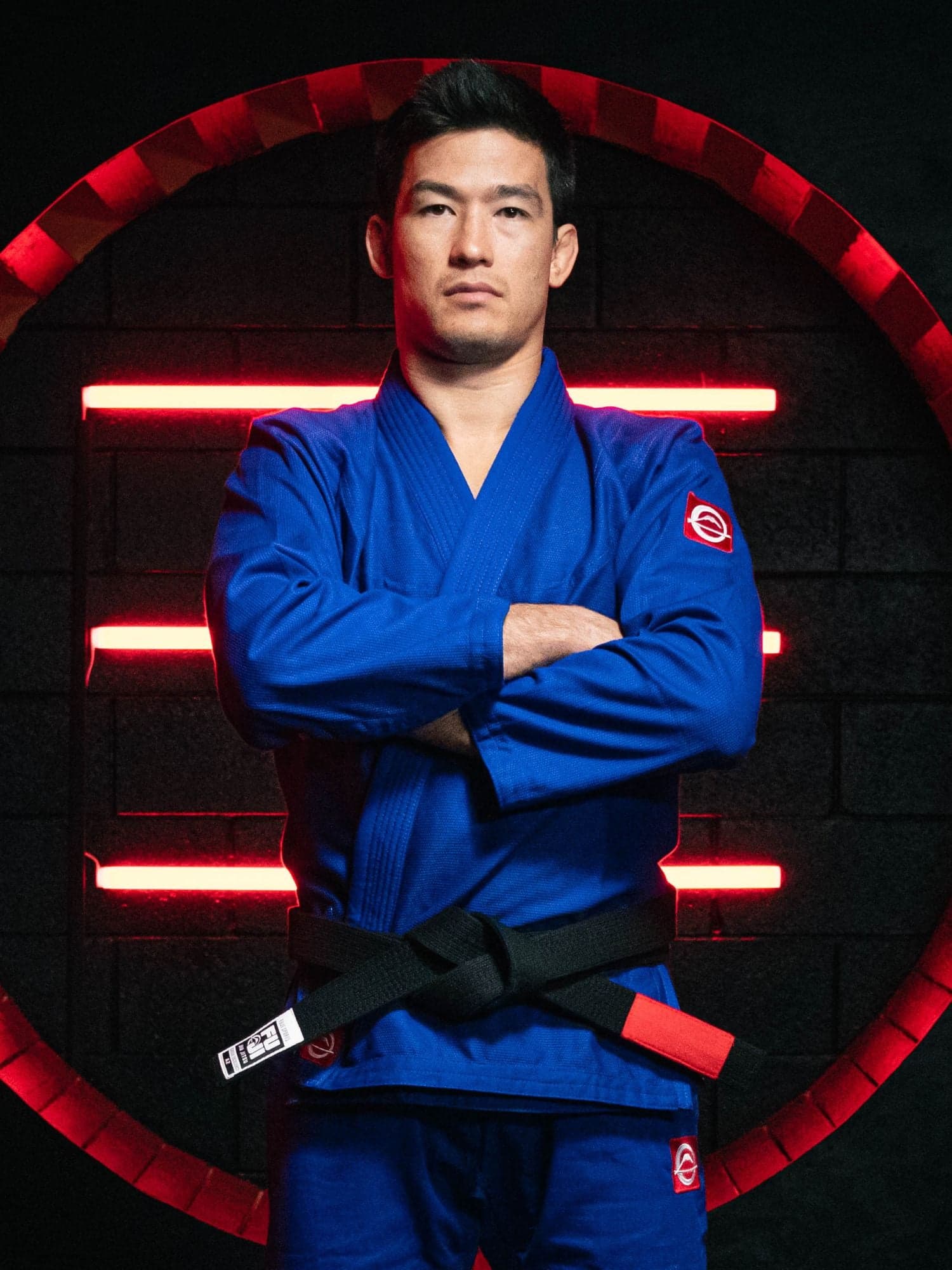
BJJ gi patches: check the placement before the stitching
Quick answer: Ask your academy about its patch policy, and check the rules of any event where you plan to wear the gi. For IBJJF competition, use the official placement diagram and attachment requirements rather than copying another competitor's jacket. Plan the layout before sewing anything permanently.
A gi patch is easy to buy and surprisingly annoying to move. The design that looked perfect on a screen can arrive large enough to claim most of a sleeve, including the part you were not supposed to decorate.
There is room for personality on a training uniform. There is also room for a few minutes of planning before enthusiasm meets a sewing machine. The rule references in this guide were checked on October 10, 2026, as an update to its April publication date; verify the rules for your own event before altering a competition gi.
Decide which gi is getting the patch
Begin with the garment's job. A gi used only at your academy has to meet that academy's requirements. A gi you intend to take to competitions also needs to satisfy the relevant organizer. A travel gi may encounter another host's uniform policy. One jacket can do all three jobs, but check the conditions before assuming it will.
Ask the instructor or front desk what the school requires. Some questions are straightforward: whether a team patch is needed, where it should go, and whether other patches are permitted. Get the actual answer instead of guessing from a class photograph in which half the jackets are facing away.
If you own more than one gi, keeping a competition option simple may save work later. That is a practical choice, not a claim that decoration itself is a problem. The issue is whether the finished garment is suitable for the places you want to wear it.
A favorite patch can also stay off the gi for now. Owning it does not create a deadline for attaching it before the next class.
Use the official diagram for competition placement
The IBJJF uniform page requires patches to be in authorized regions, made of cotton fabric, and properly sewn. It directs athletes to the illustrated placement rules. The linked uniform manual also addresses embroidery and printing, including a prohibition on embroidery or printing inside or outside the collar.
Look at the current illustration while positioning the actual patch. A verbal description such as on the leg or on the back is too broad to establish compliance. The diagram shows boundaries; your patch has dimensions. Compare both, and ask the organizer if the proposed placement remains unclear.
Keep this distinction in mind if someone says their gi passed inspection before. That describes one garment at one inspection. It is useful background, but it does not establish that your differently sized patch, placed a little lower, will meet the rules at another event.
Do the check before stitching. The official page says patches that are not properly sewn or are in unauthorized areas will be removed by inspectors. The inspection queue is an inconvenient place to discover that the layout needed another look.
Paper makes a cheaper first draft than thread
Trace the patch onto paper or use a piece cut to the same dimensions. Lay the gi flat and try the proposed arrangement. Then put the garment on, without leaving pins or other sharp objects in it, and check how the position changes when the jacket overlaps and the belt is tied.
This is especially useful when arranging several patches. A layout that looks balanced on an open jacket can disappear beneath the overlap or become crowded once the gi is worn. Check the front and back separately rather than assuming a photograph of one side settles the whole design.
Keep seams and moving fabric in view. You want the patch to lie flat and remain comfortable during normal movement. If the fabric bunches under the proposed position, ask an experienced alterations professional about it before committing.
Take a clear photograph of the planned layout for whoever will sew it. Include the actual patch and garment, not only a reference image from another model. A small amount of specificity now is kinder than explaining later that somewhere around there was not what you meant.
An iron-on backing is not the whole attachment plan
Read the patch maker's attachment instructions and the gi's care label. Do not assume that the presence of adhesive settles how the patch should be fitted for training or competition. Where the organizer requires sewing, adhesive alone does not answer that requirement.
If you are hiring someone, explain that the garment will be used for grappling and show the intended location. Ask about suitable stitching and whether the material presents any difficulty. You are requesting a practical alteration, not asking the tailor to interpret tournament regulations on your behalf.
Before taking the gi to class, check the finished work:
The entire patch sits where you intended, within any applicable placement limits.
Its edges are secured and do not lift away from the fabric.
No pins, needles, or temporary fasteners remain in the garment.
The stitching has not accidentally joined layers that need to move separately.
The inside feels comfortable when the gi is worn and the arms move.
If something is wrong, return to the person doing the alteration or ask for help. A five-minute inspection at home is easier than troubleshooting a flapping corner between rounds.
A team patch is also a conversation
A logo can represent membership, an affiliation, a sponsor, or simply something you bought. The person looking at it may not know which. If you are unsure whether a patch implies a connection you do not have, ask before wearing it as part of your training uniform.
This need not become an elaborate discussion about loyalty. A new academy can tell you what it expects on the gi. A host gym can explain visitor policy. A sponsor can clarify where its logo is meant to appear. The people concerned are better sources than a debate assembled from unrelated internet comments.
Changing schools can make the question practical. Ask the new instructor whether the existing gi is acceptable and whether any alteration is needed. Do not assume that changing a patch requires throwing away a usable garment, and do not assume every host has the same preference.
For a visit, use the gym directory to find contact details and ask directly. A photograph of a uniform is useful when a written description would leave too much room for misunderstanding.
Check the patch again after ordinary use
Treat the patch as another part of the garment to inspect. Look for lifted corners, damaged stitching, or fabric that no longer lies flat. Follow the care instructions for both the gi and the patch, and ask the maker if those instructions appear to conflict.
Do not turn a loose patch into a repair job during a live round. Stop using the garment if its condition creates a problem and arrange a proper fix. The same approach applies to a modification that makes the sleeve uncomfortable or changes how the jacket sits.
If you want to remove a patch, consider the fabric underneath before beginning. Someone experienced with garment alterations can assess the stitching and explain the likely result. An old patch does not come with a promise that the covered area will look identical to the surrounding material afterward.
For secondhand equipment, inspect the existing decoration as part of the purchase. Ask for close photographs of the patches and surrounding fabric. The price of a used gi is less attractive if the alterations needed to make it suitable remain unknown.
Pack for the event you are actually entering
Before a tournament, inspect the whole uniform against that event's current requirements. Patch compliance does not settle the gi's fit, color, material, or condition. A jacket can have perfectly placed decoration and still need attention elsewhere.
Check the organizer's instructions early enough to solve a problem. If there is uncertainty, contact the event with clear photographs and measurements as requested. Keep the response, while understanding that the garment still goes through whatever inspection the organizer requires.
A suitable backup gi can be useful if you already have one. Do not interpret that as a command to buy another uniform for every event. The point is to prepare within the event's requirements and your means, rather than relying on a last-minute repair as the only plan.
Use tournament listings to identify the event, then move to the organizer's own rules. Uniform advice from a different competition is not a substitute. A patch should be a small part of the day, not the reason the morning becomes complicated.
Main photo: FUJI Sports; product photograph illustrating a gi.
The takeaway
Choose the gi's purpose, ask the academy, and check the relevant competition diagram before sewing. Test the layout at full size and inspect the finished attachment before training in it.
There is no need to remove personality from a uniform. Just give the practical details the same attention as the design. The best time to move a patch is while it is still a piece of paper on the jacket.
Confirm your next visit
Find open mats on Let’s Roll, then ask the host about visitor and uniform requirements before packing.
FAQ
Where can I put patches on an IBJJF gi? Use the current official placement diagram linked from the IBJJF uniform page. It identifies authorized areas; a broad description such as sleeve or trouser leg is not enough to determine whether a specific placement fits.
Is an iron-on patch enough for competition? IBJJF requires patches to be properly sewn. Follow the rules of your event and the garment instructions rather than assuming adhesive backing alone meets the attachment requirement.
Do I have to wear my academy's patch? Ask the academy. Its uniform policy is a separate question from tournament legality, and the expectations should be clear before you alter a gi.
Can embroidery go anywhere a patch cannot? Do not assume so. The IBJJF manual also limits embroidery locations and prohibits embroidery or printing on the inside or outside of the collar. Check the current official guidance for your event.

Kit Langford
Kit Langford covers the louder parts of jiu-jitsu — the marketing claims, the arguments, the gear that promises more than gear can deliver. The jokes are expected to survive a fact-check.
Related Posts

Mikey Musumeci gives up the belt to make room for MMA
Musumeci is vacating his UFC BJJ title to focus on MMA training. What he is leaving, what continues, and why the transition matters.
IBJJF membership: finish the paperwork before the deadline
IBJJF membership and tournament entry are separate steps. Plan documents, professor approval, renewals, and junior accounts before registration closes.
Choosing a BJJ seminar worth your time and travel
Choose a BJJ seminar by the subject, teaching format, access, and total cost. Know what to ask the host before buying a ticket.
Comments (0)
Loading comments...