
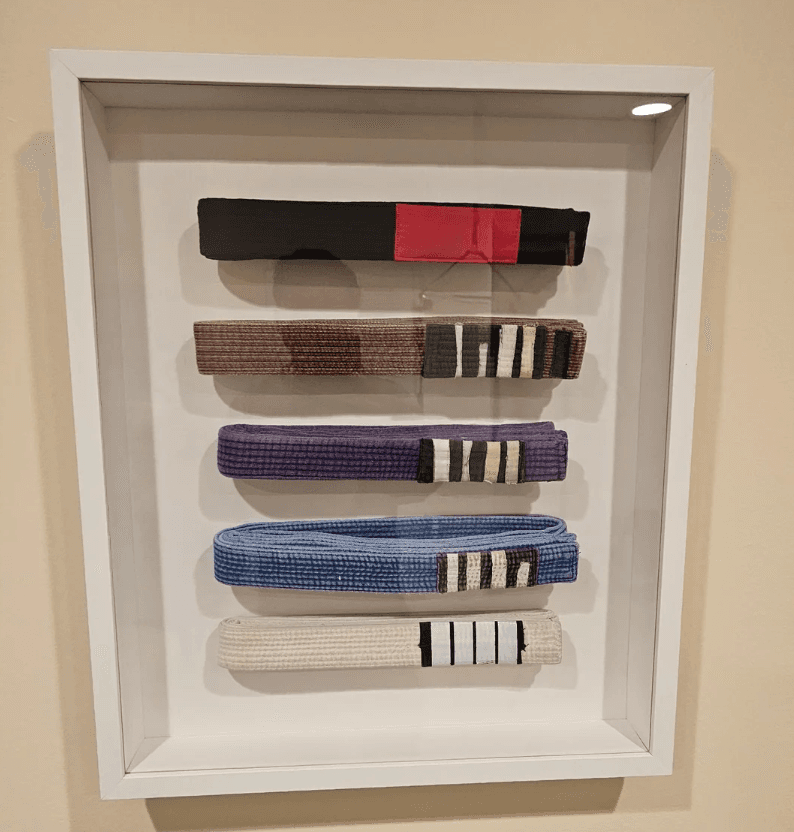
BJJ Belt Progression: Every Belt, How Long It Takes, and What It Actually Means
Quick answer: The adult BJJ belt order is white → blue → purple → brown → black, with four stripes per belt and degrees beyond black. Reaching black belt takes roughly 10 years of consistent training (2–4× a week) — longer for most hobbyists, faster for daily competitors. Kids use a separate grey/yellow/orange/green system until they're old enough to convert.
Brazilian jiu-jitsu has one of the slowest belt systems in all of martial arts — and that's the point. A BJJ black belt isn't a participation milestone you age into. It's a roughly ten-year body of work that has to be demonstrated on the mat, against resisting people, over and over. That's exactly why the rank means something.
This guide walks the whole ladder: the five adult belts, the stripe and degree systems inside them, how long each one realistically takes, the IBJJF age and time-in-grade minimums, and the separate (and more colorful) kids' belt system. No mysticism — just how it actually works.
The adult BJJ belt order
For adults (16 and up), there are five belts:
White belt — where everyone starts. The goal here is survival, then escapes, then a few reliable submissions.
Blue belt — you have a real defensive game and a handful of attacks that work on untrained or newer partners.
Purple belt — you have offense and defense, a developing personal style, and you can teach fundamentals.
Brown belt — refinement. Your game is sharp, efficient, and hard to pass or sweep. Many brown belts already teach.
Black belt — mastery of the fundamentals and a complete game. It's a beginning as much as an end; most black belts will tell you they finally understood the basics here.
Each belt has four stripes (small tape marks the instructor adds) that track progress within a rank — think of them as checkpoints between belts.
Once you reach black belt, progression continues in degrees: 1st through 6th degree are awarded over decades of time-in-grade, after which the coral belt (red-and-black, 7th degree) and eventually the red belt (9th/10th degree) recognize a lifetime of contribution to the art. Almost no one reading this will need to worry about those — they're measured in 30+ year increments.
How long does each belt take?
Honest answer: it depends on how often you train, your athleticism, your coach, and whether you compete. But here are the realistic averages for someone training 2–4 times a week consistently:
White → Blue — Typical time at this belt: 1–2 years; Cumulative time: 1–2 years
Blue → Purple — Typical time at this belt: 2–3 years; Cumulative time: 3–5 years
Purple → Brown — Typical time at this belt: 1.5–3 years; Cumulative time: 5–7 years
Brown → Black — Typical time at this belt: 1–2 years; Cumulative time: ~8–12 years
The widely repeated "ten years to black belt" is a fair average. Some athletes who train daily and compete get there in 6–7 years; plenty of dedicated hobbyists take 12–15. Both are completely normal.
The hidden truth of the timeline: the longest gap is usually blue-to-purple. White belt is exciting and fast. Blue belt is where people plateau, get humbled, and quit — which is why purple belts are comparatively rare. (More on that in our piece on why blue belts quit.)
IBJJF age and time-in-grade minimums
If you compete under the IBJJF (the sport's largest federation), there are minimum requirements before you can be promoted to each adult belt. These are floors, not targets — most people take longer.
Blue belt: minimum age 16.
Purple belt: minimum age 16, and a recommended minimum of 2 years as a blue belt.
Brown belt: minimum age 18, recommended minimum 1.5 years as a purple belt.
Black belt: minimum age 19, recommended minimum 1 year as a brown belt.
Most academies follow the spirit of these guidelines but promote on their own schedule based on skill, mat time, and character — not a stopwatch.
What earns a promotion (it's not just technique)
Belts in BJJ are given, not tested for, at most schools — there's no standardized exam like a karate grading. Coaches generally weigh:
Performance in live rolling against people at and above your level — can you actually apply what you know?
Knowledge and consistency — do you show up, and do you understand why techniques work, not just the steps?
Time on the mat — there's no shortcut for reps.
How you carry yourself — control, safety with newer partners, and being someone people want to train with.
This is why two people can have very different "speeds." A promotion is a coach's statement that you're operating at that level — not that you hit a quota of classes.
The kids' BJJ belt system (it's different)
Kids don't go straight onto the adult ladder. The IBJJF uses a separate system with more belts and built-in steps, designed to keep young students motivated through a longer journey. For ages roughly 4–15, the colors progress:
White → Grey → Yellow → Orange → Green — each with white, solid, and black variations (e.g., grey-white, grey, grey-black).
A child cannot receive an adult blue belt until they're old enough (16 under IBJJF rules), at which point their kids' rank converts onto the adult track. If you're a parent trying to make sense of it, our guide to the kids' BJJ belt system breaks down each color and the ages involved.
Stripes, "sandbagging," and other belt culture
A few things worth knowing:
Stripes are informal at many gyms — some coaches use them religiously, others rarely. Don't read too much into the gap between stripes.
"Sandbagging" is competing at a belt below your real level to win medals. It's frowned on. A good gym promotes you when you're ready, partly so you're competing honestly.
Belt anxiety is normal. Almost everyone feels like they're "not ready" for their next belt. The feeling that you don't deserve it is, ironically, a pretty common sign that you do.
The takeaway
The BJJ belt system rewards patience and consistency over talent and speed. The single biggest predictor of where you'll end up isn't your athleticism — it's whether you keep showing up after the new-toy phase wears off. Every black belt was once a white belt who simply didn't quit.
Ready to actually start (or restart) the journey?
The first belt is the hardest one to earn because it requires walking through the door. Find a BJJ gym near you on Let's Roll → — filter by gi/no-gi, kids' programs, beginner-friendly schedules, and drop-in policies, and read what the community says before your first class.
FAQ
What is the order of BJJ belts for adults? White, blue, purple, brown, black — then degrees on the black belt, and eventually coral and red belts for decades of contribution.
How long does it take to get a BJJ black belt? About 8–12 years on average for someone training 2–4 times a week. Daily training and competition can shorten it to 6–7 years; many hobbyists take longer, and that's normal.
What are the requirements for a BJJ blue belt? There's no universal exam. Most coaches look for solid defense, escapes, a few working submissions, consistent mat time, and good training etiquette. Under IBJJF rules the minimum age for blue belt is 16.
Why is the BJJ belt system so slow compared to other martial arts? Because rank is earned by performance against resisting opponents, not by memorizing forms. The slow timeline is what makes a BJJ black belt a reliable signal of real skill.
Do kids earn the same belts as adults? No — kids progress through a separate grey/yellow/orange/green system with more steps, then convert to the adult belts once they're old enough.
Related Posts

Mikey Musumeci gives up the belt to make room for MMA
Musumeci is vacating his UFC BJJ title to focus on MMA training. What he is leaving, what continues, and why the transition matters.
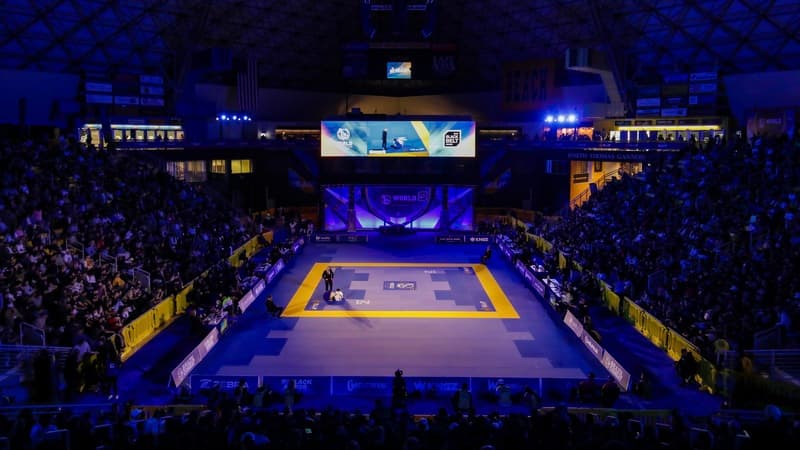
IBJJF membership: finish the paperwork before the deadline
IBJJF membership and tournament entry are separate steps. Plan documents, professor approval, renewals, and junior accounts before registration closes.
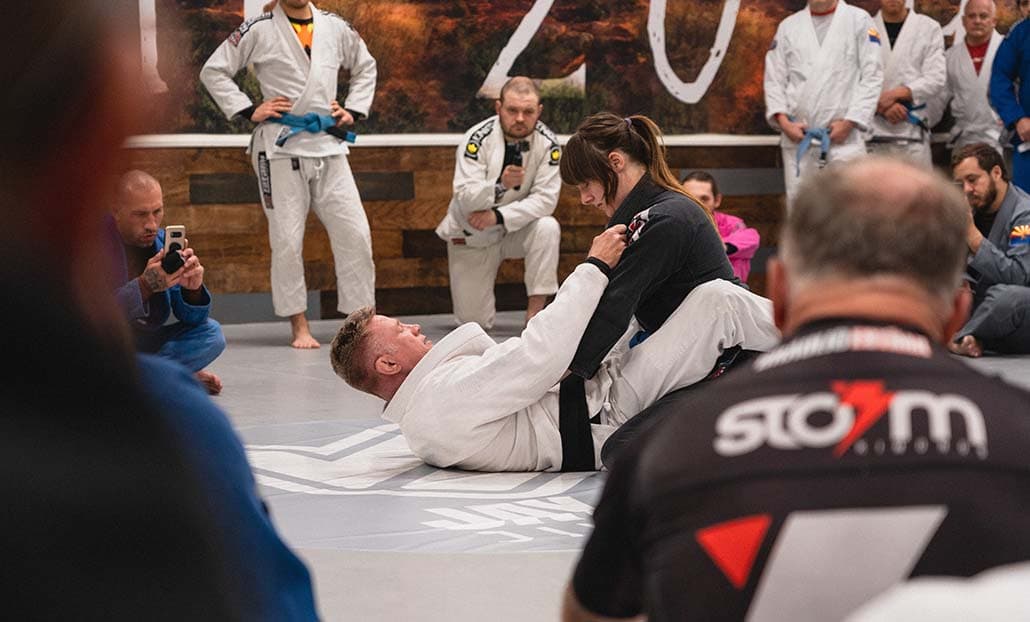
Choosing a BJJ seminar worth your time and travel
Choose a BJJ seminar by the subject, teaching format, access, and total cost. Know what to ask the host before buying a ticket.
Comments (0)
Loading comments...